What You’ll Learn in This Article
- Why open-ended toys that grow with your child support long-term learning, creativity and independent play.
- What the science says about brain development, executive function and attention span in early childhood.
- How to choose fewer, better toys that adapt from toddler years through early primary — without constant upgrading.
The Toy That Kept Both of Them Playing
Last weekend, the house felt small.
It was one of those grey afternoons where the light fades early and everyone’s energy dips with it. The toy shelves were full — puzzles, vehicles, plastic bits with missing pieces — yet neither child seemed settled.
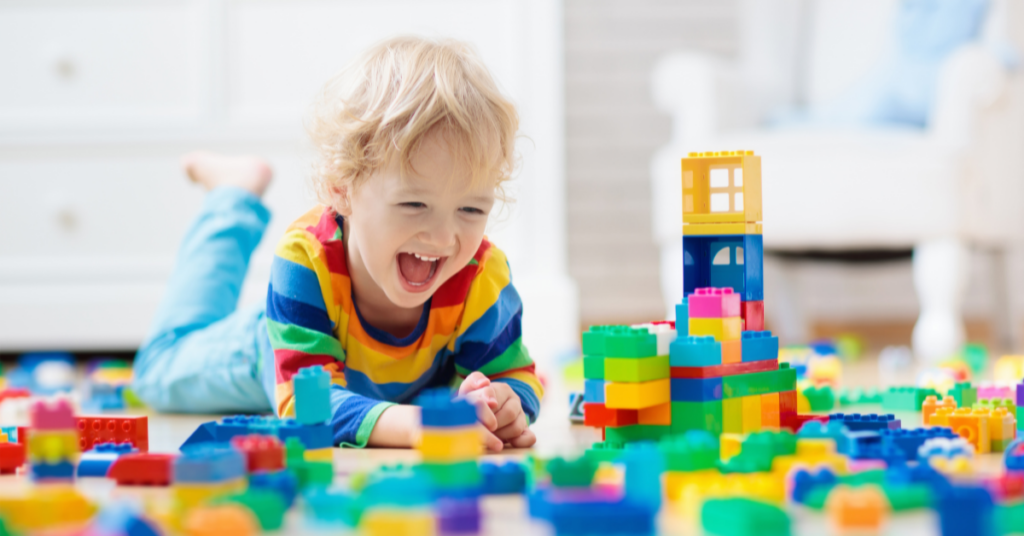
And then, without much fuss, they both ended up on the rug with the same set of magnetic tiles.
My youngest stacked them, knocked them down, stacked them again. Completely absorbed.
My older one quietly began constructing something far more elaborate — walls, a bridge, then a story unfolding about who lived there and why.
Same toy. Different ages. Different complexity.
Some toys don’t just entertain for a season. They grow.
I think the research behind open-ended play shows us something quietly powerful. This isn’t nostalgia. It isn’t just aesthetic preference. The way children play — and what they play with — genuinely shapes how their brains build connections.
Let’s look at why open-ended toys that grow with your child matter so much.
What Are Open-Ended Toys?
Open-ended toys are materials without a single correct outcome.
They don’t light up when you press them.
They don’t instruct.
They don’t “complete” themselves.
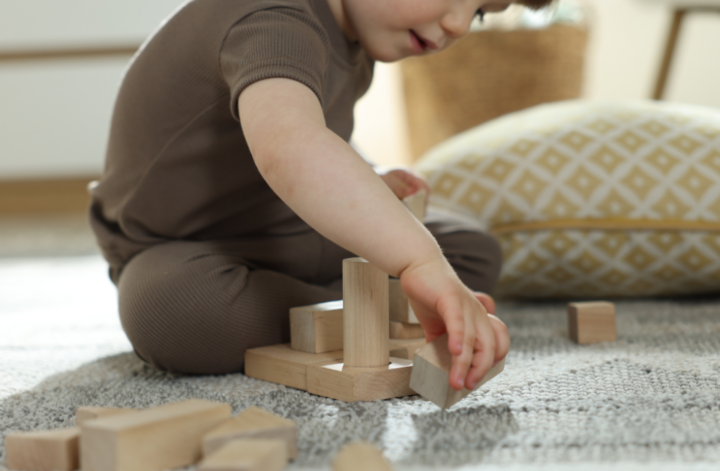
Blocks, magnetic tiles, wooden animals, stacking rings, loose parts, scarves, natural materials — these toys invite the child to decide what happens.
And that decision-making is where the magic lives.
The Science Behind Open-Ended Play
1. They Support Brain Architecture
According to the Harvard Center on the Developing Child, early experiences build what researchers call brain architecture — the neural foundations for learning, behaviour and health throughout life
👉 https://developingchild.harvard.edu/science/key-concepts/brain-architecture/
When play is active, engaging and meaningful, it strengthens those neural connections.
Open-ended toys naturally create this kind of experience. They require:
- Planning
- Problem solving
- Self-regulation
- Flexible thinking
All core components of executive function.
2. They Build Executive Function and Self-Regulation
Executive function — working memory, cognitive flexibility, and impulse control — is foundational for school readiness and emotional resilience.
The Harvard Center also explains how play supports these skills:
👉 https://developingchild.harvard.edu/science/key-concepts/executive-function/
When a child builds a tower and it falls, they adjust.
When they pretend an animal is a character in a story, they’re holding multiple ideas in mind.
That’s executive function in action.
3. They Support Healthy Brain Development Through Play
UNICEF highlights that play is not optional — it’s critical for healthy development:
👉 https://www.unicef.org/parenting/child-development/play
Open-ended play encourages exploration and imagination, both of which stimulate neural growth.
What struck me most while reading? Repetition and variation are key. A child returning to the same toy again and again isn’t stuck — they’re strengthening pathways.
And because open-ended toys change with the child’s imagination, the repetition never feels identical.
Why Simple Toys Often Lead to Deeper Play
There’s a quiet misconception that “more features” means “more educational.”
But in reality, simplicity often creates depth.
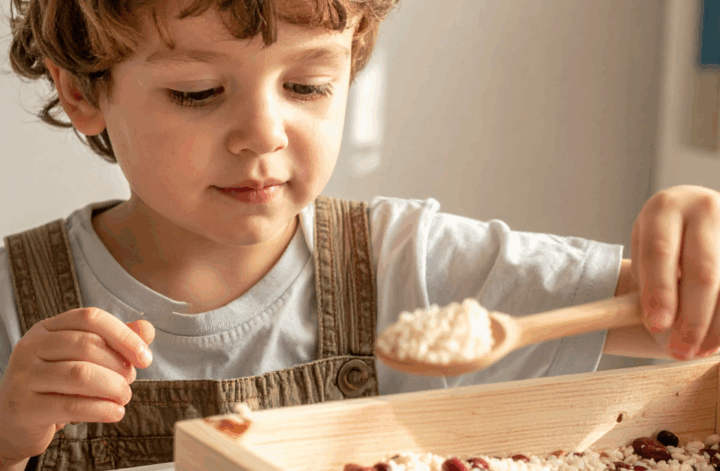
Montessori education has long emphasised simple, natural materials that isolate concepts and allow children to focus
👉 https://montessori.org.uk/montessori-education/what-is-montessori-education/
When a toy doesn’t perform for the child, the child performs for the toy.
They:
- Create the narrative
- Decide the challenge
- Adjust the difficulty
- Sustain attention longer
That sustained attention — the kind where they talk to themselves while building — is where learning becomes embodied.
And it’s beautiful to witness.
How Open-Ended Toys Grow With Your Child
This is the part that genuinely fascinates me.
The same block set can be:
- A stacking challenge at 18 months
- A sorting tool at 2
- A counting resource at 3
- A bridge-building experiment at 4
- A prop in elaborate storytelling at 5 or 6
The toy hasn’t changed.
The child has.
And because the material doesn’t impose limits, it adapts.
That longevity isn’t just financially sensible — it supports continuity of skill building. Children layer complexity onto something familiar, which strengthens mastery and confidence.
Open-Ended Toys and Independent Play
Independent play isn’t about leaving children alone.
It’s about giving them materials that don’t require constant adult direction.
Open-ended toys support intrinsic motivation — the drive to explore because it’s interesting, not because it’s rewarded.
When children lead their own play:
- They build confidence
- They solve their own problems
- They tolerate frustration
- They develop emotional resilience
And as parents, we get to step back and observe — which is often where the awe lives.
How to Choose Open-Ended Toys That Truly Grow
When you’re choosing toys, ask:
- Can this be used in more than one way?
- Does it rely on imagination rather than electronics?
- Will it still be relevant in two years?
- Does it feel grounded and sensory-rich?
- Can it support maths, language or storytelling naturally?
You don’t need dozens.
You need a few that work hard.
Toy rotation can also help keep engagement fresh without adding clutter — simply removing and reintroducing open-ended materials can spark new interest.
FAQ: Open-Ended Toys That Grow With Your Child
What are examples of open-ended toys?
Wooden blocks, magnetic tiles, loose parts, dolls without fixed scripts, play silks, stacking stones, animal figurines and natural materials are all examples. The key feature is flexibility — no single outcome.
Are open-ended toys really more educational?
Research suggests toys that support imagination, executive function and self-directed play promote deeper cognitive engagement than toys that dictate outcomes (Harvard Center on the Developing Child).
Educational value isn’t about features — it’s about what the child does.
What if my child prefers flashy electronic toys?
It’s normal. Those toys are designed to grab attention. You can gradually introduce open-ended materials alongside favourites, modelling how to use them without pressure.
Sometimes it just takes exposure.
Do open-ended toys work for older children too?
Absolutely. In fact, their value often increases with age because older children add more complexity — storytelling, engineering, maths, negotiation during sibling play.
They truly grow.
How many open-ended toys does a child need?
Fewer than you think. A small collection of versatile materials often creates deeper play than a room full of single-purpose toys.
A Gentle Invitation
If you’re exploring ways to simplify your toy shelf and encourage calmer, deeper play, I’ve created a Calm Play Guide for parents who want practical, research-backed ideas without overwhelm.
And very soon, I’ll be sharing something we’ve been building behind the scenes — Forest Friends — a wooden activity puzzle designed around open-ended storytelling, calm focus and learning through play.
No flashing lights.
No noise.
Just thoughtful materials that grow.
If that sounds like your kind of home, you’re welcome to join us.
Further Reading & Sources
- Harvard Center on the Developing Child – Brain Architecture https://developingchild.harvard.edu/science/key-concepts/brain-architecture/
- Harvard Center on the Developing Child – Executive Function https://developingchild.harvard.edu/science/key-concepts/executive-function/
- UNICEF – The Importance of Play https://www.unicef.org/parenting/child-development/play
- Montessori Education UK https://montessori.org.uk/montessori-education/what-is-montessori-education/
- Stories of Play – Open-Ended Toy Ideas https://storiesofplay.com/top-10-open-ended-toys/
Closing Thought
When we choose open-ended toys that grow with our children, we’re not just buying objects.
We’re offering them room.
Room to imagine.
Room to experiment.
Room to fail and try again.
Room to become who they’re becoming.
And sometimes, that quiet, simple toy on the rug holds more possibility than we realise.