
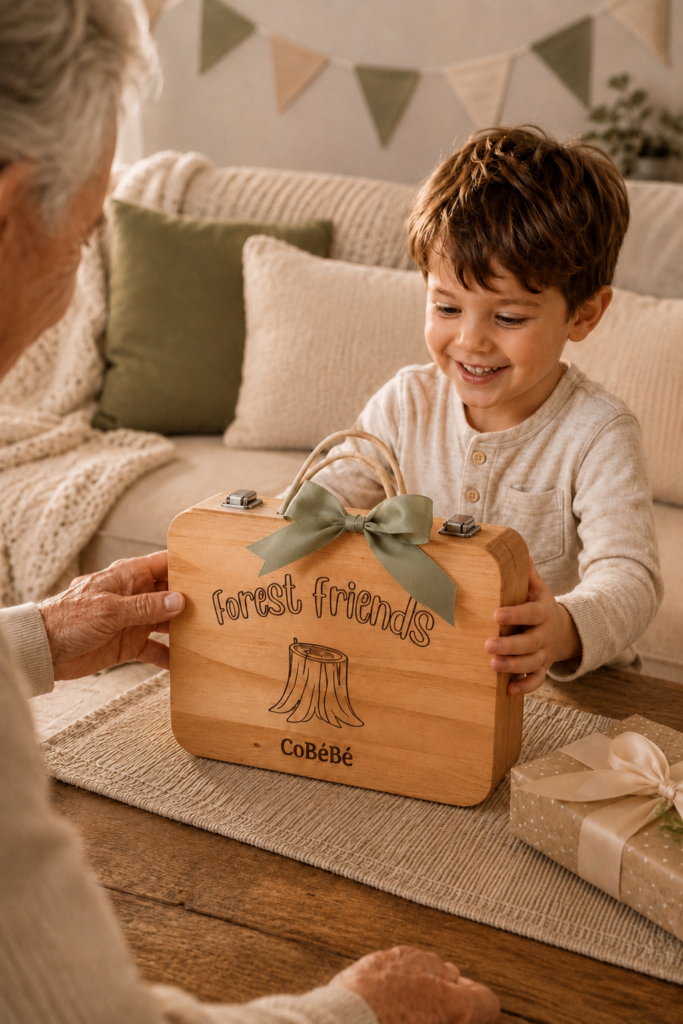
Walk down any toy aisle and the choice between wooden and plastic feels almost aesthetic — one looks nicer, one’s usually cheaper. But the reasons parents increasingly choose wooden toys for toddlers go beyond how they look on a shelf. There are real, practical differences worth knowing before you decide.
Wood tends to last where plastic often doesn’t. A well-made wooden toy can survive being dropped, sat on, and handled roughly for years without cracking or snapping the way thinner plastic often does. That durability matters more than it sounds — a toy that’s still intact after eighteen months of use is a toy that’s still getting played with, rather than one that’s been thrown away and replaced.
The weight and texture give a child real sensory information. Wood has heft, a natural grain, and a temperature that changes subtly with handling — all of which give a toddler more sensory feedback than a lightweight plastic equivalent. That extra information isn’t decorative; it’s part of how young children build an understanding of the physical world through touch.
Wooden toys are usually simpler, and that’s often the point. Plastic toys frequently compete on features — lights, sounds, moving parts — because the material makes those additions cheap to include. Wooden toys tend to lean the other way: fewer mechanisms, more emphasis on how the child interacts with the object itself. That simplicity is often what makes a wooden toy open-ended rather than single-purpose.
Quality tends to correlate with care in wooden toys. Because wood is more expensive to work with than moulded plastic, wooden toys are less likely to be made carelessly — rough edges, sharp corners, and flimsy construction are more likely to be caught before a wooden toy reaches a shelf, simply because the production process demands more attention.
It isn’t a guarantee of quality on its own. Being wooden doesn’t automatically make a toy good — a poorly finished, splintery, or badly designed wooden toy is still a bad toy. It’s worth checking for smooth, sanded edges, secure fixings, and a genuine reason the toy needed to be wooden, rather than assuming the material alone does the work.
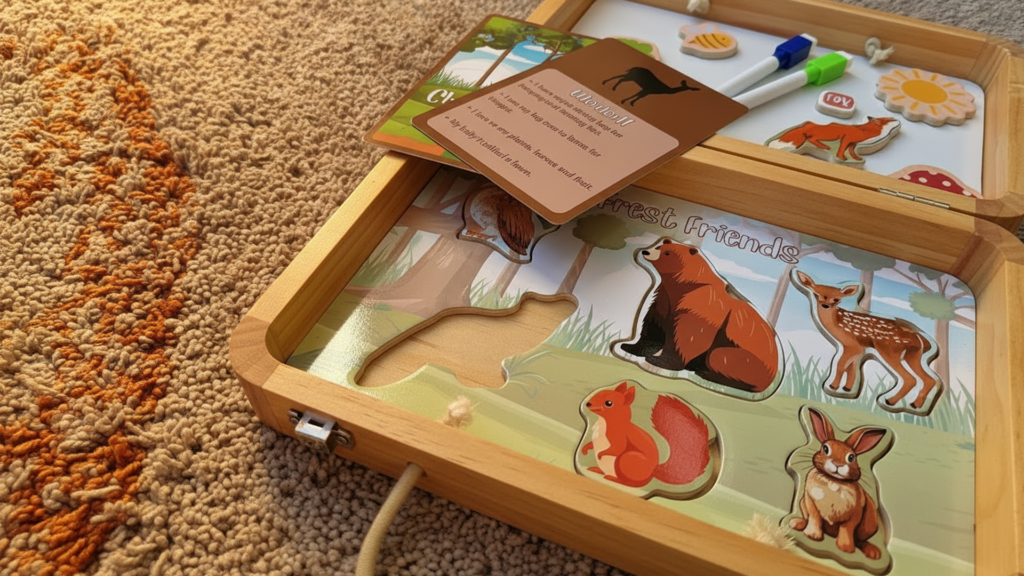
Our own Forest Friends activity box is built from solid wood for these reasons — an engraved carry case with a fixed whiteboard lid, secure locking clasp, and large, single-piece magnetic animals that are sturdy enough for regular toddler handling. There are no fragile multi-part figures to break apart, and the whole case is designed to be picked up, packed away, and used again for years rather than months.
If you’re weighing wooden toys for toddlers against plastic alternatives, the material itself is a genuine factor — but check the construction too. Good wood, well finished, tends to be the toy still on the shelf long after the plastic equivalents have been replaced.
Frequently asked questions
Are wooden toys safer than plastic toys?
Not automatically — safety depends on construction quality regardless of material. That said, well-made wooden toys tend to have fewer small, breakable parts and no batteries, which removes some common hazards found in certain plastic and electronic toys.
Why are wooden toys more expensive than plastic ones?
Wood is generally more expensive to source and work with than moulded plastic, and wooden toys often require more manual finishing — sanding, fitting, checking edges — which adds to production cost. That cost usually reflects genuine durability rather than just branding.
Do wooden toys need any special care?
Most wooden toys need very little maintenance beyond wiping clean and keeping them away from prolonged damp, which can warp or swell the wood over time. Well-sealed, good-quality wooden toys are generally low-maintenance for everyday play.
Are wooden toys better for the environment than plastic?
Wood is a natural, renewable material and wooden toys are often more durable, meaning they’re replaced less often than plastic equivalents. Environmental impact also depends on sourcing and manufacturing, so it’s worth checking whether a wooden toy comes from a responsibly managed source.
Here’s What Else We Make…
Free Printables for Calm Play at Home
If toy rotation got you thinking about creating a more intentional play space, our free printable library is a good next step. Posters, activity sheets and learning resources designed for the kind of calm, focused play we’ve been talking about — all free to download instantly