The Art of Toy Rotation: A Mindful Approach to Play
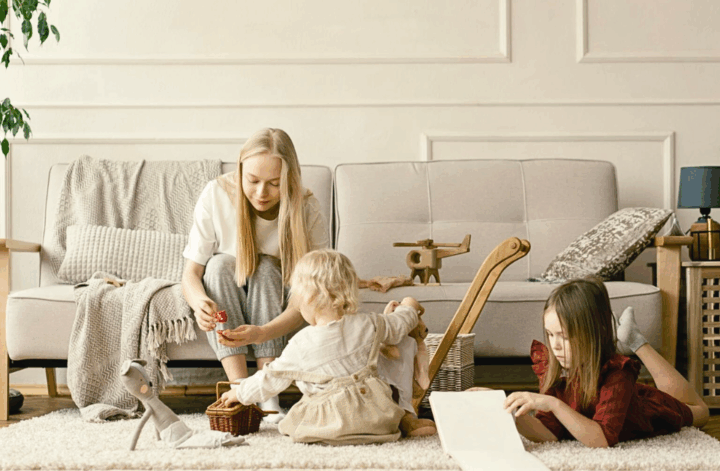
We began using a toy rotation Montessori style and mornings feel calmer these days. Not perfect, just steadier. The play shelf is simple, the toys are chosen, and there’s a rhythm to how the children move through the day.
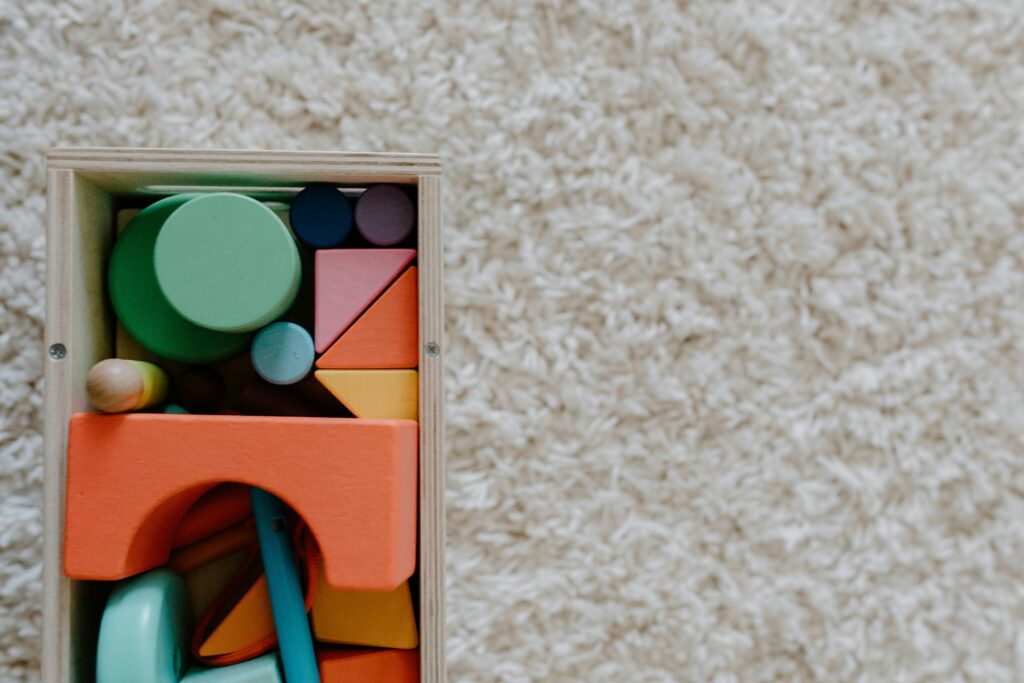
What’s interesting is that even with fewer toys out, I still catch my two-year-old finding new ways to use them. A stacking toy becomes a bridge; a basket becomes a drum. My five-year-old joins in, stopping the game of football he’s just started in the front room, turning it into a story or a game, and suddenly one small toy holds their attention for half an hour.
That’s the beauty of toy rotation. It’s not about organising or decluttering anymore — it’s about watching how play deepens when the space has room to breathe.
When toys are chosen with intention, play becomes calmer, more creative, and more meaningful.
What Is Toy Rotation?
Toy rotation Montessori style is the practice of offering a limited selection of toys to your child at any given time, while the rest are stored away and reintroduced later.
This approach comes straight from Montessori philosophy, which values environments that foster independence, order, and concentration.
In Montessori classrooms, materials are displayed thoughtfully — each with purpose and space.
At home, toy rotation recreates that same sense of calm. By curating toys intentionally, we replace overstimulation with focus, helping children engage more deeply in their play.
As Montessori educators explain, rotating toys encourages meaningful engagement, independence, and longer periods of concentration (Montessori Generation, 2023).
The Science Behind Fewer Toys
Research backs what Montessori observed long ago — children thrive in simplicity.
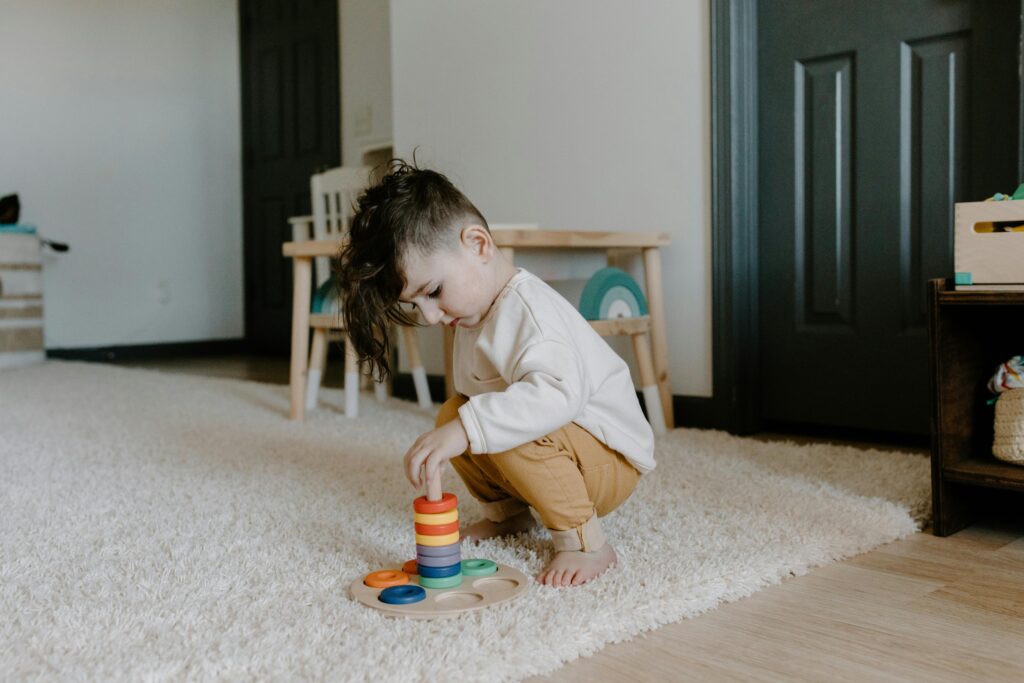
A landmark University of Toledo study (Dauch et al., 2017) found that toddlers played longer and more creatively when offered four toys instead of sixteen. With fewer choices, play became richer, more inventive, and more focused.
Too many options can overwhelm young children, leading to quick boredom or scattered play.
Fewer options, on the other hand, invite exploration. The American Academy of Pediatrics (Yogman et al., 2018) highlights that meaningful, unhurried play — not the number of toys — is what truly supports healthy brain development.
The Benefits of Toy Rotation
When done thoughtfully, toy rotation Montessori style benefits both parent and child.
1. Extended Attention Span
Children focus longer when not overwhelmed by choices. In the Toledo study, toddlers in the “fewer toys” group played more independently and for longer stretches (Dauch et al., 2017).
2. Encourages Creativity and Problem-Solving
Fewer toys inspire children to use each one in new ways. According to the Lovevery Blog (2023), rotation helps children “go deeper in their play” and strengthens problem-solving skills over time.
3. Supports Independence and Emotional Regulation
A tidy, accessible space gives children control over their environment. This mirrors Montessori’s focus on independence and self-direction. When toys are within reach, children learn ownership and care.
4. Reduces Overwhelm — for You and Them
Less clutter means less stress. Parents often find that toy rotation not only brings order to play but restores a sense of calm to the home (May River Montessori, 2023).
The Montessori Connection
Montessori environments are built on three pillars: order, independence, and concentration — and toy rotation naturally supports all three.
- Order: Toys are displayed neatly on low shelves, visible and accessible. Rotating them prevents overcrowding and keeps the space inviting (The Montessori Notebook, 2023).
- Independence: Children engage more confidently when they can choose and return toys on their own.
- Concentration: Fewer distractions help children reach deeper focus — what Montessori called “flow.”
As Bumbu Toys (2023) notes, “The fewer toys available, the more likely a child is to explore them fully — aligning with Montessori’s idea of respecting the child’s natural rhythm.”
Common Misconceptions
Let’s clear up a few myths that often surround toy rotation Montessori style:
“It’s only for minimalists.”
Not at all. It’s about accessibility, not austerity. You can own many toys — just present fewer at a time.
“It’s too much work.”
Rotations can be simple. Every few weeks (or even monthly) is enough.
“My child will be bored.”
In reality, boredom often fuels creativity. With fewer toys, children explore more deeply and imaginatively.
“It’s too rigid.”
Toy rotation Montessori style supports freedom through structure — providing clarity, not control.
How to Start Toy Rotation Montessori style at Home
You don’t need to overhaul your playroom overnight. Start small and observe.
1. Observe first.
Watch your child play. Which toys hold their attention? Which ones gather dust?
2. Choose 6–10 toys.
Select toys that are open-ended, purposeful, and developmentally appropriate.
3. Store the rest.
Use labelled bins or a cupboard — clear boxes with photos can help organization.
4. Rotate every 1–3 weeks.
Let your child’s interest guide you. When enthusiasm dips, that’s your cue.
5. Involve your child.
Older toddlers love helping choose what to swap in — it builds ownership.
6. Keep track.
A simple phone photo log helps you balance types of play (fine motor, creative, pretend).
7. Stay flexible.
If your child is deeply engaged with a toy, don’t rotate it out just yet.
Real Parent Examples
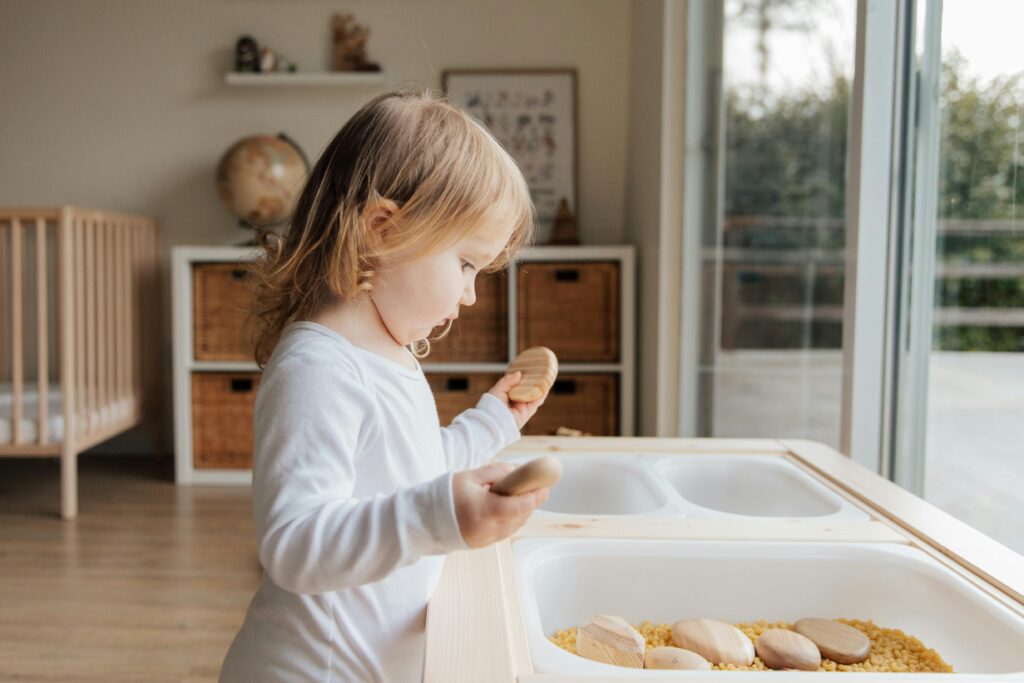
Families using toy rotation often describe a calmer rhythm to playtime.
- Sarah, mum of two, found her toddler was dumping toy bins rather than playing. After setting up a shelf with just eight toys, her child played independently for half an hour. “It was like magic,” she said (Montessori Generation, 2023).
- Mark and Lina, parents of a preschooler, built a “toy library” in a cupboard. Every Sunday, their son helps choose four toys to swap in. “He gets excited to see his ‘new’ toys — even though they’ve always been here,” they shared on The Montessori Notebook.
- One Montessori-inspired family used three baskets — for building, pretend play, and sensory exploration — and rotated one toy from each every two weeks. It kept play fresh, balanced, and clutter-free (Lovevery Blog, 2023).
A Gentle Conclusion
At its heart, toy rotation isn’t about storage bins or systems — it’s about slowing down enough to see what truly matters.
When we create a calm, intentional play space, we give our children more than toys — we give them time: time to focus, to imagine, to grow.
And we give ourselves a gift too — a quieter, more mindful home where play feels peaceful again.
So take a breath, trust your observations, and start small. Even one thoughtful rotation can remind you of something beautiful:
children don’t need more things to play better — just space, simplicity, and trust.
Further Reading & References
- Dauch, C., Imwalle, M., Ocasio, B., & Metz, A. (2017). The influence of the number of toys in the environment on toddlers’ play. Infant Behavior and Development, 50, 78–87.
- Yogman, M., Garner, A., Hutchinson, J., Hirsh-Pasek, K., & Golinkoff, R. M. (2018). The power of play: A pediatric role in enhancing development in young children. Pediatrics, 142(3).
- Montessori Generation (2023). How to Set Up a Montessori Playroom.
- Lovevery Blog (2023). How Toy Rotation Supports Deeper Play.
- May River Montessori (2023). The Benefits of Toy Rotation at Home.
- The Montessori Notebook (2023). Designing a Calm, Orderly Play Space.
- Bumbu Toys (2023). The Montessori Approach to Fewer Toys and Deeper Play.
Explore CoBéBé…
Free Printables for Calm Play at Home
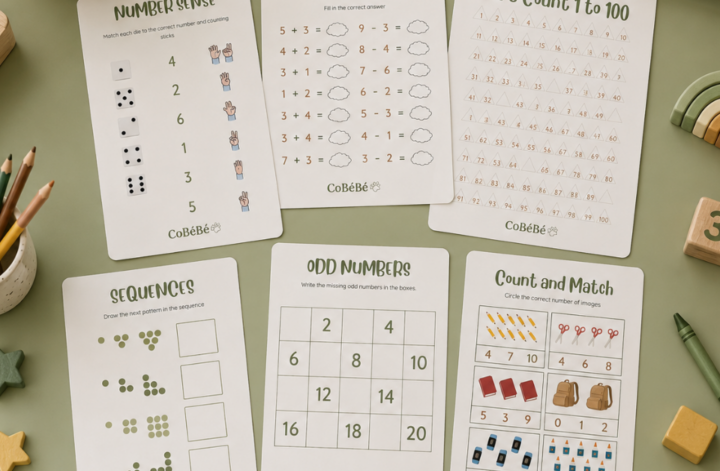
If toy rotation got you thinking about creating a more intentional play space, our free printable library is a good next step. Posters, activity sheets and learning resources designed for the kind of calm, focused play we’ve been talking about — all free to download instantly.
Want More for Your Play Shelf?
Our paid printable bundles go deeper — from alphabet learning to emotions, early maths and screen-free activity packs. Designed for the same calm, low-pressure approach to learning you’ve just been reading about. From £2, instant download.
Looking for the Perfect Shelf Toy?
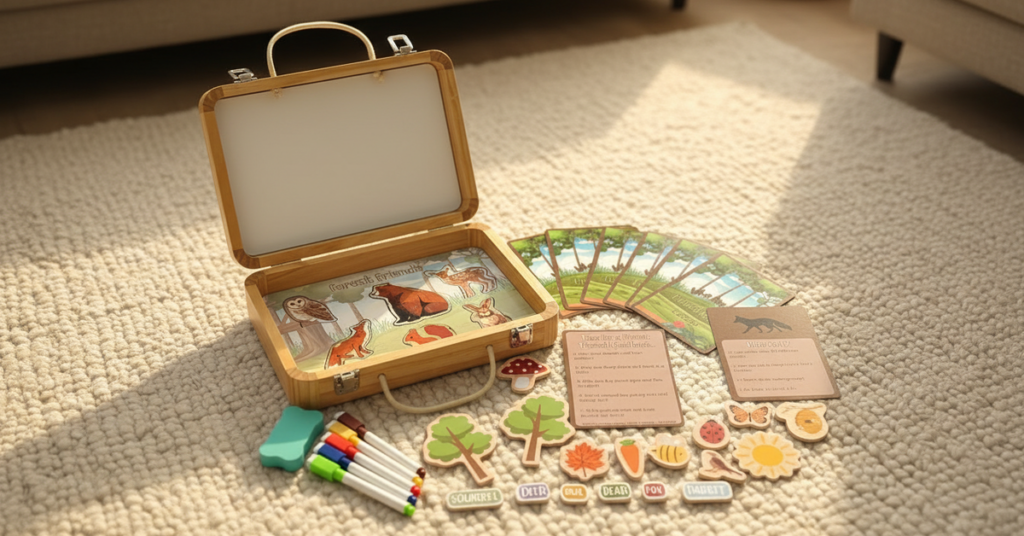
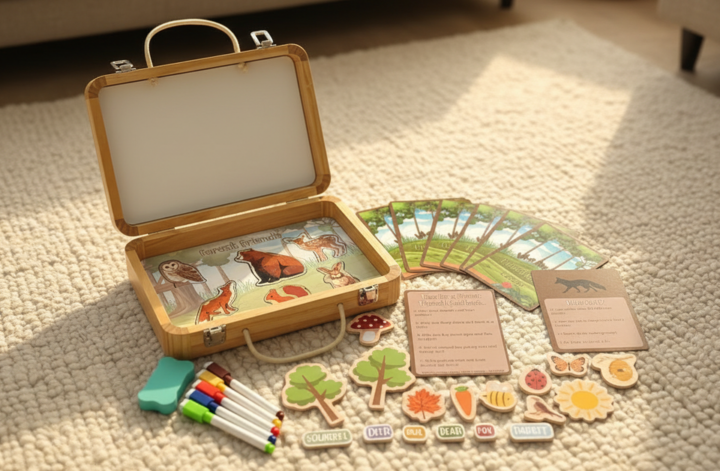
Forest Friends was designed to be exactly the kind of toy that earns its place on a rotation shelf. A wooden activity box combining magnetic puzzle play, whiteboard drawing, woodland scene building and animal quiz cards — all in one carry case that travels with you too. The kind of toy children keep coming back to.