What You’ll Learn in This Post
- How to recognise real learning through play, even when it looks messy, repetitive, or unfocused
- What’s actually happening in your child’s brain during play — and how it builds focus, confidence, and problem-solving
- Simple, realistic ways to support your child’s learning without interrupting their natural play
It doesn’t always look like learning
One of the easiest traps to fall into as a parent is thinking:
“Are they actually learning anything right now?”
Especially when play looks like:
- Doing the same thing over and over
- Jumping between toys
- Making a mess and walking away
- Or just… not doing much at all
It doesn’t look like progress.
It doesn’t look structured.
And it definitely doesn’t look like the kind of “learning” we’re used to seeing.
But here’s what I’ve come to realise:
A lot of the most important learning in early childhood is quiet.
Unstructured.
Easy to overlook.
And if you don’t know what you’re looking for, it can feel like nothing is happening.
In this post, I want to break that down — not in a complicated way, but in a way that helps you actually see what’s going on during play.
Because once you see it, it changes how you respond to it.
Why Play Doesn’t Always Look Like Learning
As parents, we naturally look for signs that feel familiar.
We expect learning to look like:
- Sitting still
- Following instructions
- Completing something
But in early childhood, learning rarely looks like that.
Play is how children learn.
And most of the time, it looks:
- Repetitive
- Messy
- Unstructured
- Even a bit pointless
According to Head Start, play is a critical part of early development — supporting language, thinking, and social skills.
But here’s the part that throws most of us:
👉 The deeper the learning… the less obvious it often looks.
What’s Happening in Your Child’s Brain During Play
While your child is playing, their brain is building something called executive function.
This includes:
- Focus
- Memory
- Self-control
- Problem-solving
The Harvard Center on the Developing Child explains that these skills are developed through real experiences — not instruction.
So when your child is:
- Repeating something
- Testing something
- Exploring something
They’re not just “playing”.
They’re wiring their brain for future learning.
7 Signs Your Child Is Learning Through Play (Even When It Doesn’t Look Like It)
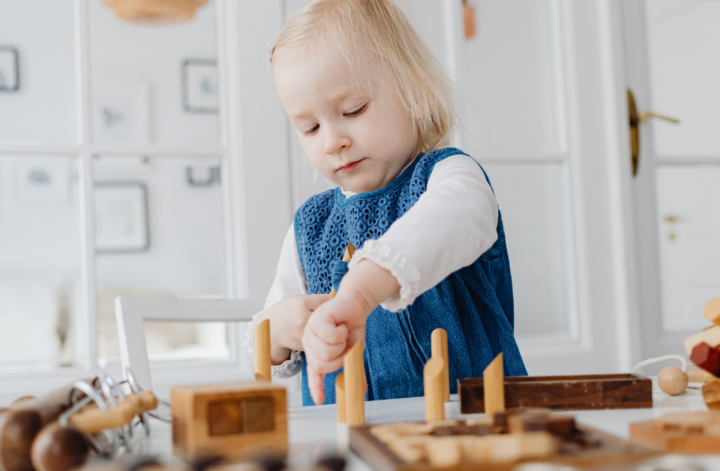
1. They’re deeply focused (even briefly)
It might only last a few minutes…
But when your child is fully absorbed in something, that’s real focus being built.
Not forced — built.
2. They’re pretending or role-playing
Talking to toys. Acting things out. Creating little scenarios.
This builds:
- Language
- Emotional understanding
- Social awareness
It’s practice for real life — just in a child’s way.
3. They repeat the same thing again and again
This is one parents often worry about.
But repetition is how children learn.
According to ChildCare.gov, repeating actions strengthens neural connections.
It’s not boredom.
It’s progress.
4. They figure things out through trial and error
Trying. Failing. Trying again.
That’s problem-solving.
No instructions needed.
5. They create stories while they play
When children build stories or little worlds, they’re developing:
- Imagination
- Language skills
- Narrative thinking
These are the early building blocks of reading and communication.
6. They move their bodies constantly
Climbing, jumping, balancing…
This develops:
- Coordination
- Spatial awareness
- Confidence
It’s not just energy — it’s development.
7. They move between activities
This one can look like a lack of focus.
But often, it’s curiosity.
According to The LEGO Foundation, exploring different activities supports cognitive flexibility.
That’s the ability to adapt, think, and learn.
Why Repetition Matters More Than We Think
Repetition is where learning settles.
It’s where:
- Skills become natural
- Confidence grows
- Understanding deepens
What looks like “the same thing again” is actually your child refining what they’re learning.
Why Switching Between Toys Isn’t Always a Problem
Not every child will sit with one activity for long periods.
And that’s okay.
Switching can mean:
- They’re exploring
- They’re comparing
- They’re learning what holds their attention
It’s not always distraction.
Sometimes it’s discovery.
Why “Doing Nothing” Is Actually Important
Those quiet moments — when your child seems to be doing nothing — matter.
They’re:
- Processing
- Thinking
- Resetting
And often, that’s where creativity starts.
How to Support Learning Through Play (Without Taking Over)
You don’t need to do more.
You just need to adjust how you show up.
Keep things simple
Too many toys = less focus
Choose open-ended toys
Things that can be used in lots of ways:
- Blocks
- Wooden toys
- Creative materials
Let them lead
Join in when invited — not automatically
Allow boredom
It often leads to better play
FAQs
How do I know if my child is learning through play?
If they’re engaged, curious, repeating, or experimenting — they’re learning.
Is repetition normal?
Yes. It’s one of the most important parts of development.
Should I guide play?
Lightly. Let your child lead as much as possible.
What if my child can’t focus for long?
That’s completely normal. Focus builds gradually through play.
Do I need educational toys?
No. Simple, open-ended toys often support deeper learning.
The bit that changes how you see it
Once you start noticing these moments, everything shifts a bit.
The things that used to feel like:
- “They’re not concentrating”
- “They’re just messing about”
- “This isn’t going anywhere”
Start to look different.
You realise…
They weren’t doing nothing.
They were learning in a way that just didn’t need you to step in.
If you want some simple ways to support more of this kind of calm, focused play at home, you can explore our Calm Play Guide or download our free printables — they’re designed to make these moments easier to create (and easier to recognise when they happen).
Because the learning is already there.
You’re just starting to see it.