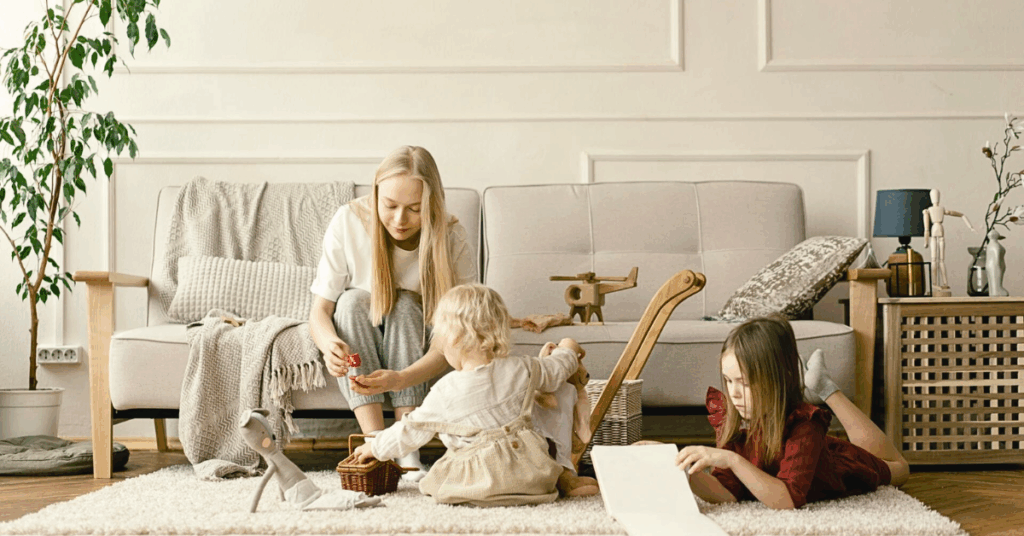
Welcome. I remember standing in the hallway one morning, coffee in hand, listening to the sound of my children playing in the next room. It was one of those small moments that made me reflect on what it really means to try Montessori at home. My five-year-old was explaining, in great detail, how to “set up shop” with blocks and bowls, while my two-year-old chimed in with a chorus of giggles, as well as the usual need to take control of what her older brother was doing.
Even with the occasional bickering that comes naturally to young siblings, it struck me how naturally they organised themselves. No one had told them what to do. No one had given instructions. And yet, there they were—creating, collaborating, learning.
In that moment of observation, I realised how often my instinct as a parent was to step in, to correct, or to lead. But one thing I am really trying to work on from what Montessori has taught me is: that my children are capable of leading their own learning, if only I step back enough to let them.
This wasn’t about rearranging our whole house or buying new materials. It was about maintaining that shift in me—how I thought about their learning, their independence, and my role as their parent.
And that’s where the heart of Montessori lies. It isn’t a checklist of activities. It’s a mindset. A calm, respectful way of seeing our children and creating space for them to thrive.
Here are five shifts in thinking that helped me begin Montessori at home with more confidence and clarity.
Shift #1: From Parent-Directed to Child-Led Learning
In that Saturday morning moment, my first instinct was to jump in and take control—tidy up the mess, keep things moving, and direct the play so it looked more “productive.” Part of that came from wanting to help, but part of it was also my own need to keep order. Over time, I’ve realised this urge to step in comes from an old way of thinking about learning—one where the parent must always lead.
Old Mindset: “I need to teach my child everything step by step.”
Montessori at Home Mindset: “My child is capable of leading their own learning—I’m here to guide and observe.”
Maria Montessori herself believed children are naturally curious and will gravitate toward meaningful work if given the right environment (Montessori Academy, 2023). Research shows child-led learning fosters independence and problem-solving (Montessori Downtown, 2023).
At home, I’ve learned to:
- Watch what my children choose without rushing to redirect.
- Offer a few simple choices instead of dictating.
- Protect their concentration, even if it means ignoring the mess for a little longer.
That shift—trusting their lead—changed how I saw their “play.”
Shift #2: From Product-Focused to Process-Focused
I used to praise every drawing or puzzle once it was “finished.” But Montessori reminds us that it’s the process, not the product, that matters most.
Old Mindset: “Success means completing the activity perfectly.”
Montessori at Home Mindset: “The value lies in the process, not the outcome.”
Montessori once said: “The greatest sign of success for a teacher is to be able to say, ‘The children are now working as if I did not exist.’” (Montessori Episcopal, 2023).
When I watched my two-year-old place puzzle pieces in the “wrong” places, then pause, rethink, and try again, I saw resilience building before my eyes. By letting go of perfection, my children could focus on effort, curiosity, and persistence—skills that last far longer than a perfect craft.
Shift #3: From Controlling the Environment to Preparing It Thoughtfully
I used to keep “special” things out of reach, worried about spills or breakages. But Montessori flipped that thinking.
Old Mindset: “I need to keep things out of reach and in control.”
Montessori at Home Mindset: “I will prepare the environment so my child can act independently and safely.”
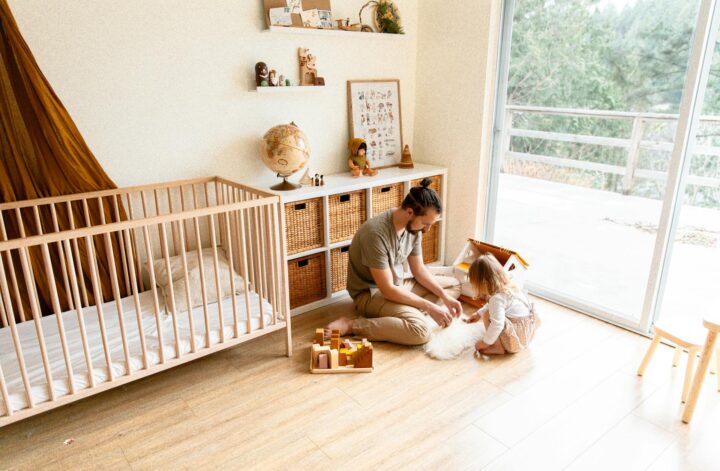
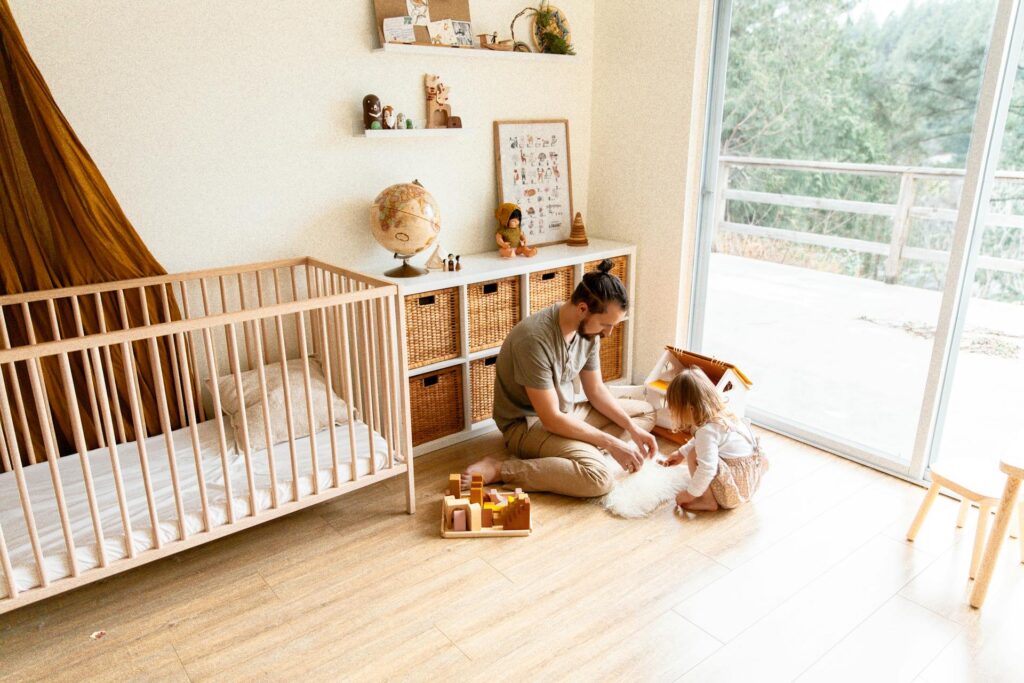
A prepared environment means creating spaces designed for children, not just adults (SpringStone Montessori, 2023). When I lowered a jug of water to a child-level shelf and added a small glass, my son began pouring for himself. It wasn’t always neat, but it was his—and that mattered.
At home we now:
- Use low shelves with baskets they can reach.
- Rotate toys to keep things calm.
- Involve the children in real life—helping cook, water plants, and tidy.
I realised the environment could say “yes” for me, instead of me always saying “no.”
Shift #4: From Doing More to Slowing Down and Observing
I used to feel guilty if I wasn’t actively engaging—reading, teaching, entertaining. But one of the most freeing shifts in Montessori was learning to slow down.
Old Mindset: “I need to constantly entertain or teach my child.”
Montessori at Home Mindset: “I will slow down and observe to understand what my child needs.”
Observation is central in Montessori (Montessori Academy, 2023). When I take a step back, I notice so much more: the way my youngest concentrates on threading beads, the way my eldest whispers instructions to his sister. Those small details guide me far better than rushing in.
Now, I try to:
- Set aside time just to watch.
- Keep a notebook of what each child gravitates toward.
- Pause before intervening—most of the time, they find their own solution.
That quiet pause is often when I learn the most about who they are becoming.
Shift #5: From External Achievement to Inner Fulfilment
Like many parents, I sometimes measure my children against milestones. But Montessori helps me look deeper.
Old Mindset: “Success means hitting milestones and being ahead.”
Montessori at Home Mindset: “Success means supporting whole-child development—emotionally, socially, physically, and cognitively.”
Montessori emphasises that development is holistic (Apple Montessori, 2023). When I stopped asking “Is he ahead?” and started noticing moments like my son comforting his sister after a tumble, I realised success isn’t about pace—it’s about wholeness.
Celebrating patience, kindness, and independence has been just as rewarding as any “academic” milestone.
A Gentle Conclusion
That morning watching my children could easily have been a moment of frustration and tidying. Instead, it became a moment in my parenting where I really began to take on board how to let my children lead. I saw that Montessori at home isn’t about expensive materials or rigid rules—it’s about a mindset shift.
One step at a time, we can choose presence over perfection, observation over control, and trust over pressure.
And every time I see my children working together, exploring freely, or persevering through a challenge, I’m reminded: these shifts are worth it.
Montessori at Home FAQs
Q: Do I need special Montessori toys to start?
A: No. Begin with simple, real-life items—cups, spoons, baskets—that encourage independence.
Q: What if my child resists?
A: Follow their lead. Montessori at home is about respecting the child’s rhythm, not enforcing rules.
Q: Is Montessori too rigid?
A: Quite the opposite. It’s about freedom within limits—creating safe spaces where children can choose and thrive.
Q: How do I know if I’m “doing it right”?
A: If you are observing, respecting, and slowing down to connect—you’re already on the path.
Sources
- Montessori Episcopal School (2023). A Parent’s Handbook to Implementing Montessori Education at Home
- Montessori Downtown (2023). How Parents Can Support Montessori Learning at Home
- Montessori Academy (2023). Key Montessori Principles of Education
- SpringStone Montessori (2023). The Six Principles of the Montessori Prepared Environment Explained
- Apple Montessori Schools (2023). How Does Montessori Help Child Development?