What You’ll Learn in This Post
- How to decide what to put on a toddler playroom wall without making the space feel busy or overstimulating
- Which wall ideas are genuinely useful for learning through play, and which ones are mostly just decoration
- Simple ways to make your child’s playroom feel calmer, more thoughtful, and more supportive of everyday learning at home
There’s a temptation when you’re setting up a toddler playroom to think every wall needs filling.
A quote here. A rainbow print there. Maybe a few alphabet posters, a world map, a height chart, and one of those canvas signs about dreaming big.
I get it. When you care about your home and you want your child’s space to feel lovely, it’s easy to start thinking the walls need to “do something”. And if you’re into Montessori-inspired play like I am, it’s even easier to end up down a rabbit hole of neutral playroom ideas, shelf styling, printable posters, and all the rest of it.
But if you’ve been wondering what to put on a toddler playroom wall, I honestly think the better question is this:
What will actually be useful to my child in this space?
That shift helps a lot.
Because toddlers don’t need walls packed with things to look at. Most of the time, they need the opposite. They need a space that feels calm enough to focus in, but interesting enough to invite curiosity. A few well-chosen things on the wall can absolutely support that. Too much can do the opposite.
That’s why, if you’re trying to work out what to put on a toddler playroom wall, I’d think less about “decorating” and more about “supporting play”.
Start with the wall space they’ll actually notice
One thing I think helps is remembering that toddlers don’t take in a room the same way adults do.
We might walk in and see an empty wall and think it needs something. But a toddler is usually more interested in what’s at their level, what they can recognise, and what feels familiar enough to come back to again and again.
So before you start adding prints, it’s worth asking:
- Which wall can they actually see clearly while they play?
- Is this at a height that makes sense for them?
- Will this help them notice, name, point, talk, or remember something?
That’s why I wouldn’t just scatter posters randomly around the room. If you’re thinking about what to put on a toddler playroom wall, I’d keep the useful things grouped and intentional.
A small set of well-chosen visuals often works better than lots of unrelated things spread everywhere.
Keep it simple enough to be calm
This is the bit that matters most to me.
A toddler playroom doesn’t need to look empty, but it does need room to breathe. If every wall is full, every shelf is packed, and every surface has something bright and busy on it, the whole room can start to feel noisy even when nobody is making a sound.
That’s one reason simple play spaces often work better. UNICEF notes that children learn and make sense of the world through play, building imagination, language, and cognitive skills along the way. The point isn’t to give them more visual input all the time. It’s to create the kind of environment where they can actually engage with what’s already there. UNICEF’s guide to learning through play is a really good reminder of that.
So when I think about what to put on a toddler playroom wall, I always come back to this:
Useful beats busy.
That usually means:
- fewer posters
- softer colours
- clear images
- easy words
- enough blank space around them
If the wall looks lovely but your child never looks at it, it’s probably more for you than for them. And that’s fine if you want some room decor too. But it helps to be honest about what each thing is there for.
The best things to put on a toddler playroom wall
If you want the simple version, these are the kinds of things I think work best.
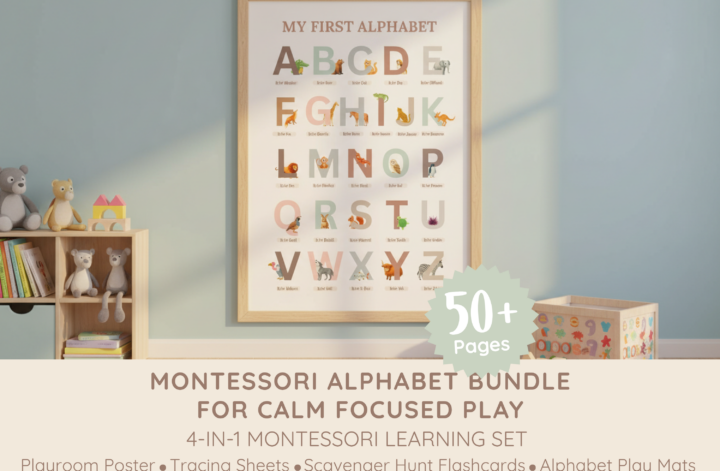
1. Alphabet posters
This is probably the obvious one, but I still think it’s worth including — especially if it’s done simply.
A good alphabet poster can help with:
- letter recognition
- vocabulary
- pointing and naming
- familiarity before formal reading starts
I’d keep it clean though. Clear letters. Simple visuals. Nothing too loud or cluttered.
Not because toddlers need to be “taught” the alphabet in a formal way, but because familiar visuals around the room can become part of everyday conversation. You’ll be surprised how often a child points to a letter on the wall and asks what it is.
2. Numbers, shapes, and colours
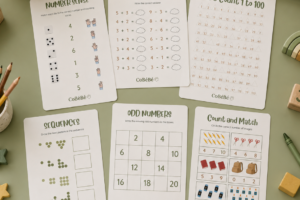
These are the kind of posters that naturally support learning through play because they connect to what children already notice in real life.
You can point to:
- the red crayon and the red poster
- the square block and the square poster
- the number 3 on the wall and three toy animals on the floor
That’s when wall posters start to feel genuinely useful rather than decorative.
If you’re wondering what to put on a toddler playroom wall, this is one of the most practical categories to include because it ties into play so easily.
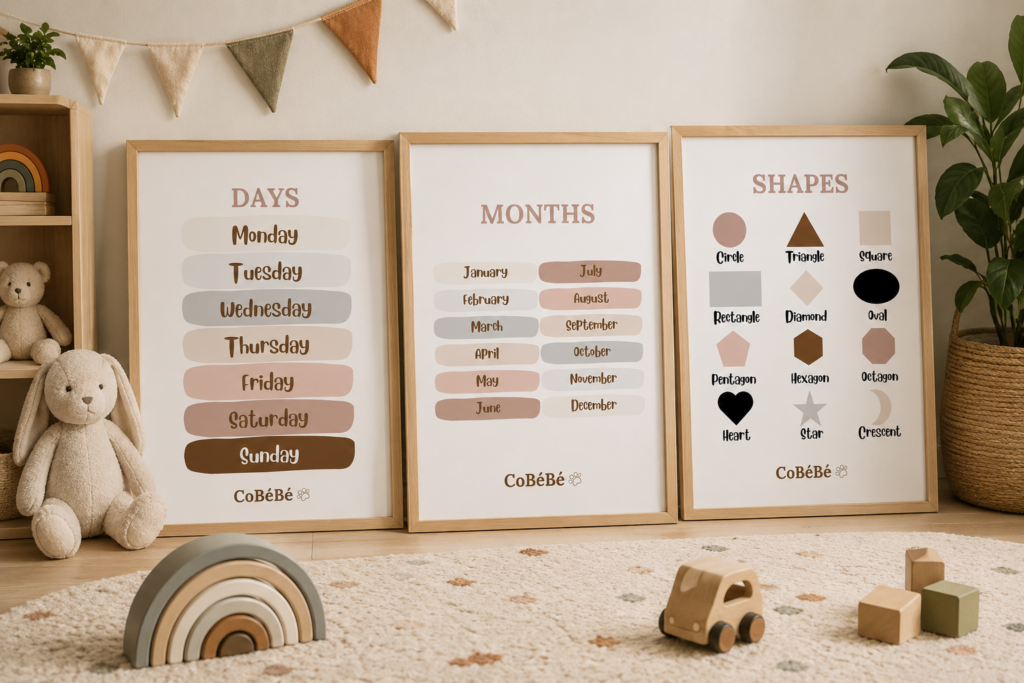
3. Days, months, weather, and seasons
These are great because they help children start noticing patterns in everyday life.
You’re not trying to make your toddler sit down and memorise the months. It’s more that these posters give you something simple to point to and talk about.
“It’s raining today.”
“Can you find the cloud?”
“What season are we in now?”
“Look, the leaves are changing.”
That kind of everyday language builds understanding naturally. NHS Start for Life also encourages simple, playful everyday activities that build coordination, communication, and learning through ordinary interaction rather than formal lessons. This NHS toddler activities page is worth a read if you want a good reminder of how much learning sits inside normal play.
4. Feelings posters
I really like these for playrooms because they give you another language tool, not just an academic one.
A simple feelings poster can help toddlers:
- point to how they feel
- hear new emotional words
- connect expressions to language
- start recognising emotions in themselves and others
It doesn’t need to be complicated. Just clear, friendly, and easy to come back to.
5. Interest-based posters
This is where I think a playroom gets a bit more personal.
If your child is really into dinosaurs, animals, vehicles, space, fruit, farm life — whatever it is — I think one or two posters around their interests make loads of sense.
Not because the wall needs “filling”, but because children are far more likely to engage with visuals that connect to what they already love.
That’s why I wouldn’t overthink whether every single poster is deeply educational. If your child keeps coming back to a dinosaur poster and asking questions, that’s useful. If a planet poster sparks pretend play, that’s useful too.
What I wouldn’t put on a toddler playroom wall
This is probably just as important.
If you’re trying to decide what to put on a toddler playroom wall, I’d avoid things that are:
Too wordy
Toddlers won’t engage with lots of text. If it looks like something meant for an adult to read, it’s probably not helping the room much.
Too visually busy
Lots of tiny elements, loud colours, or crowded layouts can make a room feel more chaotic than calm.
Too high up
If your child can’t really see it, it’s not doing much for them.
Too random
A mix of unrelated prints can make the room feel less thoughtful. It’s usually better to choose a small number of categories and build from there.
Purely “Pinterest nice”
I know that sounds harsh, but some playroom decor looks beautiful in photos and does nothing in real life. If you’re spending money or time on it, I’d want it to either support play, support learning, or genuinely make the room feel calmer.
A simple way to plan your playroom wall
If you feel stuck, this is the easiest way I’d approach it.
Choose one wall and split it into 3 jobs:
1. Learning basics
This could be:
- alphabet
- numbers
- shapes
- colours
2. Everyday understanding
This could be:
- days
- months
- weather
- seasons
- feelings
3. Child interest
This could be:
- dinosaurs
- animals
- space
- fruit
- transport
That way, the room feels useful without feeling like a classroom.
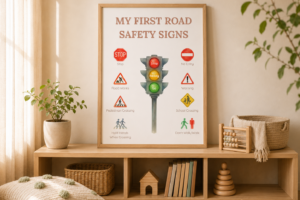
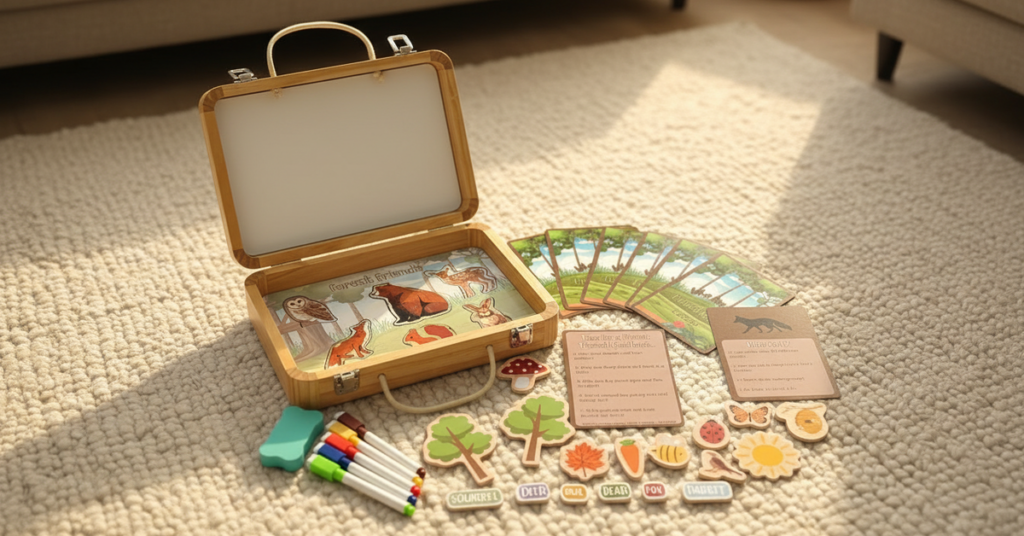
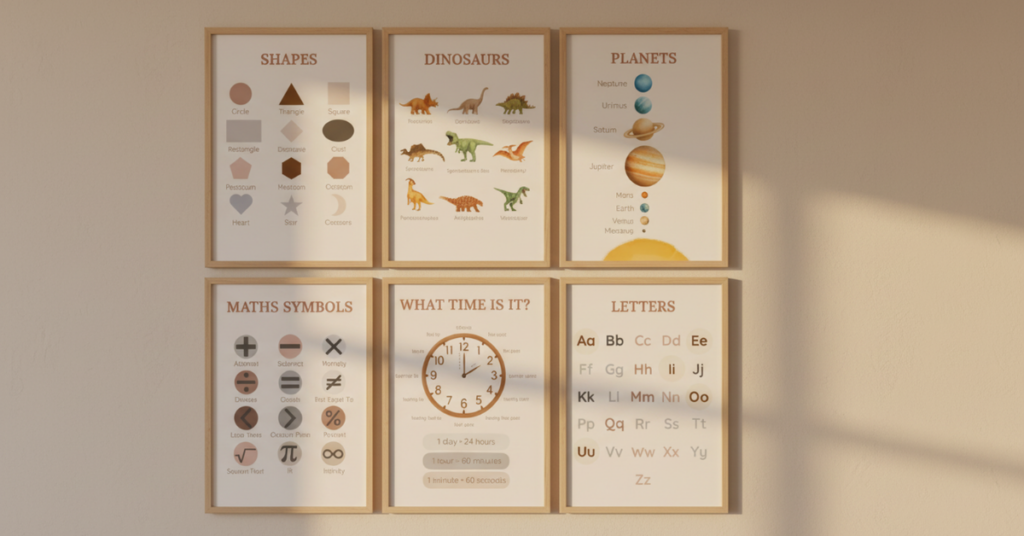
And if you’re not ready to buy anything yet, you can always start with a few simple printables first. I’ve got a growing collection on my free printables page. If you’re looking for something a bit more complete, our full calm learning poster set is now available on Etsy here.
How many posters is too many?
This depends a bit on the size of the room, but for a toddler playroom I’d err on the side of less.
A couple of grouped posters can look lovely.
A full wall of educational prints can start to feel a bit much.
If you’re not sure, start smaller than you think.
You can always add more later.
It’s much easier to build a calm learning space by adding thoughtfully than by decorating first and realising it feels overstimulating afterwards.
Should playroom wall art be educational?
Not all of it.
I think this is where parents can put a bit too much pressure on themselves. Everything doesn’t need to teach something all the time.
A playroom wall can have:
- a beautiful print
- a calm quote
- a few useful learning posters
- something linked to your child’s favourite interest
That balance is usually enough.
If everything is “educational”, the room can start to feel more like a lesson than a place to play.
The better goal, I think, is to make the room feel:
- calm
- clear
- child-friendly
- quietly supportive of learning
That’s different from trying to turn every wall into a teaching tool.
The best playroom walls support conversation
This is probably my favourite test for whether something belongs on the wall.
Ask yourself:
Will this give us something to point to, talk about, or come back to?
If yes, it’s probably a good fit.
That’s why posters work well when they:
- connect to things children already notice
- use simple visuals
- support everyday words and questions
- sit at the right height
- feel part of the room, not just decoration added after the fact
That’s also why I think the best answer to what to put on a toddler playroom wall is not “whatever looks nice”.
It’s:
whatever helps the room feel calmer, more connected to play, and more useful in everyday life.
What I’d put on a toddler playroom wall if I was starting from scratch
If I was doing it from zero, I’d probably choose:
- 1 alphabet poster
- 1 numbers or shapes poster
- 1 feelings or weather poster
- 1 interest-based poster (dinosaurs, animals, space, etc.)
That’s enough to make the room feel intentional without overdoing it.
Then I’d stop there for a bit and see what actually gets noticed.
Because sometimes the best clue is just watching your child. Which poster do they point to? Which one do they ignore? Which one becomes part of play?
That tells you far more than whatever’s trending in playroom decor this month.
FAQ
What should I put on a toddler playroom wall?
The best things to put on a toddler playroom wall are simple, useful visuals that support everyday learning through play. Good options include alphabet posters, number posters, colours, shapes, weather, feelings, and interest-based posters like animals or dinosaurs.
How do I make a toddler playroom educational without making it feel like a classroom?
Keep it simple. Choose a few calm, well-designed posters rather than filling every wall. Focus on visuals that connect to everyday life and play, not lots of formal learning charts or busy displays.
Are educational posters good for toddlers?
Yes, as long as they’re age-appropriate and not too cluttered. Educational posters can support vocabulary, recognition, and conversation, especially when they’re used naturally during play rather than as a formal teaching tool.
How many posters should a toddler playroom have?
Usually fewer than you think. A small group of 3–4 useful posters is often enough for one playroom wall. Too many can make the room feel visually busy.
What colours work best in a toddler playroom?
Softer, calmer colours often work well because they help the room feel less overstimulating. Neutral or muted tones can still be engaging, especially when the posters themselves are clear and easy to understand.
Should toddler playroom wall art be decorative or educational?
A mix of both works best. Some wall art can simply make the room feel warm and lovely, while a few well-chosen educational posters can support learning through play without taking over the whole space.
Further Reading
Here’s What Else We Make…