What you’ll learn in this article
- Why picky eaters aren’t something to “fix” overnight — and what actually helps
- A simple, low-pressure way to encourage children to try new foods
- How we turned stressful mealtimes into something calmer using a “Brave Bite” approach
When mealtimes started feeling like a battle
I don’t think we ever planned to have a picky eater.
It just sort of… happened.
One week they were happily eating a mix of foods, and the next it felt like every meal came with hesitation, negotiations, or flat-out refusal. Foods they used to eat suddenly became “yucky.” New foods didn’t stand a chance.
And if I’m honest, it started to feel frustrating.
You put effort into making something balanced and healthy, and it ends up barely touched. You start wondering if you should push more, insist more, or just give in and stick to the same safe foods.
From what I’ve seen and spoken to other parents about, picky eaters are incredibly common. It’s not just “your child” — it’s a stage a lot of children go through.
But knowing that doesn’t always make it easier in the moment.
Why picky eaters aren’t always about the food
One thing I’ve started to realise is that picky eating isn’t always about taste.
Sometimes it’s:
- unfamiliar textures
- not recognising the food
- feeling unsure or out of control
- or just not being ready yet
When you look at it that way, it starts to make more sense why simply saying “just try it” doesn’t always work.
For a child, trying a new food can feel like a big step.
And pushing too hard can actually make picky eaters more resistant over time.
There’s a helpful concept called repeated exposure — the idea that children often need to see and experience a food many times before they feel comfortable trying it.
The NHS touches on this too, noting that it can take multiple exposures before a child accepts a new food:
https://www.nhs.uk/start-for-life/baby/weaning/what-to-feed-your-baby/fussy-eaters/
That changed things for me a bit.
Instead of thinking “they won’t eat this,” I started thinking “they’re not ready yet.”
A shift that made things feel calmer at home
The biggest change wasn’t what we served.
It was how we approached it.
Instead of focusing on:
- “you need to eat this” we shifted to:
- “let’s just explore this”
Less pressure.
More curiosity.
And that’s where the idea for the Brave Bite Challenge came from.
Not as some big system.
Just as a way to make trying new foods feel:
- smaller
- safer
- and even a bit fun
What the “Brave Bite Challenge” actually is
At its core, the Brave Bite Challenge is simple.
It’s not about finishing meals or forcing foods.
It’s about:
one small interaction with a new food at a time
That could be:
- touching it
- licking it
- taking a tiny bite
- or even just having it on the plate
Each small step counts.
We started tracking these as “brave bites” — not because they were big achievements, but because they felt like big steps for a child.
And that small shift made a noticeable difference.
Why this approach works better for picky eaters
For picky eaters, pressure can turn food into something stressful.
But when you remove the pressure:
- curiosity comes back
- control feels shared
- and trying becomes less scary
Instead of:
“You have to eat this”
it becomes:
“Want to try a brave bite?”
That alone changes the tone.
It turns it into something:
- lighter
- optional
- and achievable
And most importantly — it respects where your child is at.
What happened when we tried it at home
I won’t pretend it fixed everything overnight.
It didn’t.
But what I noticed was:
- less resistance
- more willingness to interact with food
- small wins that built over time
Sometimes the “win” was literally just:
touching a piece of broccoli
But a few days later…
it turned into a nibble
And that’s the part I didn’t expect — how those tiny steps actually stack.
For picky eaters, progress doesn’t look dramatic.
It looks like:
- going from “no” → “maybe”
- from “maybe” → “tiny try”
Turning it into something kids actually enjoy
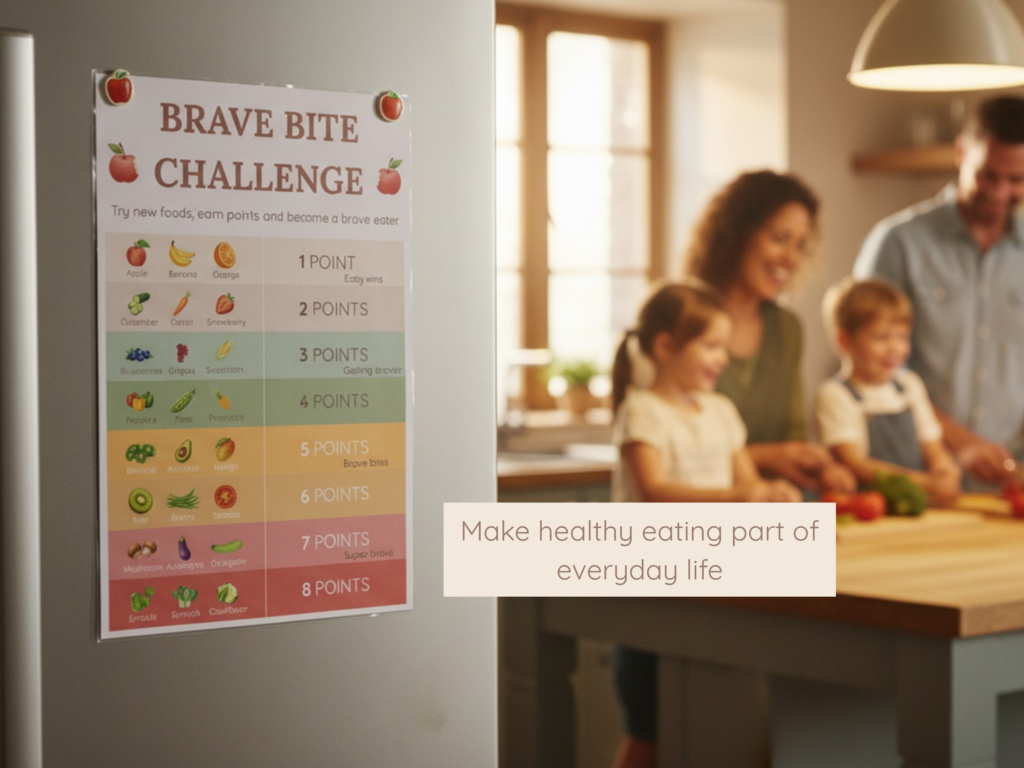
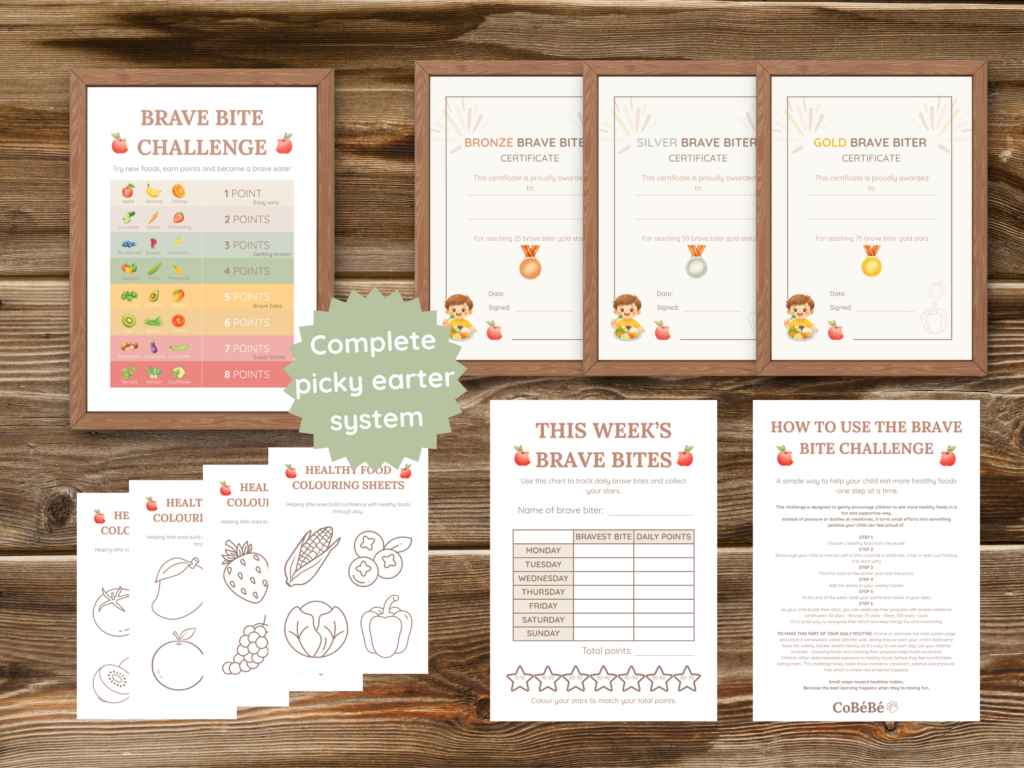
To make it feel more engaging, we added a simple system:
- a chart
- points
- little rewards
- certificates for milestones
Nothing over the top.
Just enough to:
- make progress visible
- celebrate effort (not just eating)
Because that’s the key shift:
rewarding trying, not finishing
That alone removes so much pressure.
Making healthy foods feel familiar before they’re eaten
Another thing that helped (especially with picky eaters) was taking food away from mealtime.
Not literally — but introducing it through play first.
Things like:
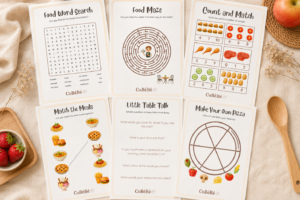
- colouring sheets with fruits and vegetables
- naming foods casually during the day
- seeing them in books or activities
It sounds small, but it builds familiarity.
And familiar things feel safer.
So when that same food appears on a plate later, it’s not completely new anymore.
The role of patience (and why it’s harder than it sounds)
This is probably the hardest part.
Because as parents, we want to:
- help them eat well
- make sure they’re getting nutrients
- feel like we’re doing a “good job”
But picky eaters don’t follow a straight line.
There are days where:
- they try something new
- then refuse it the next day
And that’s normal.
The goal isn’t perfection.
It’s:
creating a consistent, calm environment around food
A simple way to start at home
If you’re dealing with picky eaters, you don’t need to overhaul everything.
You can start really simply:
- Pick one new food
- Introduce it with zero pressure
- Offer a “brave bite” option
- Celebrate any interaction
- Repeat over time
That’s it.
No big system required.
Where the Brave Bite Challenge fits in
The Brave Bite Challenge just packages this idea into something easy to follow.
It gives you:
- structure without pressure
- consistency without overthinking
- and a way to track progress that kids can actually see
It’s not about forcing healthy eating.
It’s about:
helping picky eaters feel safe enough to try
FAQ: Picky Eaters & Trying New Foods
Why is my child such a picky eater?
Picky eating is very common, especially in toddlers and young children. It’s often linked to developmental stages, a need for control, or sensitivity to new textures and tastes — not just stubbornness.
How do I get my picky eater to try new foods?
Instead of pushing full portions, focus on small, low-pressure interactions. Let them touch, smell, or take a tiny bite. Repeated exposure over time is more effective than forcing it in one go.
Should I make separate meals for picky eaters?
It can be helpful to include at least one “safe” food alongside new options, rather than making completely separate meals. This keeps exposure consistent without causing stress.
How long does it take for picky eaters to accept new foods?
It can take multiple exposures — sometimes 10–15 or more — before a child feels comfortable trying a new food. Progress is usually gradual rather than immediate.
What if my child refuses everything?
Focus on reducing pressure first. Create a calm environment around food and shift the goal from eating to interacting. Even small steps like touching or tasting count as progress.
Is the Brave Bite Challenge suitable for all ages?
It works best for toddlers and young children, but the idea can be adapted for older kids by adjusting how progress and rewards are framed.
If you’re in the middle of this phase with picky eaters, you’re definitely not the only one. We’re still figuring it out ourselves, one small step at a time. That’s exactly why we put the Brave Bite Challenge together — just to make things feel a bit easier, calmer, and more manageable at home. If it sounds like something that could help in your house too, you can find it below. Nothing complicated — just a simple way to support those small, everyday wins that slowly build into something bigger.
Here’s What Else We Make…