What you’ll learn in this article
- What Montessori really is (and what it isn’t), explained in simple, parent-friendly terms
- The core Montessori principles and how they support independence, focus, and learning through play
- How to bring Montessori into everyday family life — without special training or expensive materials
Why So Many Parents Are Asking “What Is Montessori?”
A few weeks ago, I was chatting with another parent at the school gates while we waited for the doors to open. Somewhere between coats, snack bags, and tired smiles, the conversation drifted to schools.
“I keep hearing about Montessori,” she said. “But I don’t actually know what it is. Is it a type of school? A parenting style? A toy thing?”
These are exactly the same questions I had when I first heard of Montessori.
Montessori is one of those words that seems to pop up everywhere online. On nursery signs. On wooden toys. In Instagram captions. And yet, when you scratch the surface, many parents aren’t quite sure what it means — or whether it’s even relevant to everyday family life.
So this post is my way of getting some of the answers out there for parents who are like me. I’ll look into the history, the research, and the real-world practice behind Montessori. What we see isn’t intimidating or elitist. It is thoughtful, respectful, and quietly powerful.
Here’s what Montessori really is — and why so many families are drawn to it.
The Origins of Montessori: A Philosophy Born From Observation
The Montessori approach began in the early 1900s with Maria Montessori, one of Italy’s first female physicians.
While working with children in clinical and educational settings, Montessori noticed something radical for the time: children learned best when they were trusted, respected, and given meaningful work.
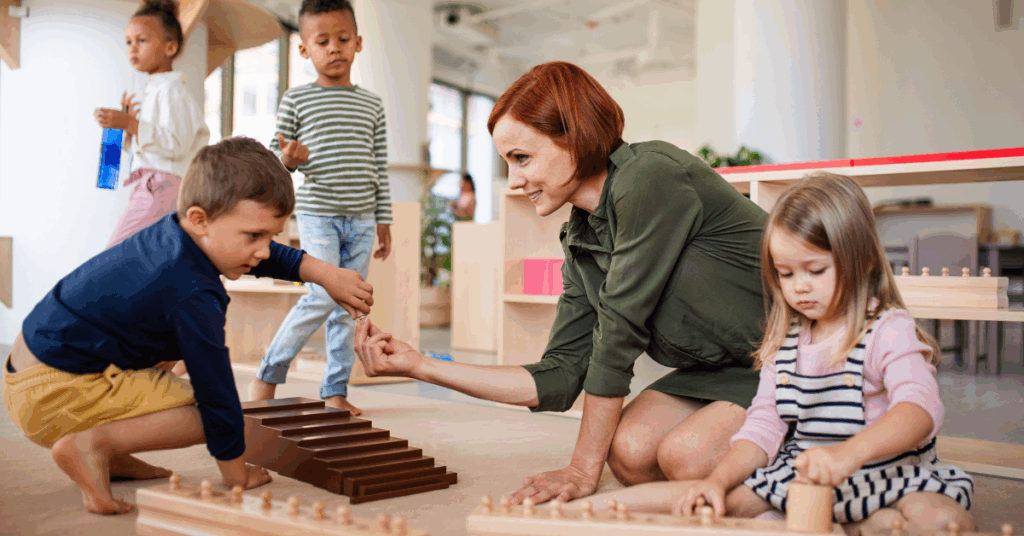
In 1907, she opened the first Casa dei Bambini (“Children’s House”) in Rome. Rather than desks, drills, and lectures, the classroom was filled with child-sized furniture, hands-on materials, and long periods of uninterrupted work. Children were free to choose activities, repeat them, and learn at their own pace.
What happened surprised many observers: children became calmer, more focused, and deeply engaged.
Montessori’s conclusions were rooted in careful scientific observation — not trends or theory. Her work went on to influence education worldwide and is still backed by modern developmental research today.
Source: https://en.wikipedia.org/wiki/Montessori_education
The Core Principles of Montessori (In Plain English)
At its heart, Montessori is about how children grow and learn, not about labels or aesthetics. These are the principles that shape it:
1. Child-Led Learning
Children are encouraged to follow their interests and work at their own pace. Instead of being constantly directed, they choose from purposeful activities designed to match their developmental stage.
Source: https://hfmontessorimckinney.com/core-principles-of-montessori/
2. The Prepared Environment
The environment is calm, orderly, and designed for independence. Materials are accessible, beautiful, and intentional — helping children focus without overwhelm.
Source: https://www.brightwheel.com/blog/montessori-method
3. The Adult as a Guide
In Montessori, adults observe more and interrupt less. Their role is to support, model, and gently guide — not control the learning process.
4. Respect for the Child
Children are treated with dignity and trust. Their efforts, emotions, and pace are respected, which builds confidence and intrinsic motivation.
5. Hands-On, Real-Life Learning
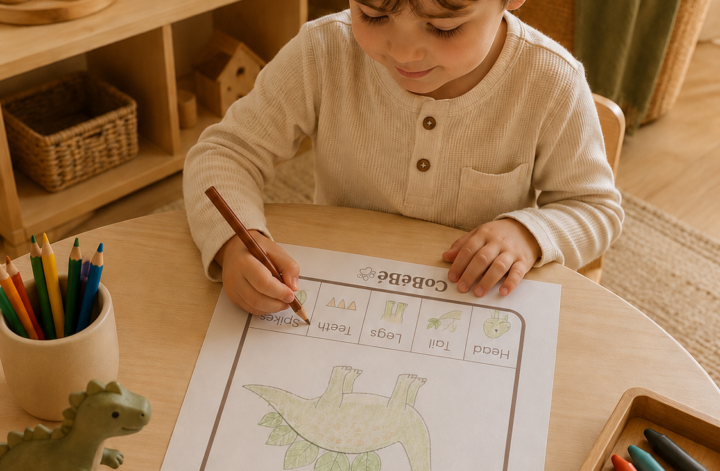
Children learn through doing. Activities often mirror real life — pouring, cleaning, cooking, sorting — building both practical skills and cognitive development.
Source: https://cdbmontessori.com/five-principles-of-the-montessori-method/
What the Research Says About Montessori
Montessori isn’t just a philosophy — it’s also been studied extensively.
Independence & Executive Function
A landmark study published in Science found that children in Montessori programs showed stronger executive function skills, including self-regulation, adaptability, and problem-solving.
Source: https://www.science.org/doi/10.1126/science.1132362
Focus & Concentration
Montessori classrooms allow for long, uninterrupted periods of work. This supports sustained attention — a skill linked to later academic and emotional success.
Source: https://developingchild.harvard.edu/science/key-concepts/executive-function/
Social & Emotional Development
Mixed-age environments encourage empathy, cooperation, and peer learning. Children learn to help others and ask for help naturally, rather than competing for attention.
Real-World Confidence
Practical life activities help children feel capable and useful — which strengthens self-esteem and a sense of belonging.
Source: https://www.applemontessorischools.com/how-does-montessori-help-child-development/
Common Montessori Questions (And The Real Answers)
Does Montessori have rules?
Montessori has structure — just not rigid control. Freedom exists within clear boundaries.
Is Montessori only for preschoolers?
Montessori spans from infancy through adolescence and can also be adapted at home.
Is Montessori only for wealthy families?
Many public Montessori schools exist, and Montessori principles can be applied at home using everyday materials.
Do children just do whatever they want in Montessori?
Children choose from purposeful, developmentally appropriate activities — not chaos.
Montessori Today: At School and at Home
Today, Montessori is practiced in over 22,000 schools worldwide, including a growing number of public and charter programs.
Source: https://en.wikipedia.org/wiki/Montessori_education
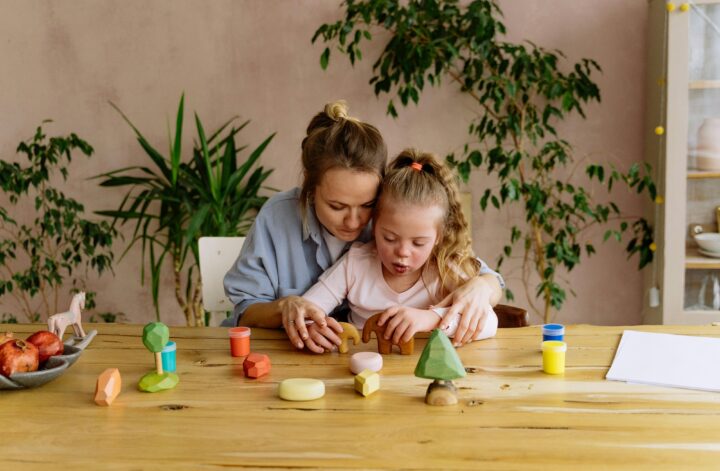
At home, many families adopt Montessori principles without formal training — by simplifying toy shelves, encouraging independence, and involving children in real life.
Montessori at home doesn’t require perfection. It requires intention.
How to Bring Montessori Into Everyday Family Life
You don’t need a Montessori classroom to start. Small shifts matter:
- Create child-reachable spaces (hooks, shelves, cups)
- Offer fewer, open-ended toys at a time
- Involve your child in daily tasks like cooking and tidying
- Follow their interests instead of rushing milestones
- Slow down and allow repetition
These choices support independence, calm, and learning through play — right where you are.
A Gentle Next Step
If Montessori resonates but feels overwhelming, I’ve created a free Calm Play Guide to help you begin gently.
It’s designed for real families — with simple activities, calm routines, and play ideas that support focus, independence, and connection without pressure.
👉 Download the Calm Play Guide here
Final Thoughts
Montessori isn’t about doing more.
It’s about trusting children more.
It reminds us that learning doesn’t need to be loud, rushed, or complicated — and that some of the most powerful growth happens quietly, through everyday moments.
If this is your first step into Montessori, you’re already on the path. And that’s enough.