Montessori Toys, a Brief Introduction
Welcome. Let me begin by making an obvious statement – children love toys. But not all toys are created equal. Some are made to last, while others are lucky to last a few weeks. Some are wooden, some are plastic. Some are educational and some are entertainment. But should we consider these factors when choosing a toy for our little ones?
When my eldest was a toddler, our living room looked like a toy shop had exploded—plastic gadgets that flashed, sang, and promised to “teach” filled every corner. I remember sitting among the noise and clutter, watching my son press a button on one toy that lit up and clapped for him. He pushed it once, twice, maybe three times, and then tossed it aside. He wasn’t truly engaged, just reacting.
By this time I had already been exposed to the ideas of Montessori without really implementing any of it’s principles in my own home for the benefit of my own children. This was about to change. I suddenly realised the importance of toys being more than entertainment—they should be tools for independence, focus, and real learning. Could I improve a toy’s value in the eyes of my children? It was time for a shift in how I chose my children’s toys.
That shift changed the way I saw every toy on our shelves.
What Makes a Toy “Montessori-Friendly”?
Montessori-friendly toys are simple, intentional, and designed to support your child’s natural development. They aren’t about flashing lights or noise—they’re about meaningful engagement.
Here’s what I learned to look for when I started swapping out the clutter:
- Simplicity – Toys that focus on one skill at a time help toddlers concentrate without becoming overstimulated.
- Natural Materials – Wood, cotton, and metal offer rich sensory experiences and last longer than plastic.
- Open-Ended or Purposeful – Some toys (like blocks) invite imagination; others (like a shape sorter) have a clear function. Both encourage active learning.
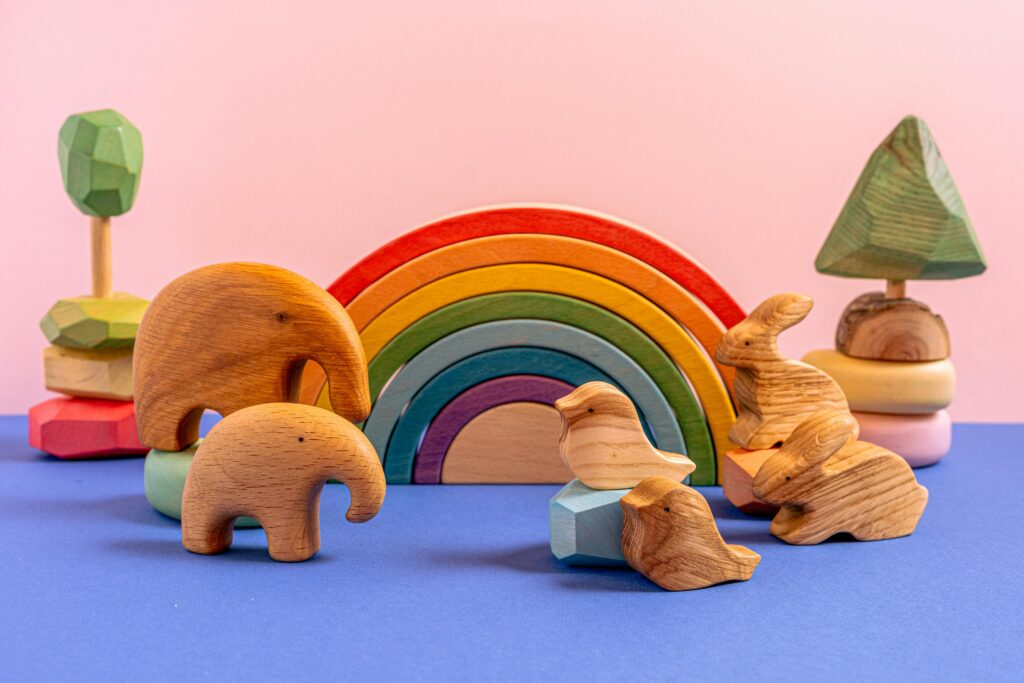
- Reality-Based – Montessori emphasises real-world over fantasy. So instead of cartoon animals, think realistic figurines or tools they see you use.
As Dr. Maria Montessori said, toys should be “based on reality, not fantasy,” especially in the early years.
Toddler Development Needs & Matching Toys
When I swapped out the noisy gadgets for simpler toys, I noticed my son spending longer stretches exploring. That’s because the right toys meet children where they are developmentally.
- Motor Skills – Stacking rings, threading beads, and push toys refine hand-eye coordination.
- Language Development – Picture books with real images, matching games, or animal figurines invite naming and storytelling.
- Problem-Solving – Simple puzzles and shape sorters nurture perseverance.
- Independence – Toddler-sized brooms or pouring jugs empower them to take part in daily life.
I realised toys weren’t just “keeping him busy”—they were shaping his confidence and skills.
Common Toy-Buying Mistakes
I’ve made most of these myself:
- Too Flashy or Loud – They entertained for a minute but didn’t hold attention.
- Overly Prescriptive – Toys with only one “right” way to play killed creativity.
- “Montessori-Inspired” Labels – Marketing buzzwords don’t always mean alignment with the philosophy.
- Plastic Overload – Lots of toys, but little sensory richness.
- Too Many Toys – A cluttered space made it harder for my toddler to choose and focus.
Once I started decluttering and choosing fewer, better toys, playtime felt calmer for all of us.
The Research-Backed Benefits
It wasn’t just me noticing the difference—research shows the same.
Children who engage with Montessori-aligned materials show greater independence, concentration, and coordination (Playroom Collective, 2023). In one landmark study, children in Montessori settings performed better on problem-solving and executive function than their peers in traditional classrooms (Lillard & Else-Quest, 2006).
What struck me most was the joy my son found in repeating tasks at his own pace. Montessori toys aren’t about quick wins—they nurture persistence and pride, which builds confidence over time (Wood and Hearts, 2023).
How to Evaluate Toys
When shopping, I started asking myself simple questions:
- Is it made from natural, durable materials?
- Does it support a real developmental skill?
- Can my child use it independently?
- Does it connect to real life?
- Will it grow with him?
- Does it encourage concentration, not distraction?
If the answer was “yes” to most of these, it was usually a good choice.
Classic Montessori Toys vs. “Montessori-Inspired”
Here are a few examples that helped me learn the difference:
Classic Montessori:
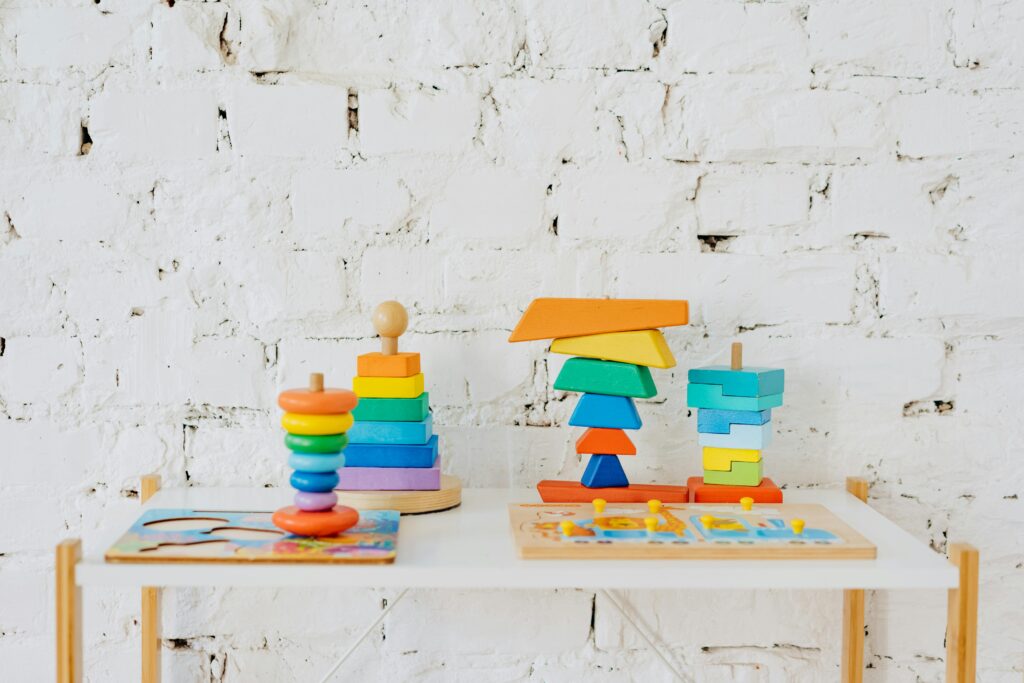
- Wooden stacking rings
- Object permanence box
- Dressing frames
- Wooden puzzles with knobs
Montessori-Inspired (but not always aligned):
- Plastic shape sorters with lights and sounds
- Busy boards overloaded with activities
- Toys labelled “Montessori” but made of cartoonish plastic
When I started sticking to simplicity, I noticed my son staying with activities longer—and enjoying them more deeply.
Practical Takeaways for Parents
You don’t need to buy a whole new playroom. Many household items can be Montessori-friendly:
- A small pitcher and cup for pouring water
- A toddler-sized broom for sweeping
- A basket of pinecones or stones for sensory play
And here’s the best part: fewer toys often lead to deeper play. We now keep just a handful of items on a shelf and rotate them. Playtime feels calmer, and my children are more engaged.
A Gentle Conclusion
That moment in the noisy, cluttered living room taught me something I’ll never forget: toys can either entertain or truly empower. When I began choosing toys with intention, I wasn’t just buying objects—I was giving my children tools for growth, focus, and joy.
Choosing Montessori-friendly toys isn’t about being perfect. It’s about slowing down, observing your child, and creating an environment where curiosity and independence can flourish.
And when I see my toddler concentrating on pouring water carefully from one cup to another, I know we’ve found something better than entertainment—we’ve found meaningful play.
Montessori Toy FAQs
Q: Do I need to buy official Montessori toys?
A: No. Many household items can be just as valuable if they support independence and real-life skills.
Q: Aren’t Montessori toys expensive?
A: Some can be, but quality often lasts longer. You can also choose budget-friendly natural items or rotate fewer toys.
Q: How many toys should I keep out?
A: Around 6–8 at a time is often enough. Too many choices can overwhelm toddlers.
Q: Are all wooden toys Montessori?
A: Not necessarily. Look for simplicity, purpose, and connection to reality—not just material.
Further Reading & Sources
- Benefits of Montessori Toys – Wood and Hearts
- How to Choose the Right Montessori Toys by Age Group – Mansio Montessori
- The Complete Guide to Montessori Toys – Playroom Collective
- Evaluating Montessori Toys – Montessori Generation
- Best Montessori Toys by Age – Country Montessori School