Learning Through Play- A Brief Intro…
Welcome. Let me tell you about an afternoon at home that made me pause. My five-year-old and my two-year-old had taken over the living room with what looked like absolute chaos—cushions scattered everywhere, blankets draped across chairs, and a pile of toy animals arranged neatly inside what they proudly declared was their “fort.” My first instinct was to step in, straighten things up, and guide them toward a calmer activity. But I stopped.
Instead, I stood back and watched. My eldest was carefully assigning roles to each stuffed animal, while my youngest giggled as she carried blocks back and forth, “helping” build the walls. What looked messy at first was actually something extraordinary: cooperation, problem-solving, imagination, and focus.
That moment reminded me that play is not a distraction from learning—it is learning. And as I’ve since discovered, the science fully supports this.
Learning Through Play- Why Play Matters
Play has long been described as the “work of childhood.” It’s how children make sense of the world around them, test ideas, and explore their abilities.
When my children are building forts, pretending to cook in their play kitchen, or running circles in the garden, they aren’t just filling time—they’re experimenting, socialising, and developing essential life skills.
Research confirms this. Play supports:
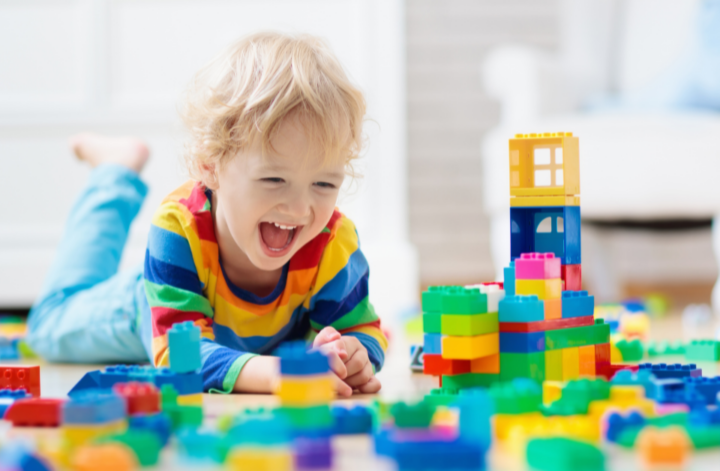
- Cause and effect — stacking blocks and watching them tumble teaches problem-solving.
- Social roles and empathy — pretending to be parents, doctors, or teachers fosters perspective-taking.
- Motor skills — drawing, climbing, and threading beads refine physical coordination.
- Language and communication — storytelling with toys builds vocabulary and narrative skills.
UNICEF puts it beautifully: play is “not just childhood fun—it is essential for learning, health, and resilience” (UNICEF, 2021).
The Science of Play
Watching my kids play side by side highlights how much learning is happening beneath the surface. Science backs this up in four key areas:
- Cognitive Development
Imaginative and open-ended play builds executive function skills like memory, impulse control, and flexible thinking—foundations for academic success (Whitebread et al., 2017). - Social-Emotional Growth
My children’s fort-building wasn’t just about cushions—it was a lesson in negotiation, cooperation, and emotional connection. Play supports empathy and helps children process feelings (UNICEF Parenting, 2023). - Creativity and Innovation
Pretend play nurtures creativity and long-term adaptability. The fort wasn’t just a fort—it was a rocket ship, a shop, and later, a cave. Each transformation stretched their imagination (Ginsburg, 2007). - Physical Development
Outdoor play builds gross motor skills, while activities like threading beads or LEGO refine fine motor control (LEGO Foundation, 2017).
Educational Perspectives
The way my two children play reminds me of what great thinkers have always said:
- Maria Montessori saw play as purposeful, led by the child’s curiosity. She also believed in the importance of environment.
- Jean Piaget described play as a way children absorb and adapt knowledge.
- Lev Vygotsky believed play creates a “zone of proximal development,” where children learn just beyond their current abilities, often with a sibling, friend, or parent guiding them.
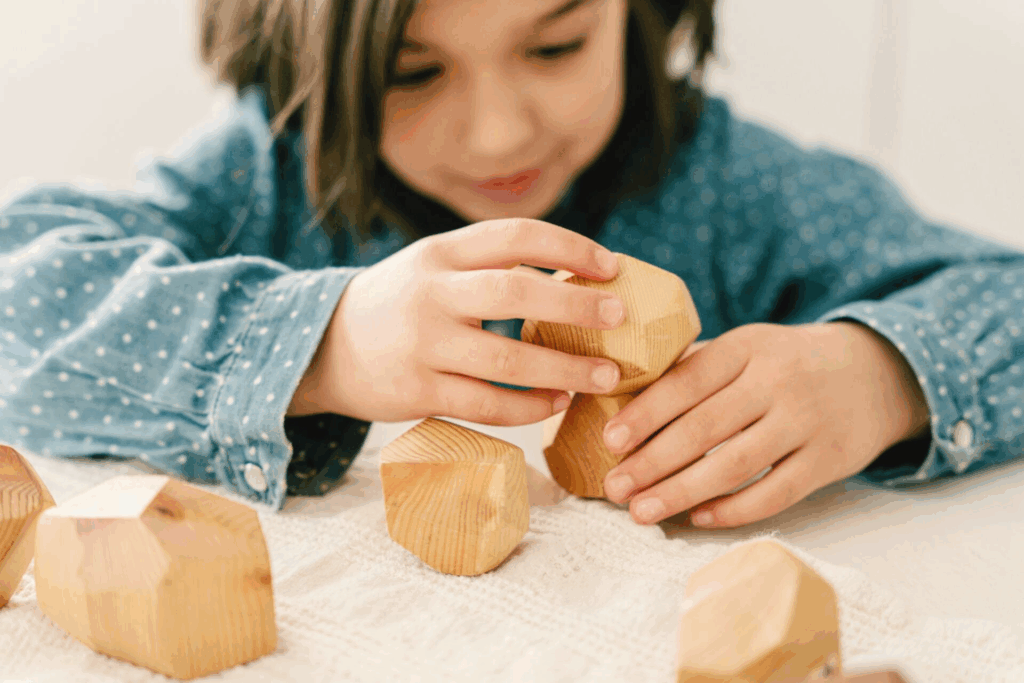
When I see my five-year-old helping my two-year-old balance blocks, I realise they are living proof of these theories.
Misconceptions About Play
Even though play is powerful, many of us (myself included) sometimes fall into common misconceptions:
- “Play is just fun.”
Neuroscience shows that learning through play strengthens neural connections in the prefrontal cortex, the part of the brain that governs self-regulation and decision-making (UNICEF, 2021). - “Academic learning is more important.”
In fact, research shows that focusing only on early academics without play can harm motivation and engagement (Miller & Almon, 2009). - “Play is only for little ones.”
Even older children need play for creativity, resilience, and mental health (Ginsburg, 2007).
Types of Play
Each type of play brings something different to children’s growth. In our house, I’ve seen them all:
- Free Play — When my two-year-old stacks blocks her own way, she’s building independence and self-regulation.
- Guided Play — When I set up a pretend shop with food labels, my five-year-old sneaks in literacy and maths practice without even realising.
- Pretend Play — When they act out being doctors or teachers, they’re learning empathy and problem-solving.
- Outdoor Play — When they’re racing around the garden barefoot, they’re not just burning energy—they’re strengthening bodies, reducing anxiety, and sleeping better.
Practical Tips for Parents
Learning through play doesn’t require expensive toys or elaborate setups. Some of our best play moments happen with cardboard boxes and imagination. Research offers these simple strategies (UNICEF Parenting, 2023):
- Follow their lead — Watch what sparks their interest and extend it.
- Rotate toys — Keep things fresh by offering fewer options at a time.
- Make space for unstructured play — Even 30 minutes daily can improve wellbeing.
- Play alongside them — Join in, model curiosity, and strengthen connection.
For me, stepping into their world—even briefly—always feels like time well spent.
Modern Challenges
As parents, we all face obstacles:
- Screen time can crowd out active play. The American Academy of Pediatrics recommends prioritising hands-on, interactive play over passive consumption.
- Overscheduling leaves little room for exploration. Play helps children decompress and recharge.
- Access is unequal—not every family has safe outdoor spaces or resources, which is why organisations like UNICEF advocate for play as a basic right (UNICEF, 2021).
Even in busy weeks, I remind myself that a messy living room fort is far more valuable than another rushed activity.
A Gentle Conclusion
That afternoon with the fort wasn’t just about blankets and stuffed animals—it was about growth, imagination, and connection. My children were showing me, in their own way, that play is how they learn about the world and about each other.
The science agrees: learning through play is not optional. It’s essential. And as parents, when we protect and value play, we’re not just allowing fun—we’re giving our children the foundation for resilience, creativity, and lifelong learning.
Play FAQs
Q: How much play do children really need?
A: UNICEF recommends at least 30 minutes of free play each day, but more is even better.
Q: Is play more important than structured learning?
A: They complement each other. Play fuels motivation and curiosity, which support formal learning later on.
Q: Do I need fancy toys to support play?
A: No. Everyday items like boxes, spoons, or cushions can become powerful play tools.
Q: What about older children—do they still need play?
A: Yes. Play continues to support creativity, mental health, and social growth well into adolescence.
Further Reading & Sources
- UNICEF Parenting: How Play Strengthens Your Child’s Mental Health
- TeachKloud: Understanding Play Theories
- LEGO Foundation: Role of Play in Children’s Development
- Play Is Essential for Learning – UNICEF
- Ginsburg, K. R. (2007). The Importance of Play in Promoting Healthy Child Development
- Weisberg, D. S., Hirsh-Pasek, K., Golinkoff, R. M., & Klahr, D. (2016). Guided Play: Principles and Practices