How two overwhelmed parents found a way back to calm play at home using the Calm Play Guide.
Hands up if you’ve ever handed your child a tablet just to get a few minutes of quiet? Im sure that’s most of us from time to time.
In fact that was us more often than I’d like to admit.
I’m a dad of two, and like most parents, I just wanted a bit of peace now and then. But at some point, that peace started to feel… uneasy. The screens that bought us quiet time also started to take over. First thing in the morning. The end of the day before bed. Playtime felt shorter, creativity seemed to fade, and our house started to feel louder — not in sound, but in energy.
I wasn’t against screens completely and I’m still not now. They have their place. I’d be lying if I said my children haven’t learned the odd thing or two from what they have watched on their tablets. But something about how they had slowly replaced real play didn’t sit right with me.
So I did what any curious (and maybe slightly overthinking) parent would do — I started looking for answers.
The Moment It Clicked
One evening, I watched my kids scroll past one video after another, not really laughing or engaging — just clicking from video to video in a kind of zombie state. Similar to how adults are accused of being on social media.
That’s when it hit me: they weren’t actually playing anymore. I had not long got home from work so this was supposed to be prime rough and tumble time with daddy. Maybe I was partly to blame for this, I thought to myself whilst slumped on the sofa.
As an engineer, I naturally like to find solutions and test things. But this wasn’t something I could fix with a quick tweak or gadget. It needed a mindset shift — for all of us.
That’s how my journey into what I now call The Calm Play Guide began.
Rediscovering Calm Play
We started small one weekend when we was both available, free from work commitments.
After researching and testing different ideas from places like the British Psychological Society and the Child Mind Institute, I began noticing a pattern — calm, connected play doesn’t just happen; it’s something we can invite in with small shifts.
Less “structured activities,” more inviting curiosity.
Instead of setting up complicated crafts, I’d just place a few open-ended toys or materials out and see what happened.
To my surprise, they didn’t need as much direction as I thought.
They just needed space — and calm.
Over time, I began noticing patterns.
When our environment was quieter, simpler, and less cluttered, play lasted longer. When I wasn’t rushing them or checking my phone, they stayed engaged.
It wasn’t about fancy toys or big plans. It was about creating the right space and rhythm for calm learning to happen naturally.
That’s where the idea for CoBéBé was born — combining my engineering background with my new passion for creating calmer, more meaningful play.
Why I Made the Calm Play Guide
As I tested different ideas, I started writing things down.
Simple shifts that made a difference — like toy rotation, slower mornings, or creating calm spaces instead of overstimulating ones.
Before I knew it, I had pages of notes which I was turning into instagram and blog posts, that actually helped our days feel lighter.
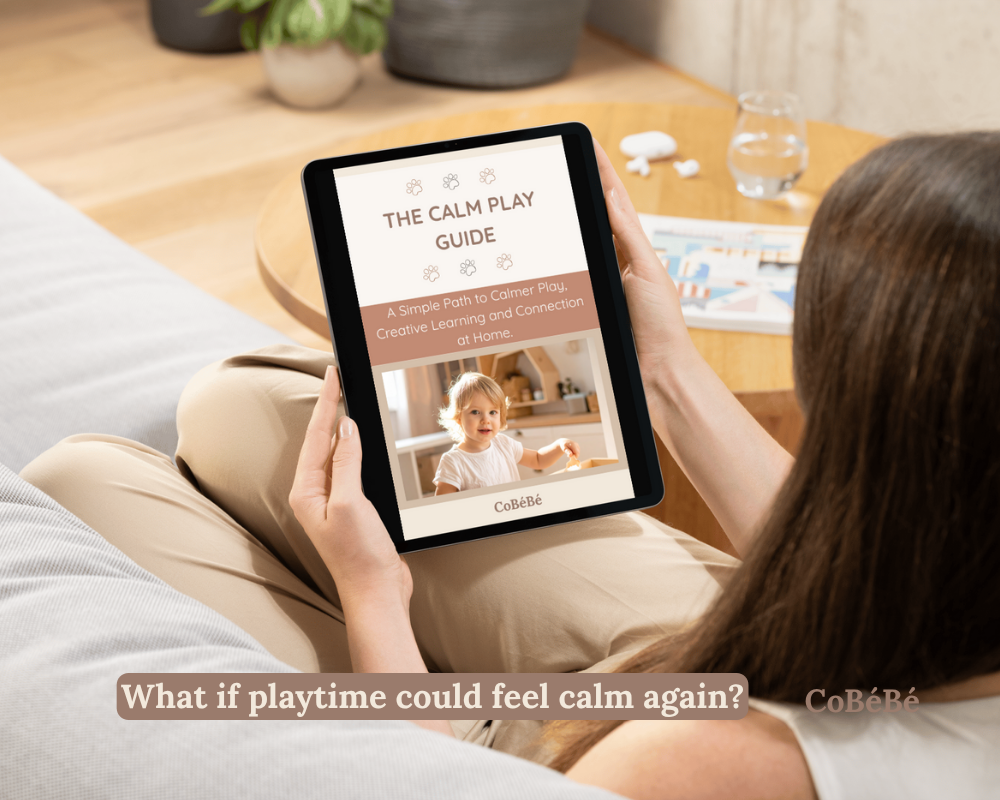
That turned into what’s now the Calm Play Guide — a simple, parent-to-parent roadmap with practical ideas that don’t require you to buy new things or follow strict routines.
It’s not a perfect system (because parenting never is), but it’s something that genuinely helped us bring calm back into our home.
And I figured, if it helped us, it might just help another parents too.
What’s Inside the Guide
The Calm Play Guide walks through five simple steps that helped us find a better balance:
- Simplify the Space – how less really does lead to more meaningful play.
- Invite Curiosity – easy ways to make play setups engaging without overwhelm.
- Follow Their Flow – understanding when to step in, and when to step back.
- Create & Connect – building small moments of learning together.
- Keep It Rhythmic – how a gentle daily rhythm can support calmer days.
Each step is short, real, and tested at home — not theory or parenting fluff.
There’s also a reflection page at the end for you to think about how these ideas fit into your life, not just mine.
What I Learned Along the Way
This whole process taught me that calm play isn’t about being picture-perfect or limiting screens entirely.
It’s about creating a space where kids can explore, imagine, and connect — without constant noise and stimulation.
It’s also about giving ourselves a break as parents.
Because calm play starts with us feeling calm.
I think so many of us are craving slower moments with our kids — ones that actually feel enjoyable instead of rushed. The Calm Play Guide is simply a small way to start that process.
Where We’re Heading Next
CoBéBé has grown out of that same mission — to make calm, creative learning accessible for everyday parents.
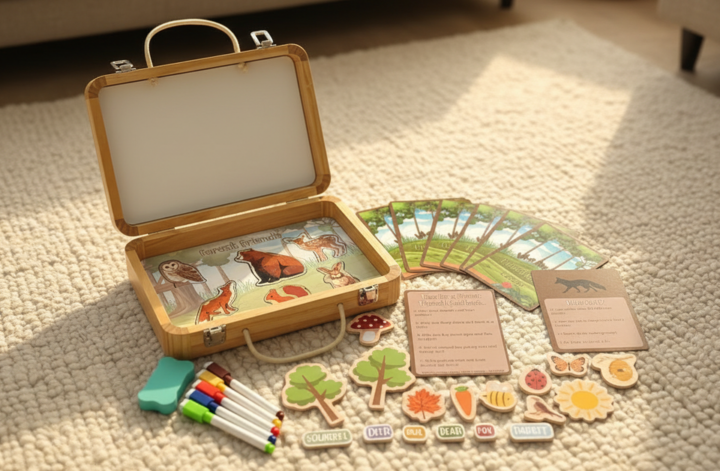
Our first toy, Forest Friends, was designed using those same principles: simplicity, curiosity, connection, and rhythm.
It’s a toy inspired by calm play — not noise or flashing lights.
Depending on when you’re reading this, it may already be live on Amazon.
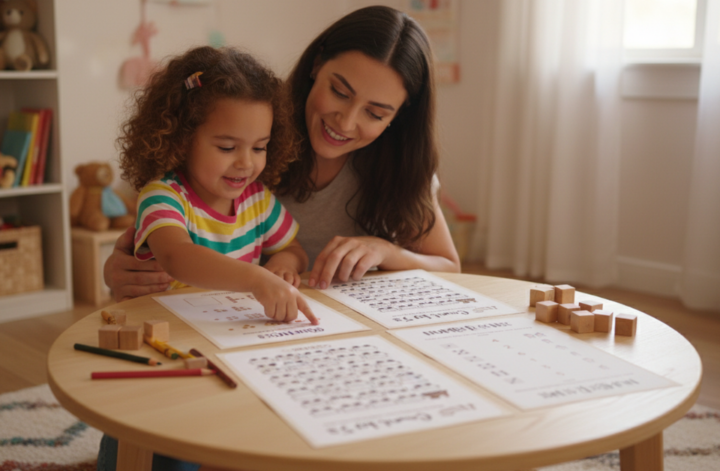
And alongside it, you’ll find free printables and wall art on our website — tools to help bring more calm learning into your home.
Why I’m Sharing This
If there’s one thing I’ve realised through this journey, it’s that so many of us are trying to do the same thing — raise happy, curious kids in a noisy world.
The Calm Play Guide isn’t about perfection. It’s just about helping you find your rhythm again.
So if playtime has started to feel chaotic, or if you’ve ever felt a pang of guilt for turning on a screen — this guide is for you.
It’s 15 pages of honest, real-life advice from one parent to another.
And it’s completely free.
Get Your Copy
You can download The Calm Play Guide here
It’s my way of saying — you’re not alone in this.
My hope is that calm play isn’t a wasted idea. It can be a quiet, powerful shift that can help us connect with our kids again through play.