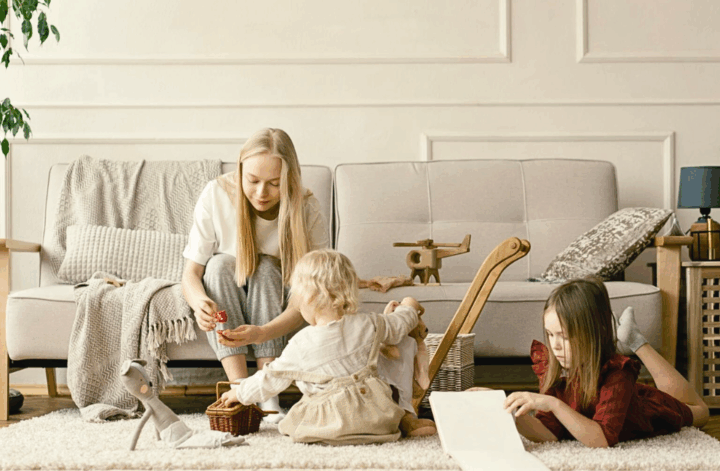
If you’ve ever watched your child quietly line up toys, stack blocks at their own pace, or sit absorbed in a simple activity, you’ve already seen calm play. It’s those gentle moments where play feels slower, quieter, and more connected — without rushing, overstimulation, or screens pulling the focus away.
Calm play isn’t about creating a perfect routine. It’s about giving your child a chance to explore the world at their own speed, in a way that feels safe and comforting. And the best part? It can happen anywhere — in a small living room, on the kitchen floor, or during those tiny pockets of the day when things settle.
What Exactly Is Calm Play?
Calm play is a style of play that helps children feel regulated, grounded, and focused.
It centres on:
- simple, open-ended materials
- slower rhythms
- less noise and fewer distractions
- child-led exploration, not adult-led instruction
Think:
puzzles, matching games, loose parts, nature objects, crayons, simple invitations to play — all used in an environment that feels warm and unhurried.
Calm play isn’t the absence of fun. It’s fun without overwhelm.
Why Calm Play Matters
Calm play supports your child in ways that benefit them long after the moment is over.
1. It helps with focus and attention
When children aren’t pulled between loud toys or frantic activities, they can stay with one idea for longer — building skills for early learning.
2. It supports emotional regulation
Calm, predictable play helps the nervous system settle. Children often behave more gently, concentrate better, and feel more secure.
3. It encourages independent play
A calmer setup invites your child to explore with confidence. Nothing is flashing or demanding attention — so they take the lead.
4. It strengthens connection
Calm play creates a peaceful backdrop for bonding. You don’t need to “entertain”; your presence is enough.
Examples of Calm Play at Home
Calm play doesn’t need fancy toys or a Pinterest-perfect space. Here are simple ideas:
- Lining up blocks or natural objects
- Matching lids to containers
- Quiet drawing on a whiteboard
- Sorting stones, leaves, or toy animals
- Simple puzzles with familiar themes
- Small-world setups that encourage gentle storytelling
These activities support creativity and learning without overstimulation.
Calm Play vs “Keeping Them Busy”
Parents often feel pressure to constantly entertain. Calm play removes that expectation.
Keeping them busy = fast, noisy, high-stimulation tasks
Calm play = slow, focused moments that build regulation, confidence, and imagination
One isn’t “better” than the other — they simply serve different needs. Calm play is the anchor.
How to Start Calm Play at Home
You don’t need a big routine shift. Try one or two of these:
1. Create a simple, predictable setup
Put out one or two activities at a time — not ten. Less choice helps children focus.
2. Reduce background noise
Turn off the TV or lower music volume. Quietness helps children hear their own ideas.
3. Sit nearby without directing
You can fold laundry, have a tea, or just be present. Your calm body language supports their calm play.
4. Rotate toys weekly
Newness keeps interest high without overwhelming them.
5. Use natural or open-ended materials
Leaves, sticks, wooden toys, cups, scarves — anything they can explore in many ways.
Where Calm Play Fits Into CoBéBé
Calm play is at the centre of everything we design.
Our upcoming Forest Friends activity box was created to support exactly these kinds of moments — gentle learning, open-ended exploration, and quiet curiosity. Each part of it (puzzle, cards, magnetic pieces, drawing board) is designed for slow, meaningful play that helps children settle and explore.
A Gentle Takeaway
Calm play isn’t a method or a strict philosophy — it’s simply a way of giving your child space to grow, feel safe, and find their own flow.
And the beauty is: you’re probably already doing it in small ways.
If you’d like more calm play ideas, explore the rest of our blog or download our free Calm Play Guide.