What You’ll Learn in This Article
- Why more parents are moving towards calm, screen-free play at home.
- How slower, simpler play can support focus, independence, and learning through play.
- Why we created Forest Friends as part of CoBéBé’s approach to calmer, more meaningful play.
A lot of parents are not looking for more toys anymore.
They are looking for calmer play.
Less background noise.
Less clutter.
Less screen time.
Less of that feeling where the house is full of toys, but nothing actually holds attention for longer than a few minutes.
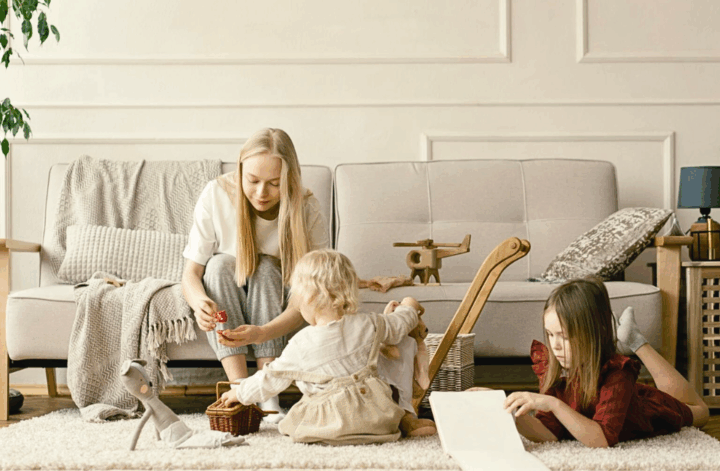
That is one of the reasons more families are starting to look at calm, screen-free play at home.
Not because they want to remove every screen.
Not because they want a perfect Montessori playroom.
Not because they think every toy has to be wooden, beige, and beautifully arranged on a shelf.
Most parents are just trying to make home feel a little less overstimulating.
The TV is often on in the background. Tablets are easy to reach for when everyone is tired. A lot of modern toys flash, sing, shout, light up, and do most of the work for the child. And after a while, it can start to feel like children need more and more entertainment just to stay engaged.
That was one of the big things behind Forest Friends.
We wanted to create something that felt slower. Something tactile. Something children could return to in different ways. Something that supported learning through play without making the whole room feel louder.
Because sometimes the answer is not more entertainment.
Sometimes the answer is better play.
The Problem Was Never “Not Enough Toys”
A strange thing happens in a lot of family homes.
There can be baskets full of toys, shelves full of activities, drawers full of colouring books, and still the child says:
“I’m bored.”
That does not always mean they need more.
Sometimes it means there is too much available at once.
Too many choices can make it harder for young children to settle into one thing. They pick something up, drop it, move on, ask for something else, then end up back at the screen because the screen is instant.
That is why calm, screen-free play at home often starts with simplifying.
Not stripping everything away.
Just reducing the noise a bit.
Fewer toys out at one time.
More open-ended activities.
Less visual clutter.
A calmer place to sit and focus.
This is also why toy rotation has become so popular with parents. It is not really about creating a perfect system. It is about helping children notice and use what they already have.
We have written more about this in our article on why the environment matters in Montessori education, because the space around a child really can affect how they play.
Children Often Play Better When Play Slows Down
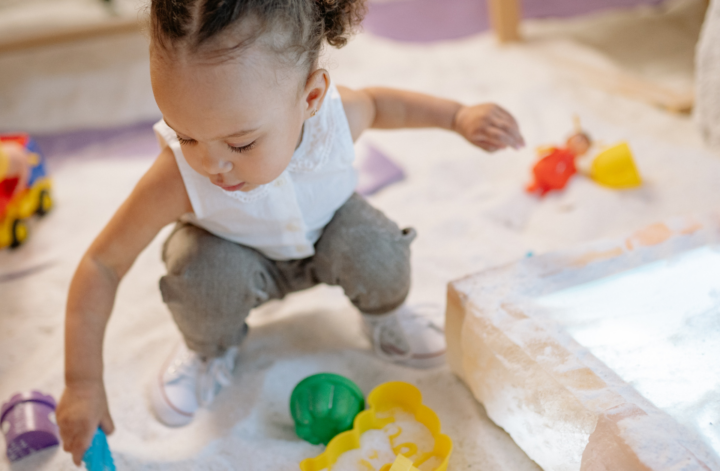
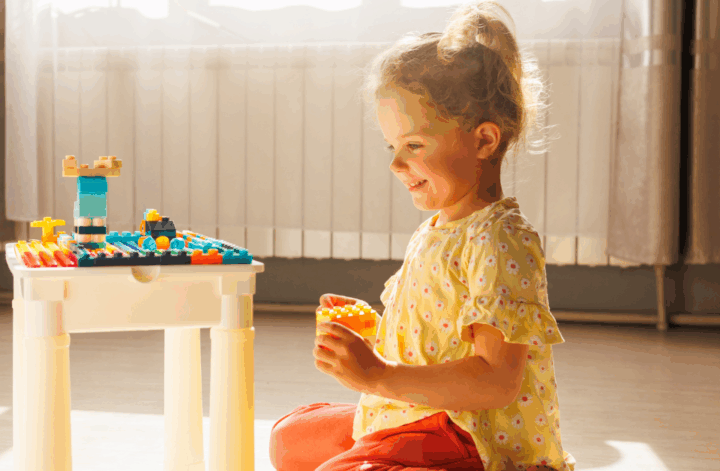
Some of the activities that hold children’s attention the longest are surprisingly simple.
Colouring sheets.
Matching games.
Puzzles.
Magnetic play.
Play dough.
Drawing.
Sorting.
Pretend play.
None of these need to be complicated.
The difference is that the child is active in the play.
They are not just watching something happen.
They are doing something. Moving pieces. Making choices. Solving small problems. Creating little stories.
That is the kind of play we wanted Forest Friends to encourage.
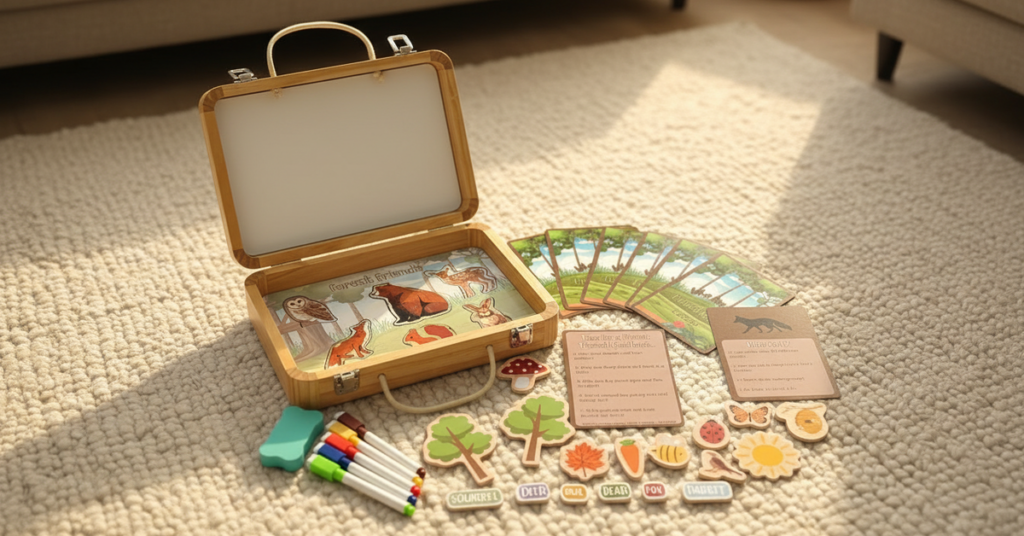
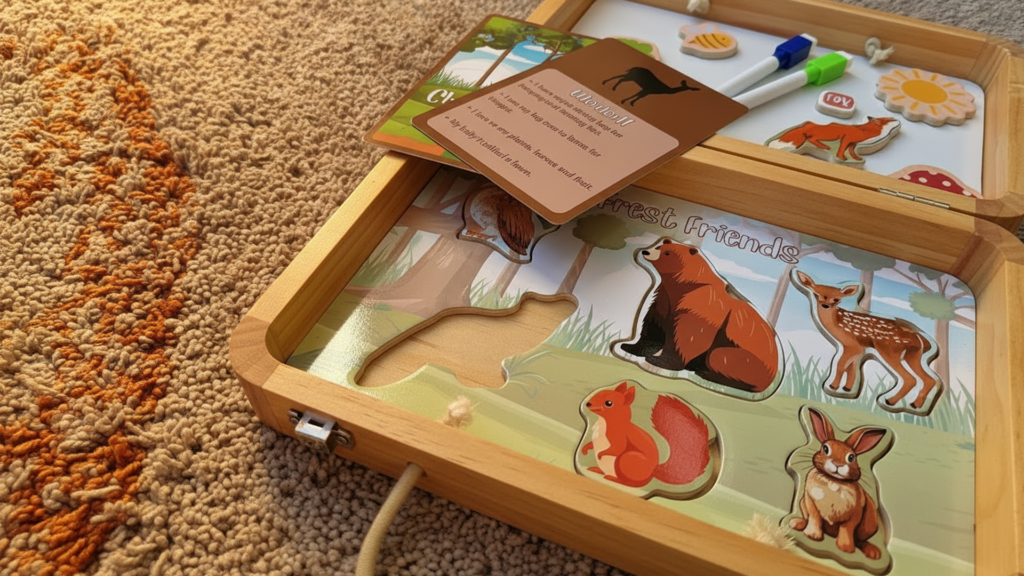
Forest Friends is built around a wooden activity box with magnetic animal pieces, learning cards, and a whiteboard-style play surface. The idea was not to create a toy that performs for the child. It was to create something the child can do something with.
They can match the animals.
Move the magnetic pieces.
Create scenes.
Draw around them.
Answer simple prompts.
Make up stories.
Come back to it another day and use it differently.
That kind of slower play is where learning often starts to appear naturally.
Not forced.
Not rushed.
Not dressed up as a lesson.
Just play that gives them space to think.
Screen-Free Does Not Mean Anti-Screen
This is important.
Most parents are not trying to ban screens completely.
Screens are part of modern family life. Sometimes they help. Sometimes they are the only reason dinner gets made or a difficult day gets survived. There is no point pretending otherwise.
The real question is balance.
A lot of parents are now asking:
- Is my child getting enough time to play without a screen?
- Can they still focus on slower activities?
- Do they always need instant entertainment?
- Are our toys helping them settle, or making them more restless?
That is where calm, screen-free play at home becomes useful.
It is not about guilt.
It is about giving children regular chances to engage with something slower and more hands-on.
Guidance from organisations such as the NHS and the American Academy of Pediatrics often focuses on balance, age-appropriate use, and the importance of real-world interaction alongside screen time.
The aim is not perfection.
The aim is to build more calm moments into normal family life.
Why We Created Forest Friends
Forest Friends came from a simple idea:
What if a toy could feel calm, but still be genuinely engaging?
Not boring.
Not overly educational.
Not another thing that gets played with once and forgotten.
We wanted it to sit somewhere between a puzzle, a magnetic play set, a drawing board, and a learning activity.
A product that supports:
- fine motor skills
- problem solving
- independent play
- animal recognition
- creativity
- early learning through play
But without flashing lights, loud sounds, or constant stimulation.
That mattered to us because CoBéBé is built around the idea that children can learn through simple, creative play at home. Not every moment needs to be turned into a formal lesson. And not every toy needs to shout for attention.
Forest Friends is designed to invite curiosity instead.
A child might start by matching the animal pieces.
Then they might move them around the board.
Then they might draw around them.
Then they might use the cards.
Then they might create their own little woodland scene.
That flexibility is the point.
The best toys often leave room for the child.
Calm Play Does Not Mean Perfect Parenting
One thing that can put parents off Montessori-inspired or calm play content is that it sometimes looks too perfect.
Perfect shelves.
Perfect baskets.
Perfect lighting.
Perfect children quietly working at little wooden tables.
That is not real life for most families.
Real life is usually messier.
Children tip things out.
They argue over the same toy.
They lose interest.
They ask for snacks.
They want the tablet.
They ignore the activity you thought they would love and play with the box instead.
That does not mean calm play is unrealistic.
It just means calm play has to work inside normal homes.
For us, calm, screen-free play at home means giving parents simple tools that make play feel a bit easier. A printable activity. A toy that does not overstimulate. A calmer setup. A small routine that helps the day feel less chaotic.
It is not about trying to become a perfect parent.
It is about making small choices that help the home feel more manageable.
If you would like to know more about what we believe helps make Calm Play possible, check out our free Calm Play Guide. It’s a simple, short summary of what helps make calm play happen in our home.
Why Independent Play Matters So Much
Independent play is one of those things many parents want, but it can feel hard to build.
Not because children are doing anything wrong.
Often they just need the right conditions.
Independent play usually improves when children have:
- familiar activities
- fewer distractions
- simple choices
- opportunities to repeat
- confidence with the materials
- enough connection before being expected to play alone
That is another reason calm, screen-free play at home matters.
If a toy is too loud or too overstimulating, it may grab attention quickly, but not always hold it deeply. If an activity is too complicated, the child may need constant adult help. If there are too many options, they may bounce between everything and settle into nothing.
A calmer activity gives them a better chance of staying with the play.
That was part of the thinking behind Forest Friends.
It is not designed to keep children busy by overwhelming them.
It is designed to give them something simple enough to understand, but open enough to keep exploring.
Learning Through Play Feels More Natural for Young Children
Young children learn by doing.
They move, test, repeat, touch, sort, pretend, copy, and explore. That is why learning through play often feels more natural than sitting down for formal teaching.
A child placing a puzzle piece is working on coordination.
A child matching animals is building recognition.
A child drawing around shapes is practising hand control.
A child making up stories is using language and imagination.
A child returning to the same activity is building focus.
That is real learning.
It just does not always look like school.
This is why play-based learning is such a strong part of CoBéBé’s approach. We want resources and toys that help parents see learning in ordinary moments.
Not because parents need more pressure.
Because sometimes it is reassuring to realise that simple play is doing more than it looks like.
The LEGO Foundation has written extensively about how learning through play supports children’s development across areas like creativity, problem solving, and social interaction.
The Harvard Center on the Developing Child also highlights the importance of responsive interaction and early experiences in shaping development.
For CoBéBé, this connects directly to what we are trying to build.
Simple products.
Calm play.
Real learning.
Less overwhelm.
Why Simpler Toys Often Last Longer
A toy does not need to do everything for the child to be valuable.
In fact, sometimes the opposite is true.
Simpler toys often last longer because they can be used in different ways as the child grows. They are not locked into one button, one song, one response, or one way of playing.
That flexibility was important with Forest Friends.
We wanted it to support different types of play:
- puzzle-style play
- magnetic play
- drawing and mark-making
- animal learning
- storytelling
- independent exploration
- parent-child activities
That means it can be used differently depending on the child, the day, and the stage they are at.
Some days it might be a quiet activity.
Some days it might become a storytelling game.
Some days it might be used with the cards.
Some days it might simply be animals moving around a scene.
That is what makes open-ended toys useful.
They do not ask the child to play one exact way.
They give them a starting point.
Calm Homes Usually Start With Small Changes
A calmer home does not usually come from one huge change.
It comes from small choices repeated often.
Things like:
- turning screens off for part of the day
- keeping fewer toys visible
- rotating activities
- using printable resources for quiet moments
- choosing toys that encourage focus
- creating one simple play space
- making learning feel playful, not pressured
That is where calm, screen-free play at home becomes practical.
It is not a lifestyle trend that only works in perfect houses.
It is something ordinary families can build slowly.
For us, Forest Friends is part of that bigger idea.
A calm, wooden activity box designed to support slower play, creative learning, and screen-free moments at home.
It is not meant to replace every toy.
It is simply one thoughtful option for parents who want fewer, better things around their children.
And as Forest Friends gets ready to make its way from production into the real world, that is still the reason behind it.
To help parents create small pockets of calm, connection, and learning through play.
FAQ
What is calm, screen-free play?
Calm, screen-free play means lower-stimulation activities that help children engage without relying on screens or electronic entertainment. It often includes hands-on toys, puzzles, drawing, printables, magnetic play, sorting games, and open-ended activities.
Why are more parents choosing calm, screen-free play at home?
Many parents are trying to reduce overstimulation, support longer focus, encourage independent play, and create calmer routines at home. Calm, screen-free play gives children more opportunities to use imagination, problem solving, and creativity.
What is Forest Friends?
Forest Friends is a Montessori-inspired magnetic activity box by CoBéBé. It includes wooden magnetic animal pieces, learning cards, and a whiteboard-style activity area designed to support calm, screen-free learning through play.
How does Forest Friends support learning through play?
Forest Friends encourages children to match, move, draw, imagine, and solve simple prompts using magnetic animal pieces and activity cards. This supports fine motor skills, creativity, problem solving, animal recognition, and independent play.
Does calm play mean children have to sit quietly?
No. Calm play does not mean silent or perfect play. It simply means reducing unnecessary stimulation so children have more space to focus, create, explore, and stay engaged.
How can I encourage more screen-free play at home?
Start small. Reduce background screens, rotate toys, keep fewer activities visible, offer simple hands-on resources, and create predictable moments for play. The goal is balance, not perfection.