Independent Play Introduction: Just Ten Minutes
It was 3:14 p.m. I remember because I looked at the clock with that quiet flicker of hope you get when you think, maybe… just maybe… I can finish something.
It was a Saturday afternoon. I had already taken my six year old to his weekly football training, done a small shop in the local supermarket and taken my son for his monthly haircut. I was half-preparing my latest attempt at a soup (my way of making the kids take on some much needed vegetables), half-hoovering any left over mess from the latest round of snacks my kids seem to get their hands on. My toddler had been doing her own version of cooking at her wooden kitchen station with her “princesses” in tow, and for a moment, I thought I might actually drink the tea my partner had prepared for me while it was still warm.
Then came the tug on my leg.
“Daddy, help me,” she said.
Nothing was broken. Nothing was wrong. She just wanted me there — to watch, to witness, to “taste” her own version of carrot soup and to be part of it.
Of course I wanted that too. But I also needed just ten minutes to breathe and reset.
If you’ve ever stood in a messy living room, tea cooling on the counter, wishing your toddler could just play independently for a moment… you’re far from alone. Independent play sounds straightforward, but for many families, it feels like this elusive milestone other parents seem to have mastered.
The truth is, it’s not a parenting failure. It’s developmental — and it can absolutely get easier with a few gentle shifts.
Section 1: Why Independent Play Is Hard (And Always Has Been)
The idea that toddlers should happily entertain themselves for long stretches is relatively modern. Historically, young children stayed close to caregivers throughout daily work — independence wasn’t an expectation in the way it is today (Source: Montessori in Real Life — https://www.montessoriinreallife.com/home/2019/7/23/encouraging-independent-play).
Early childhood experts like Maria Montessori and Jean Piaget helped shape the idea of child-led exploration. Montessori observed that children can concentrate deeply when the environment supports it — but that environment must be developmentally appropriate and thoughtfully prepared.
So why doesn’t your toddler just sit and play?
Because toddlers aren’t wired for long solo sessions. According to the CDC, a typical attention span for a 2-year-old is only 4–6 minutes for something they enjoy (Source: CDC Developmental Milestones — https://www.cdc.gov/ncbddd/actearly/milestones/index.html).
They’re also relying heavily on co-regulation — the way children feel safe and emotionally balanced through connection with a trusted adult (Source: Harvard Center on the Developing Child — https://developingchild.harvard.edu/science/key-concepts/self-regulation/).
Independent play isn’t instinctive.
It’s a learned skill.
Section 2: Core Principles of Independent Play
Here are the principles that make independent play more successful and less stressful:
Connection Before Independence
A few minutes of warm, focused connection before play helps enormously. A cuddle, a quick story, or even a shared laugh fills your child’s “connection cup.”
Prepared Environment (Montessori Influence)
Montessori emphasised accessible spaces with fewer, clear choices. Low shelves, organised baskets, and toys that are easy to reach reduce overwhelm (Source: AMI Montessori — https://montessori-ami.org/).
Start Small
Think 2–5 minutes, not 20. Just like adults build habits, toddlers build stamina.
Proximity and Reassurance
Independent play doesn’t mean being alone in another room. Sitting nearby folding laundry or reading is enough.
Let Boredom Happen
Boredom is the birthplace of creativity. It’s okay if they look unsure — that’s the starting point.
Open-Ended Toys Work Best
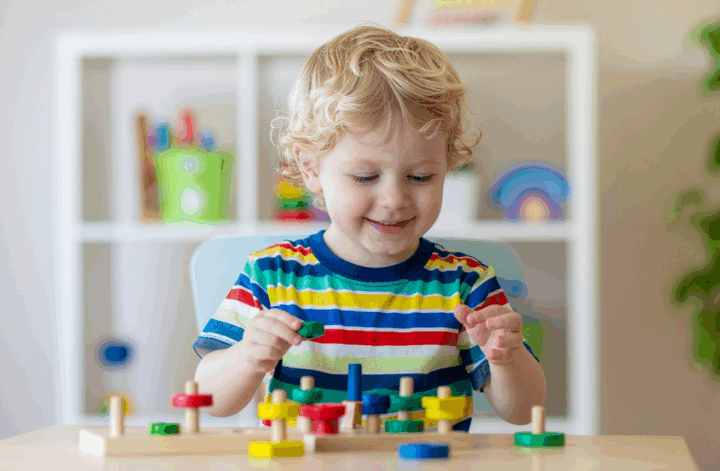
Blocks, figures, scarves, stacking cups — anything that can be used in multiple ways. These encourage imagination and persistence.
Predictable Routines
Children feel safe when they know what to expect. Adding a small “quiet play pocket” to your daily rhythm helps independent play become a normal part of the day.
Parent as Guide, Not Entertainer
You don’t need to perform. Your calm presence and gentle encouragement set the tone.
Section 3: The Real Benefits of Independent Play
Independent play does far more than give you five minutes to breathe. It actively supports key developmental skills:
1. Focus & Concentration
Unstructured play helps toddlers build early executive function — skills that support focus, memory, and self-control (Source: AAP — https://publications.aap.org/pediatrics/article/142/3/e20182058/38649/The-Power-of-Play-A-Pediatric-Role-in-Enhancing).
2. Creativity & Imagination
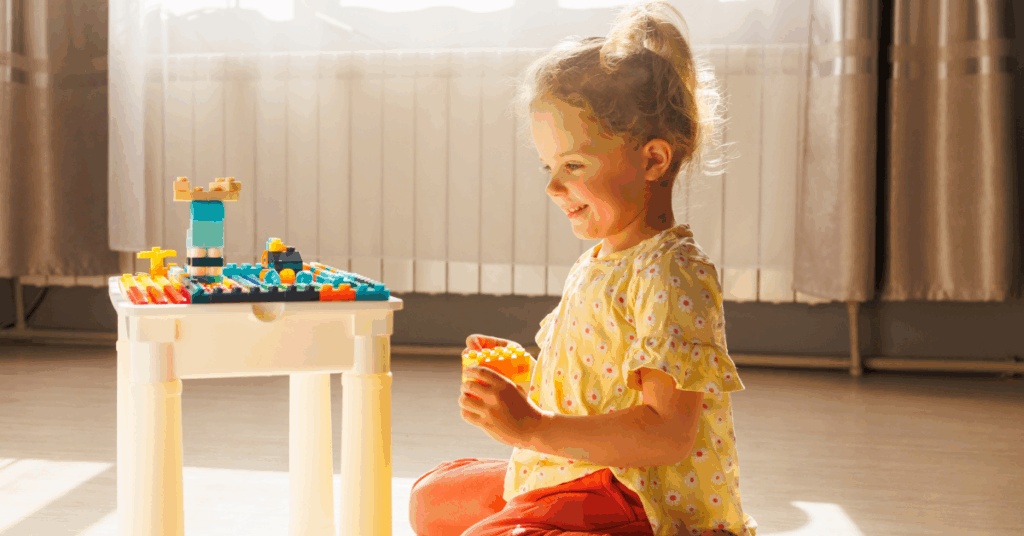
When play is child-led, toddlers turn blocks into phones, cars, sandwiches, stories, characters — the brain is doing the heavy lifting.
3. Emotional Regulation
Play without constant direction gives children chances to manage frustration and recover from small setbacks (Source: Harvard Center on the Developing Child — https://developingchild.harvard.edu/resources/what-is-regulation/).
4. Problem-Solving
Fixing a fallen tower or figuring out a tricky piece builds resilience and early problem-solving.
5. Confidence & Autonomy
Doing something “all by myself” is powerful. Independent play strengthens self-belief.
Section 4: Common Misconceptions About Independent Play
“Toddlers should play independently for long stretches.”
Very unlikely. A few minutes at a time is normal.
“It happens naturally.”
Some kids lean toward it, but most require support and practice.
“Independent play means ignoring your child.”
Presence matters. You can stay nearby without being involved.
“You need expensive toys.”
Simple and open-ended toys are often better than electronic ones (Source: Montessori in Real Life — https://www.montessoriinreallife.com/home/2019/7/23/encouraging-independent-play).
Section 5: What Independent Play Looks Like Today
Realistically, independent play today happens in short pockets, woven into home life. Five minutes during cooking prep. Ten minutes while you change the laundry. Mini moments.
Montessori environments show us that children often start with parallel play — playing near someone — before moving into deeper independence. Calm spaces, limited toys, and regular rotation support this shift.
Screens, busy schedules, and overstimulating toys can make this harder — but simplifying the environment makes it easier (Source: Momwell — https://momwell.com/blog/encouraging-independent-play).
Open-ended materials shine because they don’t tell the child what to do — children create the meaning.
For a more in depth guide into independent play routines, read our blog article called ” 5 Everyday Play Routines That Help Toddler Independence“
Section 6: A Simple Example — Forest Friends
Many parents find that simple, tactile toys work far better for independent play than anything that lights up or makes noise.
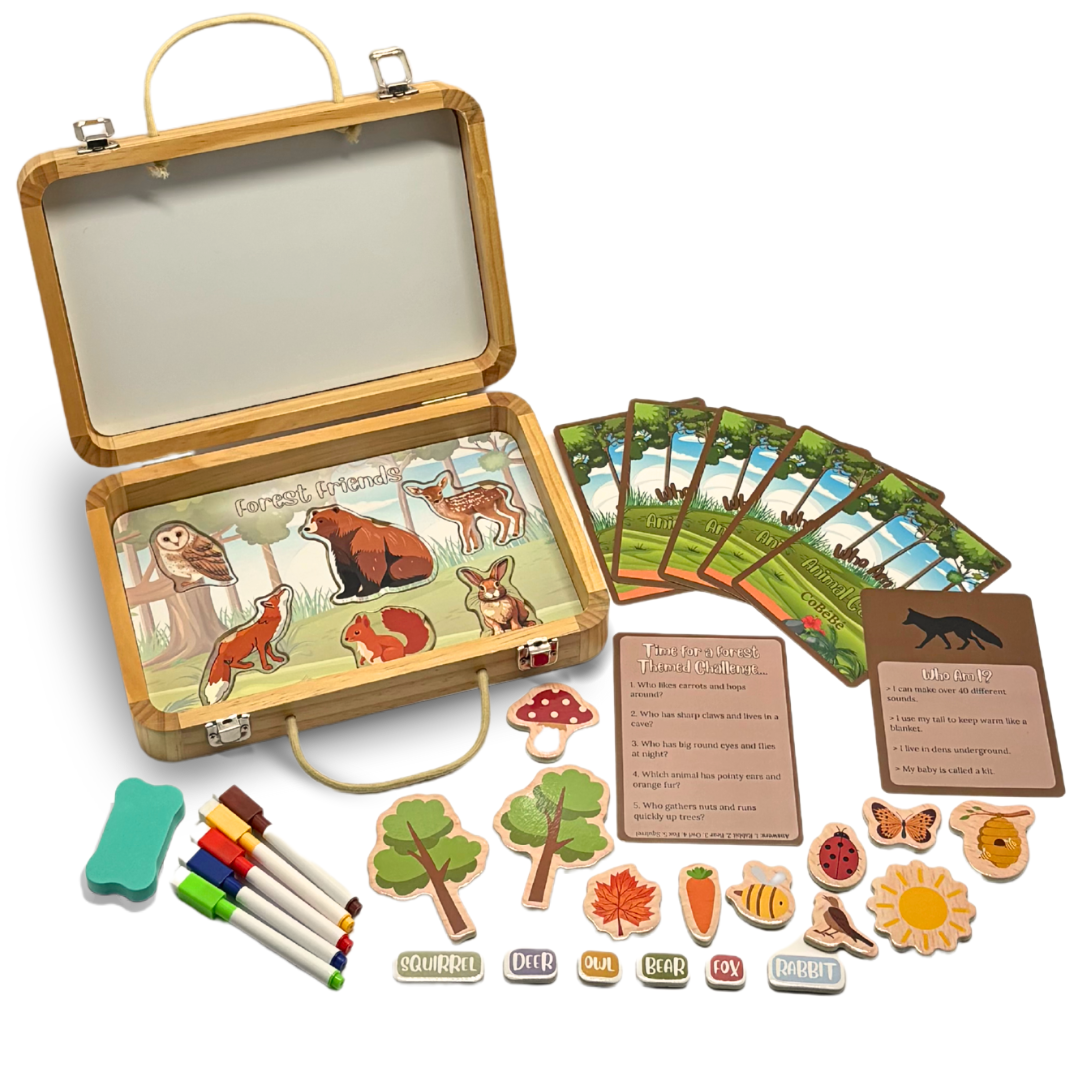
For example, our Forest Friends set naturally invites toddlers to:
- sort
- match
- line up
- count
- stack
- create tiny woodland stories
There’s no “right way” to play — which is exactly what supports independence. When a toy doesn’t do the work for them, toddlers step in with their own ideas.
(The Forest Friends Puzzle Game will be available early 2026)
Section 7: Practical Takeaways for Parents
Here’s how to begin gently supporting independent play:
- Begin with 2–5 minutes after a moment of connection.
- Offer simple “invitations to play” — a small setup with 2–3 items.
- Rotate toys weekly to reduce overwhelm.
- Sit nearby doing something calm to model focus.
- Expect check-ins. Toddlers circle back for reassurance.
- Avoid taking over. Pause before you jump in.
- Build slowly. Independence grows in tiny steps.
Independent play isn’t a test your child should pass — it’s a skill that develops gradually with practice and support.
Conclusion
Independent play isn’t about leaving your toddler alone. It’s about giving them the space and support to explore, imagine, and build confidence in their own abilities — one tiny moment at a time.
And if all you get at first is three minutes while you sip half a cup of tea… that’s not failure.
That’s the start.
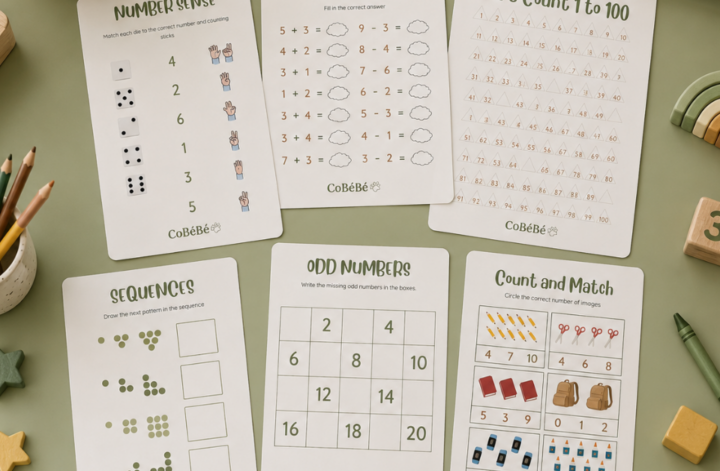
For more articles on subjects like this visit our blog page. We cover topics like toy rotation, learning through play and screen free play ideas plus much more. We also have a young and growing page dedicated to free downloadable resources to help promote learning through play.