What You’ll Learn in This Article
- Why children struggle to focus during play — and what brain development has to do with it.
- Simple ways to help your child focus longer during play through environment, toy choices and repetition.
- How open-ended play quietly builds attention, creativity and executive function skills.
Why Children’s Attention Spans Worry So Many Parents
One of the most common worries parents have about young children is their attention span.
You see it when a child starts colouring… then abandons it two minutes later.
Or when they empty a box of toys, glance at everything, and move on before you’ve even had time to sit down.
It can make you wonder whether something is wrong.
Should they be concentrating for longer?
Are other children better at focusing?
But when you look more closely at how children actually learn, something surprising appears.
Short attention spans in early childhood are not only normal — they’re part of the process.
Focus doesn’t grow through pressure, instructions, or asking a child to “try harder”.
It grows quietly through play.
When children repeat actions, build things, invent stories, or explore materials with their hands, their brains are slowly learning how to stay with an idea for longer and longer periods.
Understanding that process changes the way you see play completely.
And it also reveals some simple ways we can help children develop deeper focus — naturally, without pressure.
The Science Behind Attention in Early Childhood
Children’s attention spans are still developing throughout the early years.
One guideline often used by child development researchers suggests children can focus for roughly two to five minutes per year of age.
That means:
- A 2-year-old may focus for around 4–10 minutes
- A 4-year-old may focus for 10–20 minutes
- A 6-year-old may sustain attention for 15–30 minutes
These ranges aren’t strict rules, but they help explain something important:
Young children aren’t meant to focus for long stretches yet.
Their brains are still learning how.
Research from the Harvard Center on the Developing Child explains that the part of the brain responsible for attention and self-regulation — the prefrontal cortex — develops gradually over childhood.
https://developingchild.harvard.edu/science/key-concepts/executive-function
These skills are known as executive function, and they include:
- working memory
- impulse control
- flexible thinking
- sustained attention
And here’s the key point.
Executive function is built through experience.
Not lectures.
Not pressure.
Experience.
Which is where play becomes powerful.
Why Play Builds Attention Naturally
When children play, their brains are doing complex work.
They are:
- testing ideas
- repeating actions
- solving small problems
- managing frustration
- imagining possibilities
All of these processes strengthen neural pathways that support concentration.
According to UNICEF, play is one of the most important ways children build cognitive and emotional skills during early childhood.
https://www.unicef.org/parenting/child-development/play
In other words:
Play isn’t a break from learning.
It is learning.
The Power of Repetition in Play
If you’ve ever watched a child pour water from cup to cup fifteen times in a row, you’ve witnessed something remarkable.
Repetition.
To adults, it looks pointless.
To a child’s brain, it’s essential.
Each repetition strengthens neural pathways.
Children repeat actions because their brains are refining a skill.
This is why you might see a child:
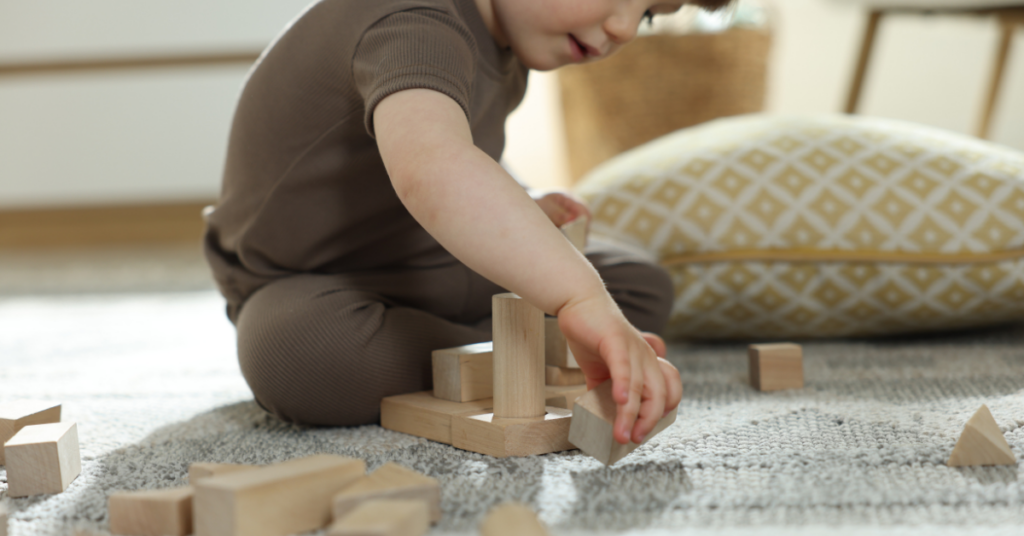
- stack the same blocks again and again
- rebuild the same tower
- repeat the same pretend story
The repetition allows their attention to deepen naturally.
This type of focused engagement is sometimes called deep play.
And when it happens, it can look almost magical.
Why Some Toys Make Focus Harder
One thing that surprised me while researching this topic is how much toy design influences attention.
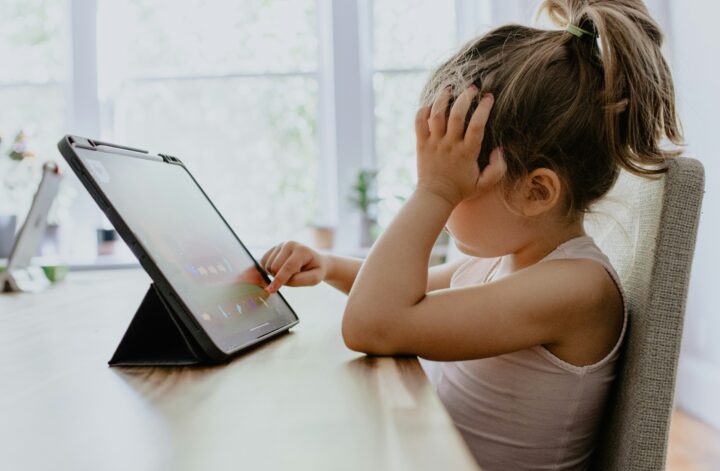
Many modern toys are designed to capture attention quickly using:
- flashing lights
- loud sounds
- automatic actions
These toys are entertaining, but they often encourage short bursts of interaction rather than sustained play.
In contrast, open-ended toys — such as blocks, puzzles, figurines or art materials — require children to create their own play.
This type of play:
- stimulates imagination
- encourages problem solving
- holds attention longer
Sometimes the quietest toys are the ones that lead to the deepest focus.
The Environment Matters More Than You Think
Another factor that strongly influences attention is the play environment.
Imagine trying to concentrate in a room filled with:
- constant noise
- bright screens
- dozens of competing options
It’s difficult for adults — and even harder for children.
Research suggests that too many toys can actually reduce the quality of play, because children become overwhelmed by choice.
A calmer environment supports deeper engagement.
Some simple ways to create this include:
- limiting the number of toys available at one time
- rotating toys periodically
- keeping play spaces uncluttered
- creating quiet areas for focused play
Small changes can have surprisingly big effects.
Practical Ways to Help Your Child Focus Longer
The good news is that helping children develop focus doesn’t require complicated techniques.
Often, it’s about creating the right conditions.
Here are a few approaches that tend to work well.
Offer Fewer Toys
A smaller selection encourages deeper exploration.
When children have fewer options, they often stay with an activity longer.
Choose Open-Ended Materials
Blocks, puzzles, figurines, art supplies and building toys allow children to direct their own play.
This encourages problem solving and longer attention.
Protect Deep Play
If your child is deeply engaged in an activity, try to avoid interrupting unnecessarily.
Those moments of absorbed concentration are incredibly valuable.
Create Predictable Play Rhythms
Children often focus better when they know when play time happens.
Simple routines — such as quiet play before dinner — can help.
Let Repetition Happen
Repetition is not boredom.
It’s learning in progress.
Allowing children to repeat favourite activities builds mastery and confidence.
When Short Attention Is Completely Normal
It’s easy to worry that a child who moves quickly between activities has a problem focusing.
But short attention spans are often developmentally normal.
Young children learn through curiosity.
They explore.
They experiment.
They shift.
According to the NHS, difficulties with attention become a concern only when they consistently interfere with daily life or learning.
https://www.nhs.uk/conditions/attention-deficit-hyperactivity-disorder-adhd
Most of the time, children simply need time, practice and the right environment.
FAQ: Helping Children Focus During Play
How long should a child focus during play?
A general guideline is two to five minutes per year of age. However, attention varies widely depending on the child and the activity.
What toys help children focus the most?
Open-ended toys such as building blocks, puzzles, art supplies and figurines tend to support longer attention because they require active thinking and creativity.
Does screen time affect focus?
Highly stimulating screen content can shorten attention for slower activities like reading or building. Balancing screen time with hands-on play helps support concentration.
Why does my child repeat the same activity over and over?
Repetition strengthens neural connections and helps children master new skills. What looks repetitive to adults is often deep learning.
Should I interrupt my child during play?
If a child is deeply engaged, it’s usually best to let them continue. These moments of focused play are important for developing concentration and executive function.
A Gentle Next Step for Parents
If you’d like to encourage deeper focus during play at home, simple activities and calm environments can make a big difference.
I’ve created a Calm Play Guide filled with ideas designed to support independent play, creativity and concentration without relying on screens.
And behind the scenes, I’ve also been working on something inspired by everything I’ve been learning about deep play — a wooden activity puzzle called Forest Friends, designed to invite storytelling, imagination and focused play.
No flashing lights.
No noise.
Just thoughtful materials that encourage children to slow down and explore.
If that sounds like something your family would enjoy, you’re very welcome to join the mailing list for updates.
Final Thoughts
Helping children focus isn’t about pushing them to concentrate harder.
It’s about creating the conditions where focus naturally emerges.
A calm space.
A few thoughtful materials.
The freedom to explore, repeat and imagine.
When those ingredients come together, something remarkable happens.
A child becomes absorbed in play.
And in that quiet concentration, their brain is building the foundations for learning that will last a lifetime.