What you’ll learn in this article
- Why learning through play at home often feels harder than it should
- The 3 simple shifts that made play feel calmer and more focused for us
- How to help your child play more independently without constantly stepping in
This didn’t start as some kind of system. It was just real life.
Too many toys out. Kids jumping from one thing to the next. Losing interest quickly. And screens slowly becoming the easiest option just to get five minutes of peace.
At the same time, I kept thinking… are they actually getting anything from this?
You hear a lot about learning through play at home. It sounds great. But when you’re actually in it day to day, it’s not always that clear what you’re meant to be doing. It can feel a bit chaotic, and you end up either overthinking it or just going with whatever gets you through the day.
So I started paying more attention to what was actually happening.
Not in a structured way. Just noticing what worked, what didn’t, and what made things feel easier.
Over time, I kept coming back to the same three things.
Start with the environment
This is the bit most people overlook, but it made the biggest difference.
When there’s too much out, nothing really gets used properly.
They pick something up, put it down, move onto the next thing, and it just repeats. It looks like they’re “playing”, but they’re not really settling into anything.
That’s not a motivation problem. It’s not a behaviour problem either.
It’s just too much.
So I stripped it back.
Fewer toys out at once. A bit more space. And a bit more thought about what was actually there.
Not a full makeover. Not a Pinterest-style playroom. Just simpler.
That might look like:
- 5–8 toys out instead of everything
- toys spaced out so they’re easy to see
- a mix of different types
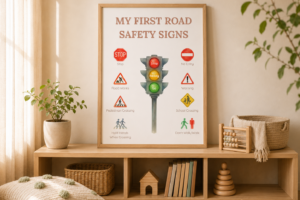
- simple wall art that allows them to gently engage with it at their own leisure
That alone changed things.
They started noticing what was there. They spent longer with each thing. They became curious and play felt less rushed.
If you want to go deeper into this part, I’ve written a separate post just on setting up the environment, because this is where most of the change actually comes from.
That’s the first step in making learning through play at home actually work. If the environment is too busy, everything else becomes harder.
Guide the play (without overdoing it)
This was the part I used to get stuck on.
I knew learning through play at home was important, but I didn’t always know what that actually meant in practice.
Do you sit with them?
Do you leave them to it?
Do you set things up?
It felt like I was either doing too much or not enough.
What helped was keeping it simple.
Instead of trying to “teach”, I just started giving a starting point.
That might be:
- putting out a puzzle in a way that invites them in
- leaving something half-started
- setting up something small they can build on
Or just using simple activities that don’t need much prep.
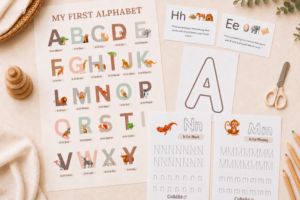
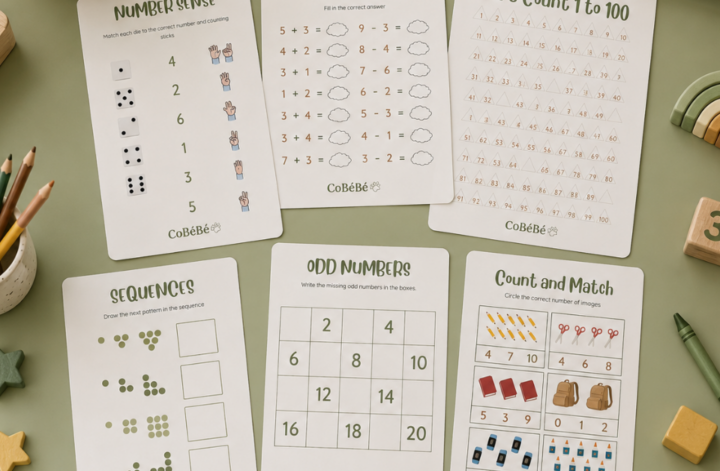
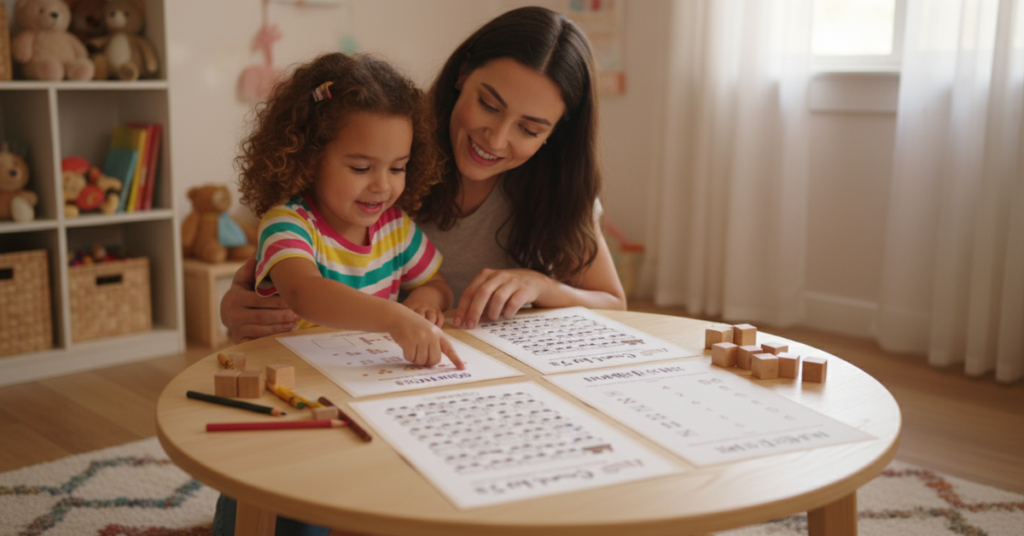
One thing that works really well for us is just colouring sheets. Nothing complicated. Just printed pages they can sit with. My kids love them, and they’ll actually stay focused on them for a good amount of time. They’re easy to print, easy to reprint, and you can take them anywhere. Sometimes it’s the simplest things that work best.
That’s really the point here.
You don’t need to constantly come up with new ideas. You just need something that gets them started and holds their attention long enough for play to actually go somewhere.
That’s where simple tools come in.
Printables, small challenges, visual prompts… they’re not there to control play. They just help it get going.
Let them get on with it
This is the bit that made everything feel easier.
Once the space was calmer and I stopped stepping in all the time, things started to change.
They began to:
- focus for longer
- come back to the same things
- play without needing constant input
That’s the shift.
You’re not trying to entertain them. You’re trying to get to a point where they can actually sit and get into something properly.
That’s what learning through play at home should feel like.
Not constant noise. Not jumping from one thing to the next. Just steady, focused play.
This is where the right kind of toys make a difference.
Not more toys. Just better ones.
Things they can:
- figure out
- come back to
- use in different ways
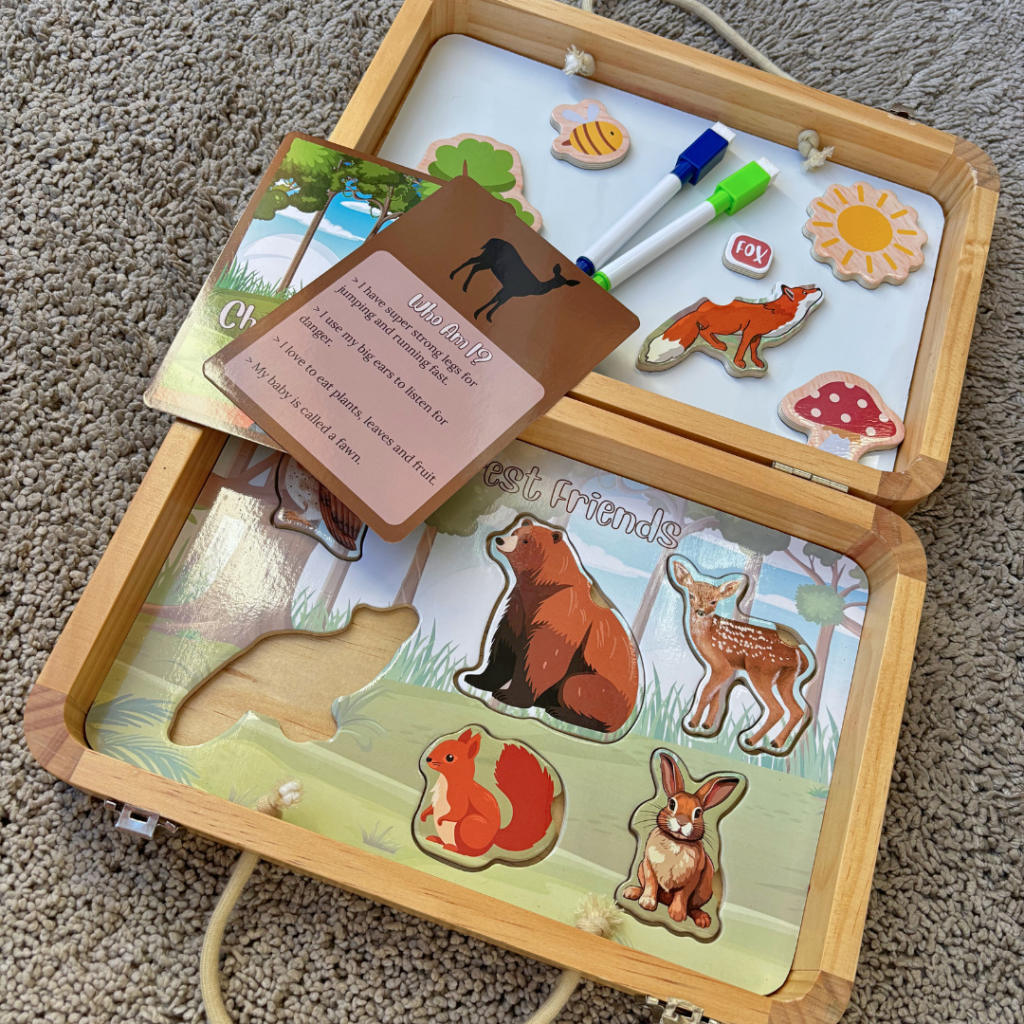
That’s exactly what I had in mind when putting together things like Forest Friends.
Not something to distract them for five minutes. Something they can sit with and actually use.
If you want to see what I mean, you can have a look:
Why learning through play at home often feels hard
A lot of the time, it’s not because you’re doing anything wrong.
It’s because:
- there’s too much out
- there’s no clear starting point
- or you feel like you need to be constantly involved
That’s what creates the overwhelm.
You end up thinking:
- “they’re bored”
- “I need something new”
- “I need to do more”
But most of the time, it’s the opposite.
You need less.
Less out.
Less pressure.
Less stepping in.
That’s when things start to settle.
What changes when you simplify things
When you simplify the environment and guide things a bit, a few things happen naturally.
Play slows down.
Instead of rushing through toys, they start to spend time with them.
Focus improves.
Not because you forced it, but because there’s less competing for attention.
And independence builds.
They don’t need you as much because they’ve got something they can actually get into.
That’s when learning through play at home starts to feel like it’s working.
If you’re trying to make this work at home
You don’t need to overhaul everything.
Start small.
Pick one area and simplify it.
Take a few toys away. Leave a few out. See what happens.
Then try adding a small starting point.
It could be something simple like a puzzle… or even just a colouring sheet.
And then step back a bit.
That’s it.
FAQ
What does learning through play at home actually mean?
It just means children are picking things up naturally while they play, instead of everything needing to feel like a lesson.
Do I need Montessori toys for this to work?
No. It’s more about how things are set up than what you have.
How many toys should I have out at once?
There’s no exact number, but fewer usually works better. Around 5–8 is a good starting point.
How do I get my child to play independently?
Simplify what’s out, give them a starting point, and step back a bit.
How often should I rotate toys?
Whenever they stop engaging with what’s out. That’s usually your cue.
Final thought
Learning through play at home doesn’t need to be complicated.
Most of the time, it’s not about doing more.
It’s about making things simpler so play actually has a chance to work.
Start there and see what happens.
Here’s What Else We Make…