A calm, practical guide for parents with limited space (and full hearts) Montessori Play Space Introduction The other morning, after dropping my son off at school, I found myself chatting with another parent at the gate. We were doing that usual half-laughing, half-tired rundown of our mornings — lost shoes, forgotten water bottles, the usual […]
What Is “Fewer, Better Toys”?
“Fewer, better toys” is the idea that children thrive with a small number of high-quality, meaningful toys, rather than shelves full of clutter. It’s based on the understanding that young children play deeper, calmer, and more creatively when they’re not overwhelmed by too many choices. It isn’t about owning expensive toys or creating a minimalist […]
What Is Nature Play?
Nature play is any kind of play where children explore natural materials, outdoor spaces, or elements from the natural world. It can be as simple as collecting leaves in the garden, digging in soil, watching insects, or sorting stones. The goal isn’t to create structured activities — it’s to let children learn through curiosity, movement, […]
What Are Activity Trays?
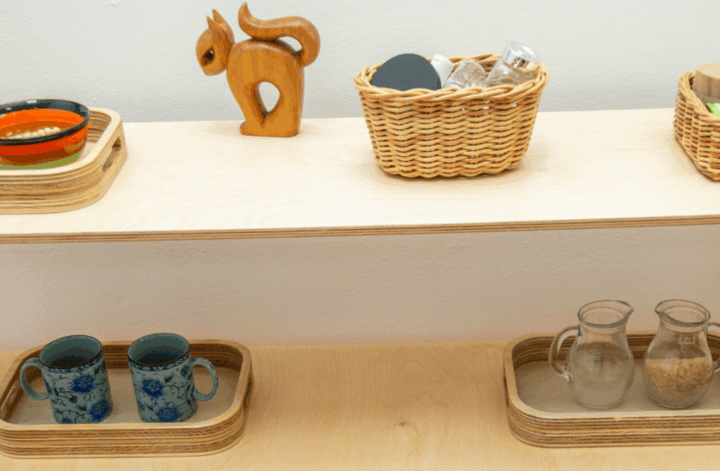
Activity trays are a simple Montessori-inspired way of setting up play or learning activities so your child can use them independently. Each tray contains one activity, with all the materials needed in one place, laid out clearly and neatly. The purpose of an activity tray isn’t to make things look perfect — it’s to make […]
What Is a Prepared Environment?
A prepared environment is a Montessori idea that describes a space designed specifically to support a child’s independence, focus, and natural curiosity. Instead of adults directing the play, the environment gently guides the child by making everything accessible, calm, and easy to use. In a prepared environment, children don’t need to ask for help all […]
What Is Toy Rotation?
Toy rotation is a simple way of keeping your child’s play space calm, inviting, and focused. Instead of having every toy out at once, you keep most items stored away and only offer a small selection at a time. Every week (or whenever interest drops), you “rotate” the toys by swapping them for a fresh […]
What Is Independent Play?
Independent play is when a child is able to play on their own for short periods of time, without needing constant direction or involvement from an adult. It doesn’t mean playing in another room or being left completely alone — it simply means the child feels safe, settled, and confident enough to explore at their […]
Toy Rotation Montessori: A Simple Way to Inspire Play
The Art of Toy Rotation: A Mindful Approach to Play We began using a toy rotation Montessori style and mornings feel calmer these days. Not perfect, just steadier. The play shelf is simple, the toys are chosen, and there’s a rhythm to how the children move through the day. What’s interesting is that even with […]
5 Everyday Routines That Help Toddlers Build Independence
Welcome. Mornings in our house are rarely smooth. Someone always wants to pour their own cereal, someone else insists on wearing their football kit before getting ready for school, and the floor somehow ends up covered in crumbs before 8 a.m. There was a time when I would rush through it all. Wiping up, fixing, […]
Montessori at home – 5 Shifts in Thinking for Parents
Welcome. I remember standing in the hallway one morning, coffee in hand, listening to the sound of my children playing in the next room. It was one of those small moments that made me reflect on what it really means to try Montessori at home. My five-year-old was explaining, in great detail, how to “set […]