
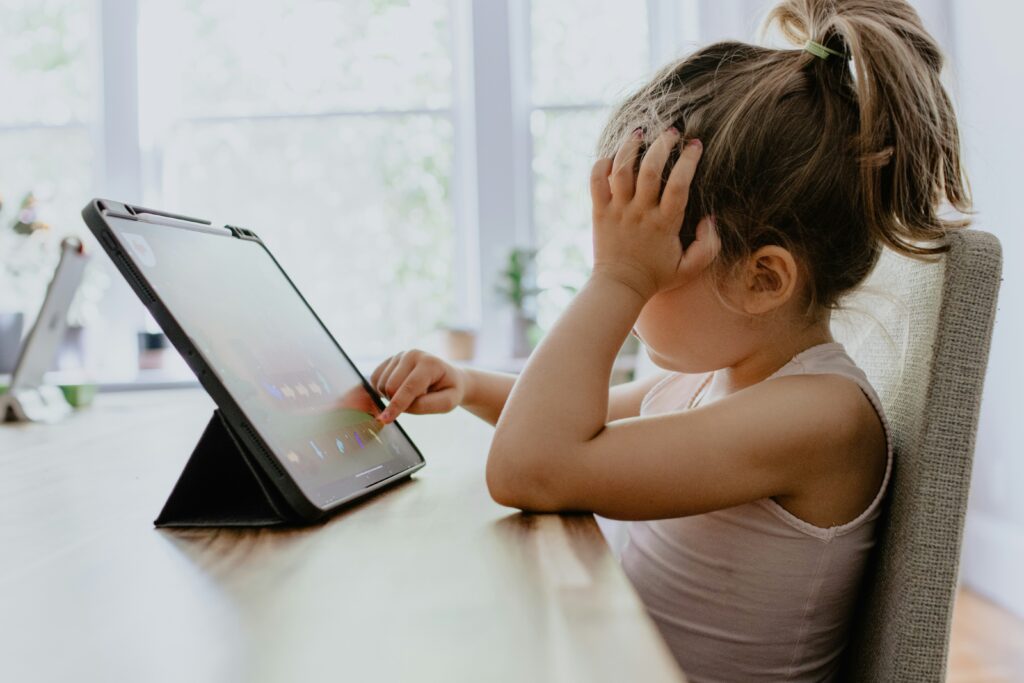
Welcome. I’d like to start by saying that I don’t think I’m alone when it comes to this subject. That mix of guilt, worry, and even frustration when it comes to screen time is something I hear from almost every parent I know.
“I feel bad for letting my child use screens, but I’m so overwhelmed with day-to-day life—it allows me some peace and quiet.”
Sound familiar? That sentence, shared by a parent in a screen-free Facebook group, could have been written by me at certain points. Whether it’s a toddler waking before dawn, a preschooler needing constant attention, or older kids who “just want to watch TV” before school—screens are often the easy button we reach for when we’re exhausted.
But should we be feeling this way? Is there actually a balance to be found?
When my son gets home from school, knowing he’s had a full day without screens, I feel less guilty about the short time he spends on his tablet before bedtime. Yet, I can’t help but wonder—am I right? Or am I simply reassuring myself?
A Worry That Isn’t New
When we talk about screen time today, we usually picture iPads, video games, or YouTube. But this worry isn’t new. My parents used to warn me that sitting too close to the TV would ruin my eyesight, or that video games would rot my brain.
And just like today’s parents, families in the 1950s worried about the sudden influence of television. Every generation of technology seems to bring the same question: What is this doing to our children?
According to Common Sense Media, children aged 8–12 now average about 5 hours of screen use per day (not including schoolwork). That number climbs for teenagers. No wonder so many parents feel overwhelmed and conflicted.
The Concerns About Screen Time
It’s important to acknowledge the science-backed reasons why parents worry. Many of the posts I’ve seen online reflect exactly these concerns:
- Sleep and Health
Parents often mention screens at bedtime or during meals. Research shows excessive screen time can interfere with sleep, appetite, and physical activity (American College of Pediatricians, 2020). - Emotional Well-Being
In one Facebook post, a parent worried their screen-free child was behind in speech compared to kids who watch Ms. Rachel. Others worry the opposite—that too much screen time could cause meltdowns or emotional difficulties. Studies do show a link between heavy screen use and higher risks of anxiety and depression in adolescents (JAMA Pediatrics, 2021). - Attention and Learning
Fast-moving, brightly coloured content can affect focus. Parents of toddlers often wonder if bouncing between shows is hurting language development. UNICEF (2023) notes that under-2s learn best from human interaction, not screens. - Social Skills
Several parents shared how hard it is to encourage reading, art, or play when their kids “just want TV.” The truth is, children learn empathy and communication through face-to-face interaction—and too much screen time can squeeze that out.
The Other Side of the Story
And yet… it’s not all bad. Screens can be powerful tools when used intentionally. Many parents in these groups admit that when used sparingly, screens offer relief—not just for the child, but for the whole family.
- Education
Apps and shows like PBS Kids can genuinely support early literacy and numeracy. During the pandemic, digital learning wasn’t optional—it was essential. - Creativity
Screens can inspire kids to draw, write, code, or make videos. The difference between passive watching and active creating is huge. - Connection
For older kids, screens are often where friendships and identity are explored. A teen chatting with friends after school isn’t wasting time—it’s part of their social world.
Common Misconceptions
It helps to clear up a few myths:
- “All screen time is bad.” → Not true. Quality, context, and purpose matter more than raw hours.
- “Screens cause mental illness.” → They can play a role, but often kids struggling with anxiety or loneliness turn to screens as a coping mechanism.
- “Toddlers can learn just as well from apps.” → Not really. Under-2s need human interaction most.
- “Time limits fix everything.” → Limits help, but co-viewing and guiding content make the biggest difference.
Tips for Finding Balance
From both research and real parent voices, here are some gentle ways to approach screens:
- Focus on Quality – Choose content that enriches (Common Sense Media is a great guide).
- Watch Together – Make screen time interactive by talking about what you’re watching.
- Create Boundaries – Screen-free meals and bedrooms help set healthy rhythms.
- Model Behaviour – Our kids notice when we scroll endlessly, too.
- Balance with Real Life – Outdoors, chores, and play matter more than exact screen-time hours.
One parent in the Facebook group put it beautifully: “We crowd out TV with activities, outings, and stuff so there’s less room for it.” That’s the heart of balance.
A Gentle Conclusion
The truth is, screens aren’t going anywhere. The question isn’t whether to allow them—it’s how to use them wisely.
As parents, we don’t need to pile guilt on top of exhaustion. What we need is perspective. If you’ve spent the day reading, playing, and connecting, a bit of screen time doesn’t erase all of that.
So the next time you catch yourself worrying, remember: you’re not alone. Parents everywhere are wrestling with the same questions. What matters is being thoughtful, not perfect.
Screen Time FAQs
Q: How much screen time is “too much”?
A: The American Academy of Pediatrics suggests no screen time under 18 months (except video calls) and about 1 hour daily for ages 2–5. For older kids, balance matters more than a strict number.
Q: What if my child screams without TV?
A: Tantrums are common when limits change. Start small, be consistent, and offer alternatives. Over time, they adjust.
Q: Is educational screen time better?
A: Yes, but it’s not a replacement for human interaction—especially for under-2s.
Q: Do I need to feel guilty about using screens for a break?
A: No. Breaks are part of parenting. Screens are a tool—use them thoughtfully, without shame.
Further Reading & Sources
- Screen Time: The Effects on Children’s Development – Informed Futures (2022)
- Babies Need Humans, Not Screens – UNICEF (2023)
- Screen Time and Adolescent Mental Health – JAMA Pediatrics (2021)
- Media Use and Families – American College of Pediatricians (2020)
- Screen Time and Emotional Problems in Kids – APA (2025)