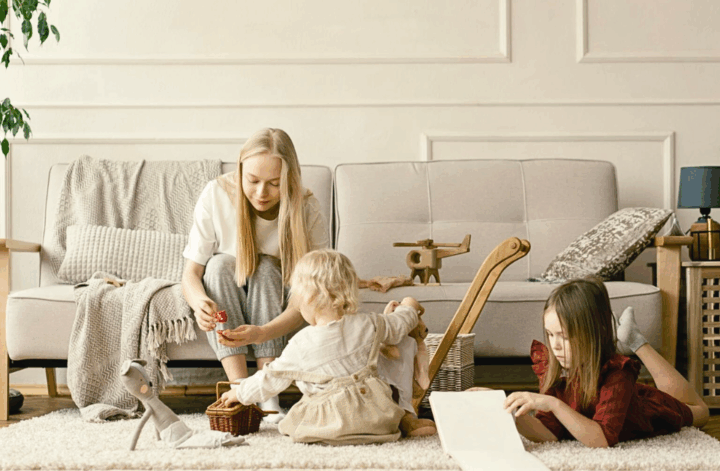
Welcome. Mornings in our house are rarely smooth. Someone always wants to pour their own cereal, someone else insists on wearing their football kit before getting ready for school, and the floor somehow ends up covered in crumbs before 8 a.m.
There was a time when I would rush through it all. Wiping up, fixing, hurrying us along to “get on with the day.” Especially where the place was recently refurbished and I felt like I had to do my best to keep it that way. But lately I’ve started to notice what’s really happening beneath the mess. My two-year-old concentrating as she spreads butter on toast. My five-year-old reminding her where the knife goes. Little flashes of toddler independence that, in the middle of the chaos, are quietly forming life skills.
It’s not picture-perfect or slow-motion sentimental, it’s real. And that’s where the Montessori approach makes sense to me. It’s not about transforming every routine into a lesson, but recognising that these small, ordinary moments are the lessons. They’re where confidence, patience, and pride start to grow.
And the more I’ve leaned into those moments, the more I’ve realised they’re not just about getting dressed or fed — they’re about something deeper: real toddler independence.
Here are five everyday routines that help build toddler independence — rooted in Montessori philosophy and backed by developmental science.
Why Toddler Independence Matters
Toddlers are in what Dr. Maria Montessori called a sensitive period for independence. Between ages one and four, children have a deep, instinctive drive to “do it myself.”
It’s not defiance — it’s development.
When toddlers are given real opportunities to take part in daily life, they begin to see themselves as capable contributors. This sense of capability builds confidence, emotional regulation, and long-term resilience.
As Montessori once wrote, “The child’s conquests of independence are the basic steps in what is called his natural development.”
In Montessori homes and classrooms, this is encouraged through child-sized tools, predictable routines, and freedom to engage in practical life activities — small acts that give children ownership of their world (Montessori Oaks, 2023).
The Science of Autonomy and Self-Efficacy
Modern psychology agrees with what Montessori observed more than a century ago: autonomy is a cornerstone of motivation and well-being.
Research shows that when caregivers support autonomy—by allowing choice, encouraging problem-solving, and respecting effort—children develop stronger self-esteem and persistence (Journal of Montessori Research, 2022).
Psychologist Albert Bandura’s concept of self-efficacy describes this perfectly: every small success strengthens a child’s belief in their own ability. Each time they pour their own drink or zip their coat, they’re building more than skill—they’re building confidence.
Even neuroscience backs it up. Repeated practice of toddler independent actions develops executive function skills like planning, attention, and flexibility—skills linked to school readiness and lifelong adaptability.
1. Morning Routine: Start the Day with “I Can”
Mornings can be chaotic, but they also set the tone for the day. Giving toddlers small choices in their morning routine teaches both responsibility and autonomy.
In our house, I’ve learned to slow things down just enough to let them try:
Choosing between two outfits
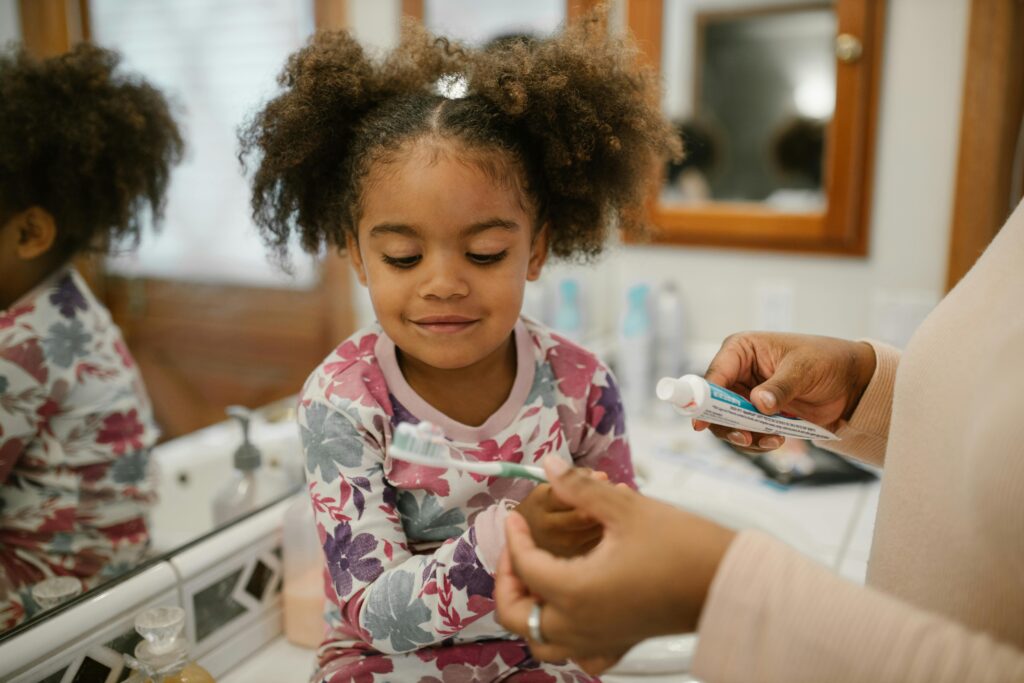
Brushing teeth with their own mirror and brush
Putting dirty clothes in the laundry basket
By creating accessible spaces—a low shelf for clothes, a stool at the sink—they can do more themselves. And that sense of accomplishment carries through the day.
As Learn and Play Montessori (2023) explains, “When children participate in their morning routine, they begin their day with a sense of accomplishment.”
Tip: Offer choices within limits — “Would you like the blue jumper or the red one?” Choice without chaos.
2. Snack Preparation: Nourishing Body and Confidence
Toddlers love to be in the kitchen, and with the right setup, food prep becomes a perfect toddler independence-builder.
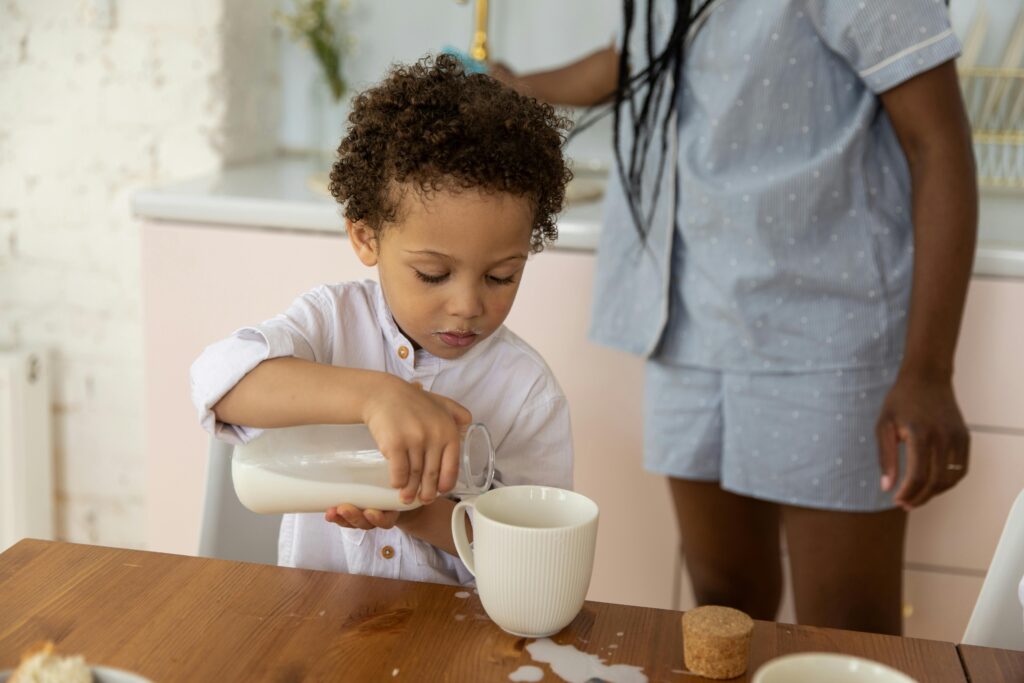
Small acts like washing fruit, spreading butter, or pouring water from a little jug strengthen fine motor skills and responsibility.
In Montessori classrooms, these tasks fall under Practical Life activities—the foundation of confidence and concentration. Montessori Oaks (2023) notes, “Practical life skills give children real-world responsibilities that build competence and focus.”
Tip: Use child-sized tools. A small knife or pitcher helps them succeed safely.
3. Tidying Up: A Routine of Respect
Tidying isn’t about perfection—it’s about partnership.
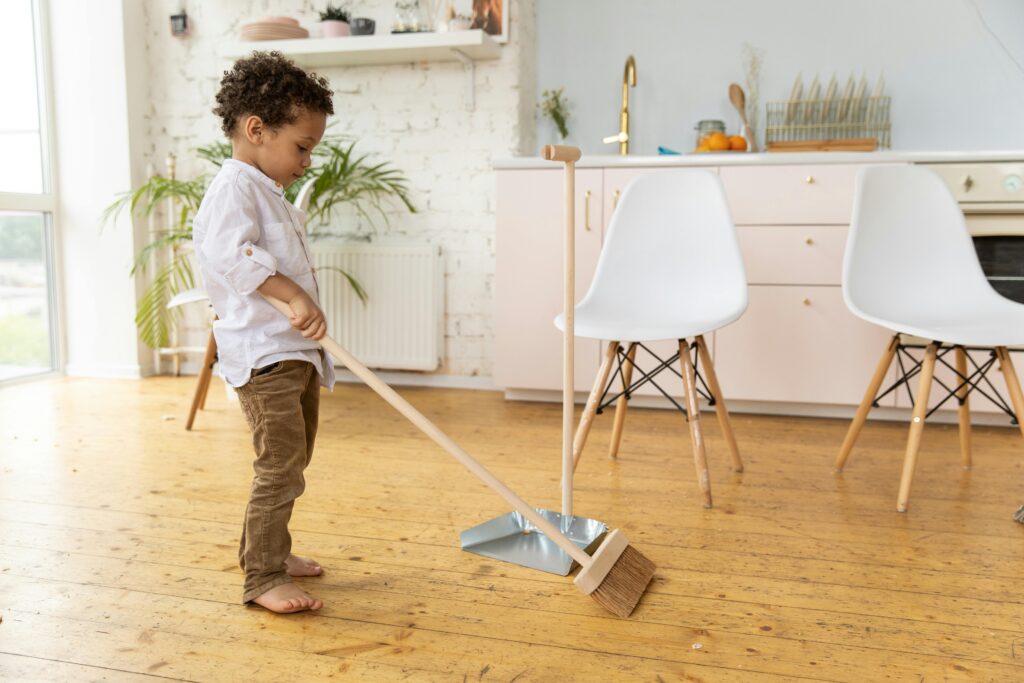
When toddlers help restore order—returning toys to shelves, wiping spills, or placing books neatly—they learn respect for their environment and a sense of belonging.
In Montessori settings, every item has its place, and putting things back becomes part of the rhythm of play. Research published in Frontiers in Psychology (2022) found that Montessori-educated children demonstrated stronger autonomy and collaboration than peers in traditional classrooms (PMID: PMC8870616).
Tip: Model tidying with warmth. I like to say, “Let’s make the room happy again,” and they join in.
4. Dressing Themselves: Small Struggles, Big Skills
It can be tempting to rush through dressing when you’re running late—but giving toddlers time to try builds lasting independence.
Practising with buttons, zippers, and socks not only refines coordination but also strengthens self-worth.
As Learn and Play Montessori (2023) explains, “Children develop a sense of control over their bodies and choices, which strengthens both motor coordination and self-esteem.”
Tip: Choose simple, easy-to-handle clothes. Elastic waistbands and Velcro shoes are your friends.
5. Playtime: Freedom Within a Framework
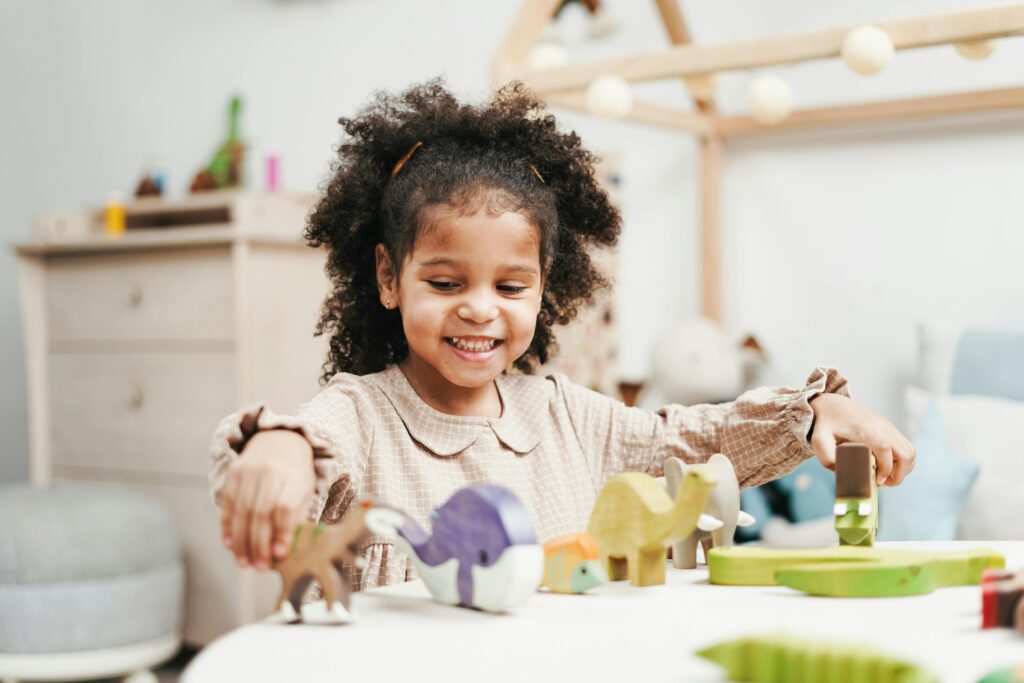
Independent play is one of the most powerful ways children practice decision-making and creativity.
Tip: Rotate toys every couple of weeks to keep curiosity alive. Simplicity invites depth.
Supporting Toddler Independence Without Pressure
Encouraging toddler independence doesn’t mean expecting perfection. It means slowing down, observing, and trusting your child’s natural rhythm.
Here’s what I’ve learned to remind myself of:
Slow down — give them space to try.
Step back — the small struggles are the learning.
Celebrate effort — “You worked so hard on that zipper!”
Stay calm — offer gentle support, not rescue.
As Dr. Montessori beautifully said, “The greatest gifts we can give our children are the roots of responsibility and the wings of independence.”
A Gentle Conclusion
Now, when I think about our morning chaos, I try to smile. It’s not about speed or tidiness, it’s about letting them feel capable. And let’s face it, kids love their independence.
In the quiet rhythm of daily life- letting children get dressed, prepare snacks and tidy up- there’s a world of growth happening beneath the surface. These simple routines are not chores; they’re opportunities.
And every time we pause, observe, and let them try, we send the message that matters most: