What you’ll learn in this article
- Why wooden toys support better play and longer attention spans in early childhood.
- How simple, open-ended materials help children build focus, imagination, and emotional regulation.
- Research-backed ways to choose toys that encourage calm, meaningful play at home.
A pattern I couldn’t ignore
A week or so after Christmas, the living room looked exactly how you’d expect.
New toys everywhere. Boxes half opened. Batteries already fading in a few of them.
But what caught my attention wasn’t the pile of new things — it was what kept getting returned to.
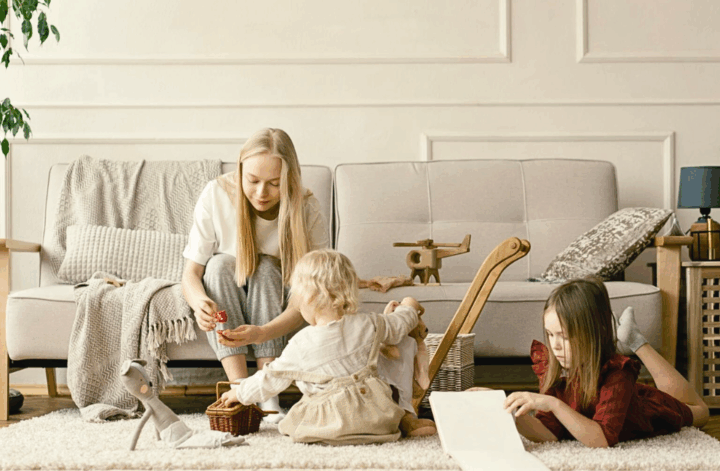
Amid the lights, sounds, and novelty, my child kept drifting back to the same wooden sets. Doctors utensils, ice cream sets and alike. Lining them up. Sorting them. Driving them slowly across the rug. No instructions. No noise. Just quiet focus.
It wasn’t dramatic. It was steady. The kind of play that stretches on without you noticing the time.
And it made me realise something I’ve started seeing more clearly over the years: when toys are simpler, children often play longer. They narrate and get into character. They repeat. They stay with it.
So I started looking into the research behind that pattern — and what I found was reassuring. The materials children play with don’t just entertain them. They shape how deeply they engage, how long they focus, and how their brains build connections.
Let’s explore why wooden toys so often invite that deeper kind of play — and what the science actually says.
How children’s brains respond to play materials
Children learn through doing. Every time they stack, sort, imagine, or repeat an action, their brain is building neural pathways.
According to the Harvard Center on the Developing Child, experiences that are active, meaningful, and engaging build strong brain architecture in early childhood.
👉 https://developingchild.harvard.edu/science/key-concepts/brain-architecture/
Open-ended materials — like wooden blocks, puzzles, and figurines — invite this kind of engagement. They don’t tell the child what to do. They require participation.
In contrast, highly electronic toys can shift a child into passive mode. A study published in JAMA Pediatrics found that when infants played with electronic toys, there was less parent-child interaction and less language use compared to traditional toys or books.
👉 https://jamanetwork.com/journals/jamapediatrics/fullarticle/2527387
That doesn’t mean electronic toys are “bad.” But it does highlight something important:
Toys that do less often ask children to do more.
And that’s where deeper learning happens.
Why simplicity supports deeper play
Simple toys create space. Space for imagination, problem-solving, and repetition.
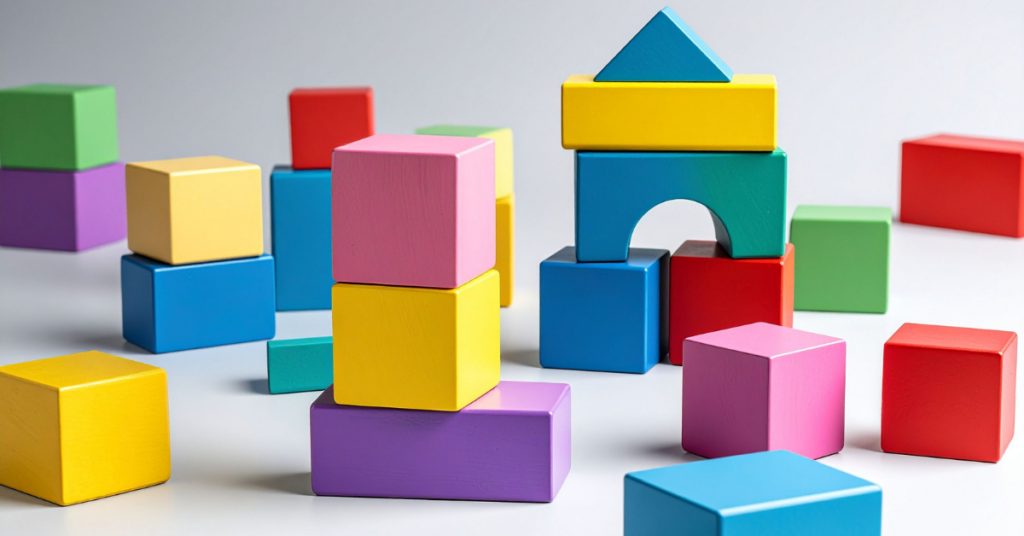
When a toy doesn’t dictate how it should be used, children begin to invent. A wooden block becomes a house, then a cake, then a bridge. The play evolves because the material allows it.
Researchers call this open-ended play — play without a fixed outcome.
Zero to Three notes that open-ended materials support creativity, independence, and emotional regulation.
👉 https://www.zerotothree.org/resource/play-is-the-work-of-the-child/
This kind of play also builds executive function:
- focus
- working memory
- self-control
These are the skills children use to follow instructions, manage emotions, and stay engaged in learning.
👉 https://developingchild.harvard.edu/science/key-concepts/executive-function/
When toys are simple, children bring more of themselves into the play. And that’s where growth happens.
Why wooden toys often hold attention longer
There’s something about wooden toys that invites children to stay.
Part of it is sensory. Wooden toys have weight. Texture. Temperature. Subtle differences that give real feedback to a child’s hands and brain.
The American Academy of Pediatrics explains that sensory-rich experiences help build neural connections and support healthy development.
👉 https://publications.aap.org/pediatrics/article/142/3/e20182058/38649/The-Power-of-Play
Plastic toys can be open-ended too — but many modern versions are designed to grab attention quickly rather than sustain it. Lights and sounds create excitement, but not always deep engagement.
Wooden toys, by contrast, tend to invite slower exploration. They don’t overwhelm the senses. They ground the child in what they’re doing.
And when children feel grounded, they often play longer.
Overstimulation and modern toy design
Many toys today are built to capture attention instantly. Bright lights. Music. Buttons. Movement.
These features aren’t inherently harmful. But they can create short bursts of excitement without sustained focus.
When a toy performs for the child, the child often becomes the audience rather than the creator.
That can reduce opportunities for imagination, storytelling, and problem-solving.
UNICEF notes that overstimulation can increase cognitive load — making it harder for young children to process information and stay engaged.
👉 https://www.unicef.org/parenting/child-development
Simpler toys reduce that load. They allow the brain to focus on one thing at a time. And that’s where concentration begins to grow.
What research says about open-ended materials
Open-ended toys encourage experimentation. Trial and error. Repetition.
They support what psychologists call intrinsic motivation — the drive to explore for the sake of exploration itself.
Zero to Three highlights that when children lead their own play, they develop stronger problem-solving skills and creativity.
👉 https://www.zerotothree.org/resource/choosing-toys-for-toddlers/
Montessori environments often use wooden materials for this reason. They isolate concepts like balance, size, or sequencing and allow children to explore them independently.
Maria Montessori believed that when children are deeply engaged in purposeful activity, they become calmer and more focused — a state she called “normalisation.”
In simpler terms:
When children have the right tools, they settle into deeper play.
Common questions about wooden toys
Are wooden toys really better for development?
Wooden toys aren’t automatically “better,” but many are designed to be simple, open-ended, and sensory-rich. These qualities support focus, imagination, and problem-solving — all key parts of early brain development. What matters most is whether a toy invites your child to participate actively in play rather than just watch or press buttons.
Do children get bored with wooden toys?
Sometimes adults assume they will, because wooden toys look simpler. But many children actually play with them for longer. Without lights and sounds dictating the play, children tend to create their own stories and uses for the toy — which keeps it interesting over time.
Are plastic toys bad for children?
Not at all. Many plastic toys can support great play, especially if they’re open-ended and not overly stimulating. The goal isn’t to remove all plastic toys — it’s to balance them with toys that encourage creativity, focus, and independent exploration.
Why do simple toys often hold attention longer?
Simple toys reduce sensory overload. When there are fewer distractions, children can concentrate more deeply. Research shows that open-ended materials support longer play sessions, more imagination, and stronger language development because the child is doing the thinking and creating.
Do I need to replace all my child’s toys with wooden ones?
Definitely not. A full toy overhaul isn’t necessary. Many parents find that simply rotating toys, reducing clutter, and adding a few open-ended options naturally leads to calmer, deeper play. It’s about creating balance, not perfection.
Are wooden toys only for Montessori homes?
Wooden toys are often associated with Montessori because they support independence and hands-on learning, but they work beautifully in any home. Any child benefits from toys that allow them to explore, repeat, and imagine at their own pace.
What should I look for when choosing better toys?
Ask yourself:
- Does this toy let my child lead the play?
- Can it be used in more than one way?
- Does it encourage imagination or problem-solving?
- Will it hold their attention beyond a few minutes?
If the answer is yes to most of those, it’s probably a strong choice.
How to choose toys that support better play
You don’t need to replace everything. Small shifts make a big difference.
Try asking:
- Does this toy invite my child to build, imagine, or create?
- Can it be used in more than one way?
- Does it encourage quiet focus rather than constant stimulation?
- Will it grow with my child over time?
- Does it spark storytelling or problem-solving?
Sometimes, simply rotating toys and reducing noise can transform how a child plays.
Less clutter. More depth. More calm.
A gentle next step
If this idea of calmer, deeper play resonates with you, you might enjoy exploring a few simple supports at home.
You can start with:
- A small basket of open-ended toys
- A simple play rhythm
- A quiet play corner
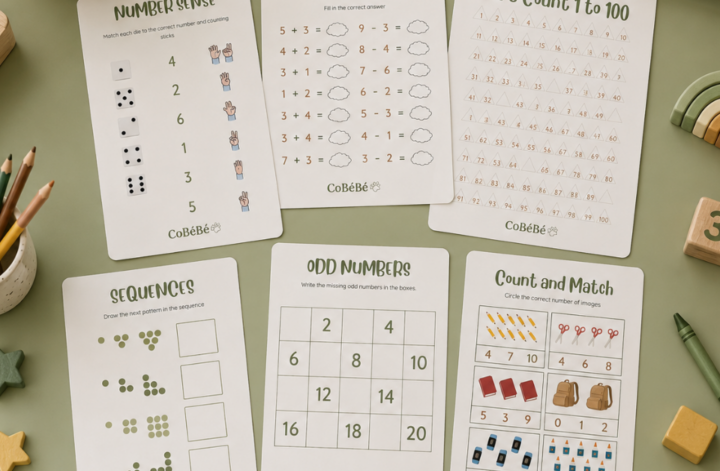
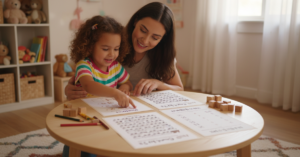
Or, if you’d like something ready-made, you can download my Calm Play Guide or free learning printables. They’re designed to help create spaces where children can slow down, focus, and explore without overwhelm.
Further reading and sources
- Harvard Center on the Developing Child — Brain Architecture https://developingchild.harvard.edu/science/key-concepts/brain-architecture/
- American Academy of Pediatrics — The Power of Play https://publications.aap.org/pediatrics/article/142/3/e20182058/38649/The-Power-of-Play
- Zero to Three — Choosing Toys for Toddlers https://www.zerotothree.org/resource/choosing-toys-for-toddlers/
- Sosa, A. V. (2016) — Toy type and parent-infant communication https://jamanetwork.com/journals/jamapediatrics/fullarticle/2527387
- UNICEF — Early childhood development through play https://www.unicef.org/parenting/child-development
Closing thoughts
We live in a world that moves quickly. Loud toys. Busy schedules. Endless options.
But when you watch a child deeply absorbed in play — stacking, imagining, repeating — you’re witnessing something powerful. Their brain building. Their confidence growing. Their imagination unfolding.
Wooden toys aren’t magic.
But they often invite the kind of play where magic happens.
Sometimes, the quietest toys create the deepest learning.